
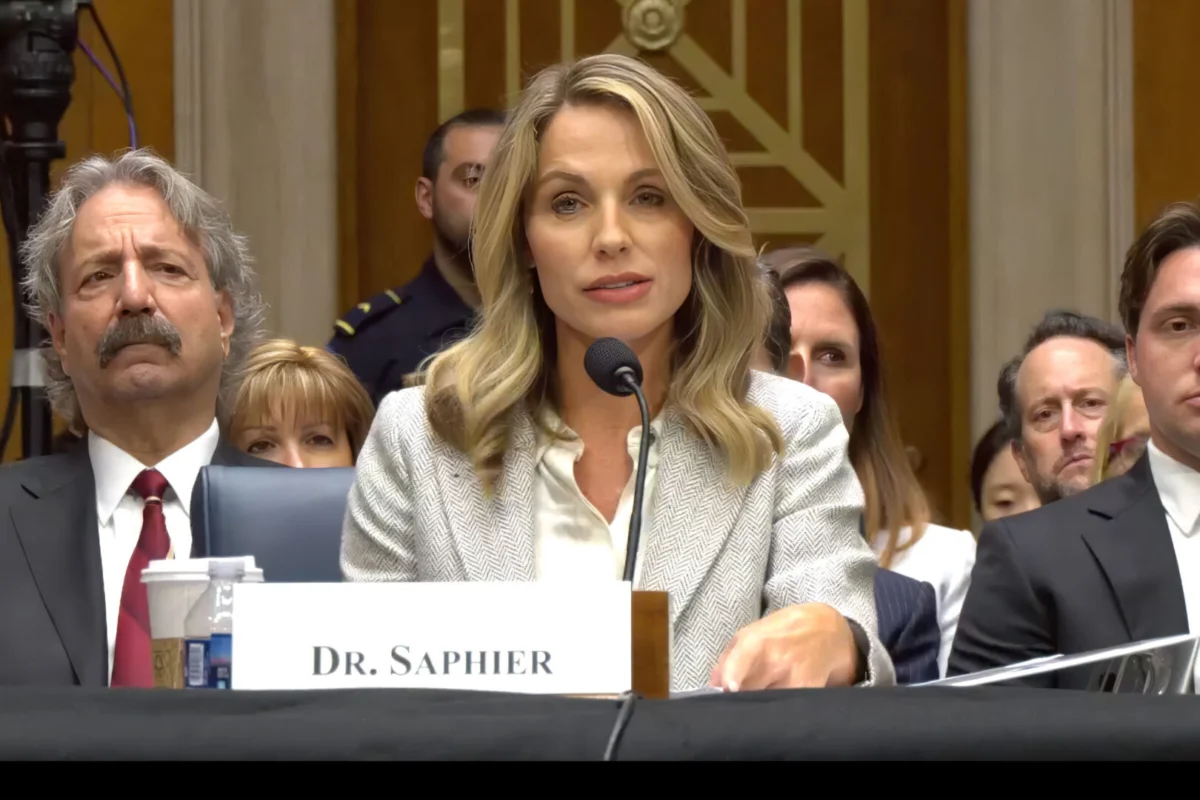
The nomination process for Dr. Nicole Saphier to serve as the nation’s Surgeon General hit a significant roadblock on Wednesday as members of the Senate Health, Education, Labor and Pensions (HELP) Committee pressed her on her willingness to diverge from the controversial health stances held by President Donald Trump and Health and Human Services (HHS) Secretary Robert F. Kennedy Jr. During a tense confirmation hearing, Saphier struggled to provide the categorical reassurances requested by senior lawmakers, particularly regarding the safety of childhood vaccines and the administration’s shifting public health priorities.
The hearing, which also featured testimony from deputy HHS secretary nominee Chris Klomp and assistant HHS secretary nominee Timothy Westlake, highlighted a deepening rift between traditional medical establishment norms and the populist, often skeptical, health agenda currently being advanced by the White House. For Saphier, a physician and media figure, the session served as a high-stakes test of whether she could maintain her professional credibility while navigating the political demands of an administration that has frequently questioned the consensus of federal health agencies like the Centers for Disease Control and Prevention (CDC) and the Food and Drug Administration (FDA).
The Controversy Over Vaccine Safety and Institutional Credibility
The central flashpoint of the hearing occurred when outgoing HELP Committee Chairman Bill Cassidy, R-La., a physician himself, attempted to secure definitive statements from Saphier regarding the safety profile of the MMR (measles, mumps, and rubella) vaccine. Specifically, Cassidy pushed for a rejection of the long-debunked claim that the MMR vaccine is linked to autism—a theory that both President Trump and Secretary Kennedy have previously championed.
When asked directly if she believed the MMR vaccine causes autism, Saphier stated, "Well, humbly, I don’t know what causes autism, but I have not seen repeatable evidence that will suggest it causes autism." This response immediately drew a sharp rebuke from Cassidy, who warned that the nominee was providing "too much wiggle room." Cassidy’s concern stems from the belief that public health officials must offer unambiguous guidance to maintain public trust. "The way to dispel confusion is not to sell more confusion," Cassidy noted, emphasizing that vague answers from a top-tier health official could embolden anti-vaccine sentiment at a time when vaccination rates for preventable diseases have faced significant volatility.
This exchange is part of a broader, ongoing conflict regarding the administration’s influence on the CDC. In December, a vaccine advisory panel voted to remove the universal recommendation for the hepatitis B vaccine at birth, a move that followed public skepticism voiced by Secretary Kennedy. While a judge temporarily blocked that policy change in March, the uncertainty surrounding the recommendation has left the medical community in a state of flux. Saphier testified that she supports universal hepatitis B vaccination, yet she declined to criticize the administration’s efforts to review these long-standing protocols, leading to further frustration among committee members who view the current trajectory as a departure from evidence-based medicine.
Chronology of Recent Public Health Policy Shifts
The tension surrounding these nominations is not occurring in a vacuum. The current administration has signaled a desire to fundamentally restructure federal health policy, which has led to a series of high-profile departures and policy pivots:
- May 2024: The FDA authorized four new fruit- and menthol-flavored vaping products, a decision that triggered immediate backlash from health advocates.
- Late Spring 2024: Following the vaping authorization, former FDA Commissioner Marty Makary resigned in protest, citing a fundamental disagreement with the administration’s prioritization of harm reduction over stricter anti-tobacco regulations.
- June 2024: A top HHS spokesperson, Rich Danker, stepped down from his post, further signaling internal unrest regarding the agency’s direction on nicotine and vaccine policy.
- July 2024: The Senate HELP Committee convened hearings for high-level HHS nominees, with senators from both parties demanding transparency on how these officials will interact with political appointees who hold views contrary to mainstream epidemiological data.
The Vaping Debate and Regulatory Standards
Beyond the vaccine discourse, the committee questioned Saphier on the administration’s stance toward flavored vaping products. Senator Susan Collins, R-Maine, challenged the nominee on whether the influx of new, flavored nicotine products could undermine years of anti-smoking progress.
Saphier attempted to balance her medical background with the administration’s stated policy, acknowledging that "the lungs are very sensitive and they don’t regenerate." However, she added that if flavored products could serve as a tool to help adults transition away from traditional combustible cigarettes, they might warrant consideration. This "harm reduction" argument is at the heart of the divide between the current FDA leadership and traditional public health experts, who argue that the potential for youth addiction outweighs the benefits of smoking cessation for adults.
Senator Tim Kaine, D-Va., expressed deep concern over the administration’s decision to dismantle the CDC’s dedicated smoking cessation office. He argued that removing institutional support for tobacco control at a federal level leaves a dangerous vacuum. Saphier reiterated her personal commitment to anti-tobacco initiatives, stating, "I am as anti-smoking, anti-tobacco as you could imagine anyone to be," yet she remained non-committal on how she would navigate the administration’s specific regulatory authorizations if confirmed.
Implications for Federal Health Policy
The scrutiny of Saphier and her colleague, Chris Klomp, reflects a growing anxiety on Capitol Hill regarding the transparency of the current HHS leadership. During his own testimony before the Senate Finance Committee earlier in the week, Klomp faced similar questioning regarding his willingness to support the administration’s controversial stances.
Senator Cassidy’s line of questioning regarding the recent measles deaths in Pennsylvania highlighted the stakes. The CDC has struggled to provide a definitive classification for these deaths, a delay that Cassidy attributed to the agency’s fear of contradicting the political narrative established by Secretary Kennedy. Klomp pledged that, if confirmed, he would prioritize "operational shortcomings" and ensure that the CDC provides clear, data-driven definitions, regardless of political sensitivities.
Fact-Based Analysis: The Trust Gap
The skepticism displayed by committee members—even those within the nominee’s own party—underscores a fundamental challenge for the incoming health leadership: the "Trust Gap." Public health effectiveness is inextricably linked to the credibility of the institutions providing the guidance. When officials refuse to explicitly reject debunked scientific claims, they risk alienating the medical community and the public.
Data from the American Academy of Pediatrics and the CDC consistently show that high vaccination coverage is the most effective tool for preventing outbreaks of diseases like measles, which had been considered eliminated in the U.S. in 2000. Any rhetoric that undermines the confidence in the current vaccine schedule has real-world consequences, as evidenced by sporadic outbreaks across several states.
As the confirmation process continues, the burden of proof rests on these nominees to demonstrate that they can act as a firewall between scientific rigor and political ideology. The Senate’s apprehension reflects a broader concern that if the Surgeon General—a position designed to be the "nation’s doctor"—is perceived as a political advocate rather than a scientific authority, the efficacy of the entire federal health apparatus could be compromised for years to come.
The committee is expected to continue its deliberations in the coming weeks. For Dr. Saphier, the path to confirmation will likely require more than just personal reassurances; it will require a clear, articulated commitment to the scientific standards that have governed public health for decades, regardless of the political pressures exerted by the White House.









Leave a Reply