
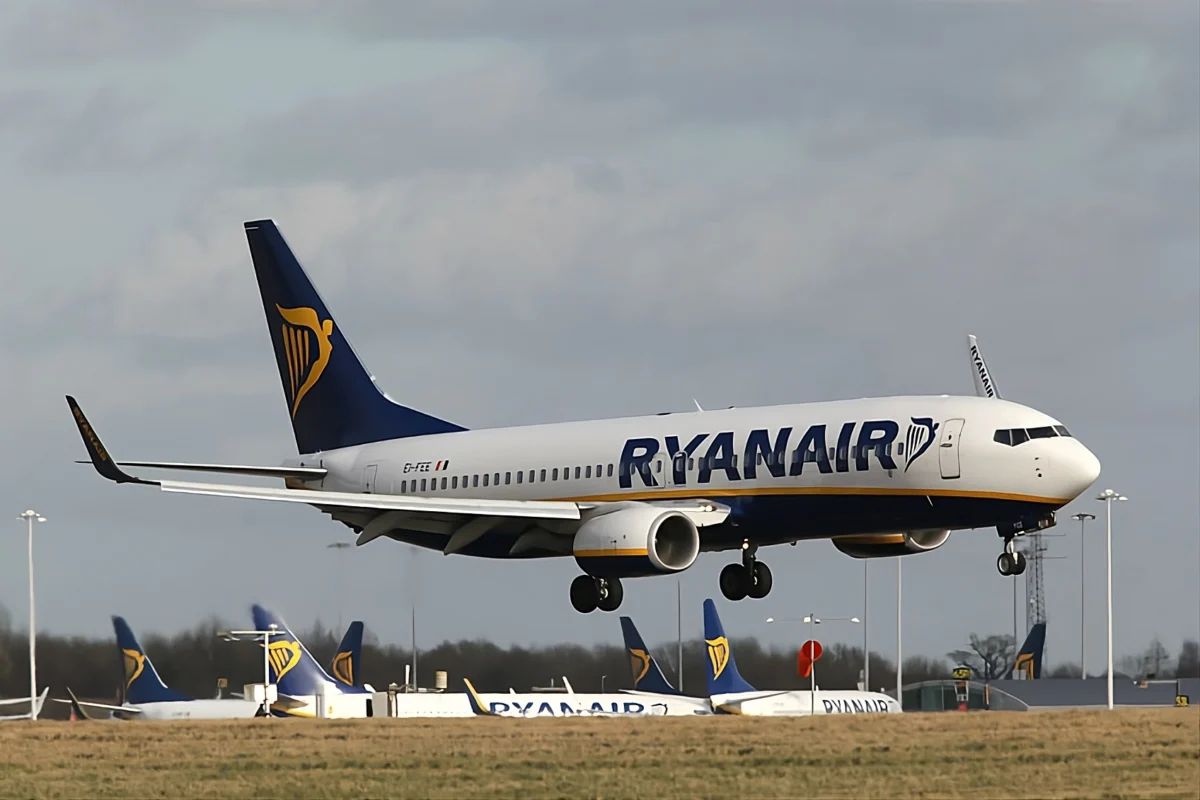
The aviation industry is no stranger to the pugnacious rhetoric of Ryanair CEO Michael O’Leary, but his recent decision to characterize competing carriers as "high-fare rapists" has sparked an intense, week-long public firestorm that ultimately forced a rare and public apology from the executive. The incident, which dominated headlines across Ireland and the European aviation sector throughout mid-September 2026, underscored the thin line between the airline’s long-standing "outrage marketing" strategy and the societal expectations of corporate leadership.
The controversy originated on September 10, ahead of Ryanair’s annual general meeting in Dublin. During a press briefing, O’Leary attempted to frame Ryanair’s low-cost model as the only viable option for budget-conscious travelers in an inflationary economic climate. In an attempt to disparage competitors such as Aer Lingus, Lufthansa, and British Airways, O’Leary declared that consumers "can’t afford to fly with the high-fare rapists around Europe."
When reporters immediately challenged the appropriateness of using such a violent metaphor, O’Leary initially doubled down. He insisted that his choice of words was "absolutely" acceptable in the context of his critique of industry pricing, effectively dismissing concerns about the trivialization of sexual violence in favor of maintaining his aggressive stance against industry rivals.
A Chronology of the Controversy
The fallout from the remarks evolved through several distinct phases, moving from a defiant defense to political pressure and, finally, a formal retraction.
- September 10: O’Leary makes the disparaging comments during a press briefing at Ryanair’s headquarters. He rejects immediate criticism, arguing that his focus was solely on the financial exploitation of passengers.
- September 11: Facing growing backlash, O’Leary issues a formal letter. While he acknowledges the gravity of sexual assault as a crime, he maintains that his specific use of the term did not constitute a trivialization of the act, stopping short of an apology.
- September 14: The controversy reaches the highest levels of Irish governance. Taoiseach Micheál Martin publicly addresses the situation, suggesting that while O’Leary’s intent may have been to discuss pricing, the executive needed to "reflect and listen" to the perspectives of women and survivors of abuse.
- September 18: After sustained pressure from advocacy groups and political leaders, O’Leary releases a video apology. He cites conversations with family, friends, and colleagues as the catalyst for his change in stance, admitting that his language caused significant distress.
Historical Context of O’Leary’s Rhetoric
The use of inflammatory language has been a cornerstone of Michael O’Leary’s tenure at the helm of the Dublin-based carrier. For decades, the executive has utilized controversial statements as a calculated PR tool to keep the brand in the public consciousness. His repertoire has historically included suggestions such as charging passengers to use onboard lavatories, the potential for standing-room-only flights, and the idea of replacing traditional ticket revenue with onboard gambling.
The "rapist" analogy is not entirely new to the CEO’s vocabulary. In July 2004, O’Leary famously referred to the owners of Stansted Airport as "a bunch of overcharging rapists" during a heated dispute over landing fees. That incident, while drawing sharp criticism at the time, occurred in a different media landscape—one that lacked the current level of sensitivity regarding the impact of language on survivors of sexual violence. The persistence of this specific insult in his vocabulary suggests a reliance on "shock value" that has, in the current climate, proven to be a liability rather than an asset.
Impact on Stakeholders and Advocacy Groups
The Dublin Rape Crisis Centre (DRCC) became a central figure in the fallout. CEO Rachel Morrogh noted that the organization’s national helpline saw a tangible impact, with callers expressing distress over the remarks. The center’s intervention was significant, as they provided not just a condemnation of the language, but an offer for O’Leary to undergo sensitivity training—a gesture aimed at transforming a public relations crisis into an educational opportunity.
The apology provided by O’Leary on September 18 was framed as a direct response to this feedback. "I am truly sorry for the offense and upset I’ve caused you by my careless use of those words," O’Leary stated. "It won’t happen again. I will try to learn from this mistake and do better in the future." The DRCC subsequently welcomed the apology, emphasizing that the focus should remain on the harm caused by the trivialization of sexual violence, rather than the political or corporate friction that initially triggered the comments.
Fact-Based Analysis: The Financial and Social Implications
The implications of this event extend beyond a simple PR gaffe. From an industry perspective, O’Leary’s attempt to equate high airfares with criminal activity fails on a logical level: air travel is a voluntary consumer choice. Passengers are free to compare fares and select carriers based on their own economic preferences. By choosing such an extreme metaphor, O’Leary arguably weakened his own argument regarding the cost-competitiveness of Ryanair, as the conversation shifted entirely away from ticket pricing and toward his personal conduct.
From a corporate governance standpoint, the incident highlights the risks associated with "founder-led" branding. While O’Leary’s personality has been instrumental in Ryanair’s rise to become one of the world’s most profitable low-cost carriers, the modern regulatory and social environment leaves little room for such volatility. Investors often value stability and brand reputation; when an executive becomes the story, it can lead to unnecessary friction with regulators, government officials, and the broader consumer base.
Furthermore, the involvement of the Taoiseach underscores that, in Ireland, the actions of a major national employer like Ryanair are matters of public interest. When a corporate leader’s language is perceived as incompatible with public values, it invites state-level intervention, which can complicate the company’s relationship with aviation authorities and political stakeholders.
Future Outlook
The aftermath of this incident will likely result in a more guarded approach to media engagements for Ryanair’s leadership. While O’Leary has built a career on defying convention, the rapid progression of this crisis—from a localized outburst to a national political issue—serves as a case study in the limitations of "outrage marketing."
The long-term impact on Ryanair’s brand loyalty remains to be seen. Historically, consumers of low-cost airlines have shown a high degree of tolerance for eccentric leadership provided that the price point remains attractive. However, as the travel market matures and competitors narrow the gap in pricing, the brand’s reputation becomes an increasingly valuable asset. O’Leary’s apology, while belated, represents a strategic pivot to ensure that the focus of the airline returns to its operational metrics rather than the personal conduct of its chief executive. For now, the episode concludes with a rare moment of introspection from one of aviation’s most combative figures, marking a shift in how the industry and the public engage with the intersection of commerce and rhetoric.




Leave a Reply