Archaeologists working in the hyper-arid coastal deserts of southern Peru have uncovered the extraordinary skeletal remains of an infant afflicted with a severe and exceptionally rare congenital malformation. The condition, characterized by the fusion of the eye orbits into a single central socket in the cranium, is medically known as cyclopia. Advanced genetic analyses conducted on the ancient DNA extracted from the bones have officially confirmed that a chromosomal abnormality was the underlying cause of this fatal developmental defect, which occurred more than sixteen centuries ago.
The discovery offers a profound glimpse into the biomedical history of pre-Columbian societies, specifically shedding light on how ancient Andean populations perceived and managed severe genetic anomalies. While modern medicine understands cyclopia as the most extreme expression of holoprosencephaly—a disorder where the embryonic forebrain fails to properly divide into two hemispheres—finding direct bioarchaeological evidence preserved across millennia remains an extraordinary scientific rarity.
Main Facts and the Archaeological Discovery
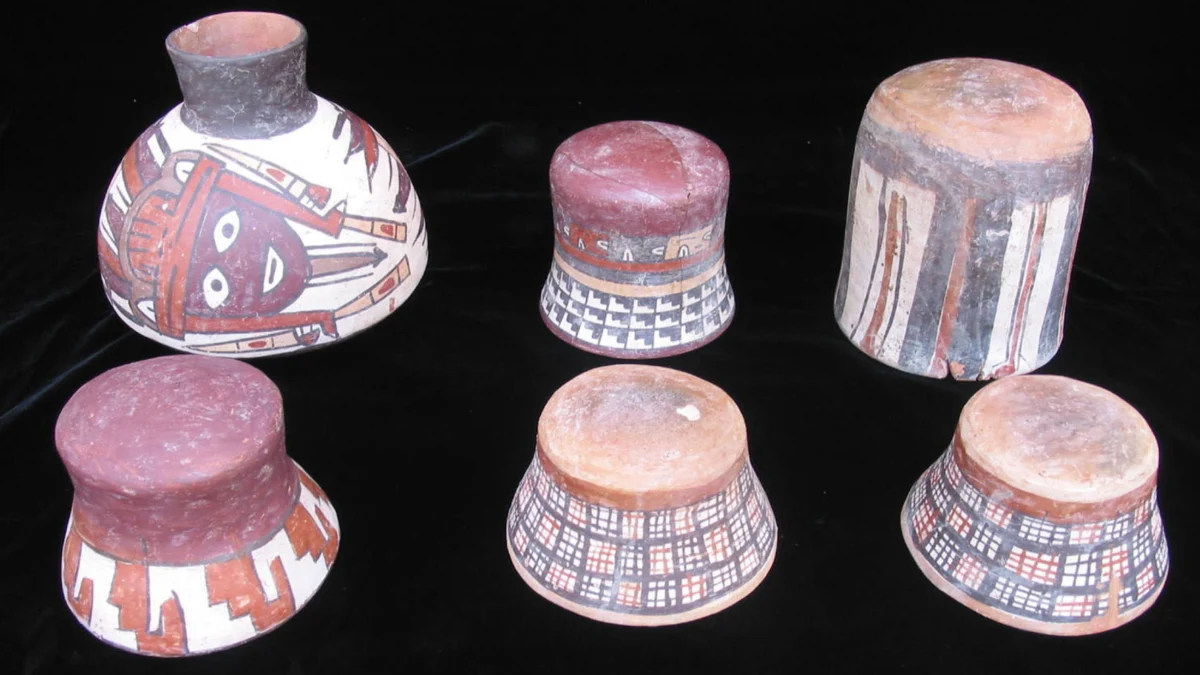
The infant skeleton was recovered from an archaeological site associated with the renowned Nasca culture, a civilization that flourished along the arid southern coast of Peru from approximately 100 BCE to 800 CE. Known worldwide for their massive geoglyphs etched into the desert floor—the famous Nazca Lines—as well as their intricate polychrome pottery and sophisticated underground aqueduct systems, the Nasca people also left behind a rich bioarchaeological record.
During a routine excavation campaign aimed at documenting residential and mortuary practices within the region, researchers came across the fragile, highly deteriorated burial. Initial macroscopic examination in the field immediately alerted the physical anthropology team that the specimen was structurally distinct. The facial bones presented an unmistakable anomaly: instead of the standard bilateral orbital cavities designed to house two eyes, the skull featured a singular, centrally located nasal-orbital structure.
Recognizing the delicacy and immense historical significance of the find, the archaeological team collaborated with geneticists and paleopathologists to extract biomolecular data. DNA preservation in the scorching, saline soils of the Peruvian coastal desert is notoriously difficult, yet the research team successfully isolated genetic material. Subsequent sequencing confirmed that the developmental failure was the result of a profound chromosomal aberration, providing irrefutable empirical proof that ancient human populations experienced the same catastrophic genetic mutations that occur today.
Chronology of the Research and Analysis
The investigation into the ancient Peruvian infant followed a rigorous, multi-stage scientific protocol spanning field recovery, laboratory preservation, and advanced molecular analysis.
Phase one involved the careful exhumation of the infant burial, which required specialized micro-excavation techniques due to the extreme fragility of perinatal skeletal remains. Because infant bones are porous and incompletely ossified, recovering them intact from compacted desert sediment demands meticulous precision.
Following successful extraction, the remains were transported to a controlled laboratory setting for non-destructive imaging. Anthropologists utilized high-resolution computed tomography (CT) scanning to peer inside the cranial structures without causing physical damage. These scans confirmed the complete absence of a nasal bone structure above the single eye orbit, a hallmark skeletal signature of extreme alobar holoprosencephaly.
Phase two centered on biomolecular interrogation. Under clean-room conditions designed to prevent modern human DNA contamination, technicians drilled into dense petrous bone portions to harvest endogenous DNA. The ensuing genomic sequencing verified the presence of the chromosomal defect.
Phase three involved contextualizing the burial within the broader framework of Nasca mortuary archaeology. Researchers cross-referenced the stratigraphic layer, accompanying grave goods, and burial architecture with established chronologies of the Nasca phase to date the remains to roughly 1,600 years ago, placing the infant squarely within the Middle Nasca period.
Supporting Data and Medical Context
To fully understand the weight of the archaeological discovery, modern medical and historical data regarding the condition must be examined. Cyclopia is an extreme manifestation of holoprosencephaly (HPE), a structural anomaly of the brain that occurs early in human embryonic development, typically during the first month of gestation.
Statistically, holoprosencephaly affects approximately 1 in every 10,000 to 16,000 live births globally, but the vast majority of these cases result in spontaneous miscarriages or stillbirths. The most severe subtype, cyclopia, is exceedingly rare, occurring in roughly 1 out of every 100,000 births. In contemporary medical settings, infants born with true cyclopia rarely survive for more than a few hours or days outside the womb due to associated profound malformations of the brain, heart, and respiratory systems.
Dr. Lars Fehren-Schmitz, an anthropologist at the University of California, Santa Cruz, and a co-author of the recent study detailing the find, highlighted the physiological limitations imposed by the condition. "We cannot really say how long this individual survived," Fehren-Schmitz noted in an interview regarding the metabolic and neurological challenges the infant would have faced. Even with modern neonatal intensive care units, survival beyond birth for a complete cyclopic infant is virtually unprecedented. Consequently, researchers believe the infant likely passed away shortly after birth, or perhaps was stillborn.
Cultural Treatment and Social Responses in Ancient Peru
One of the most compelling aspects of the discovery relates not to the pathology itself, but to the social reaction of the community that cared for the mother and ultimately buried the child.
In many historical societies, particularly those with limited biomedical understanding of congenital disorders, infants born with striking physical deformities were stigmatized, abandoned, or subjected to irregular mortuary treatments. Superstitions often framed such conditions as omens, divine punishments, or demonic possessions. However, the archaeological context of the Nasca infant challenges these assumptions.
"The burial of this infant suggests that the Nasca treated this individual in death like most other infants," Fehren-Schmitz stated. The grave goods, positioning, and inclusion within a standard communal or family burial ground indicate that the child was not cast out or discarded in a peripheral zone. Instead, the grieving family and community afforded the infant the same ritual care, respect, and ceremonial interment reserved for healthy newborns of the period.
This egalitarian mortuary treatment offers profound insights into the social structure and empathy of the Nasca civilization. It demonstrates that familial bonds and community structures superseded physical perfection, and that infants who succumbed to fatal congenital conditions were nonetheless mourned and integrated into the community’s ancestral landscape.
Broader Impact and Implications for Bioarchaeology
The publication of this study carries significant implications for the fields of bioarchaeology, paleopathology, and evolutionary medicine. By bridging the gap between ancient DNA analysis and morphological anthropology, researchers can now definitively diagnose genetic disorders that previously could only be inferred through visual inspection of skeletal remains.
Furthermore, the integration of molecular diagnostics into archaeology allows scientists to track the deep-time baseline of human genetic health. Chromosomal abnormalities are as old as humanity itself, yet finding direct material evidence of conditions like cyclopia in the archaeological record is exceptionally uncommon due to the rapid decomposition of infant bones and the historical scarcity of preservation environments as favorable as the Peruvian coast.
For bioarchaeologists working in South America, the find opens new avenues for exploring how ancient Andean civilizations perceived disability, illness, and mortality. The Nasca culture operated in an environment marked by severe ecological pressures, including prolonged droughts and shifting climatic conditions tied to El Niño cycles. Despite these environmental stresses, their social fabric maintained a high degree of care for vulnerable members, reflecting a sophisticated ethical framework regarding human life and death.
As analytical techniques continue to advance—allowing for ever-more sensitive extraction of ancient proteins and degraded DNA—researchers anticipate uncovering further insights into the biological challenges faced by ancient populations. The single-eyed infant of the Nasca desert stands as a poignant reminder of the shared biological fragility of humankind across millennia, while simultaneously illuminating the enduring capacity for human compassion and community care in the face of tragedy.