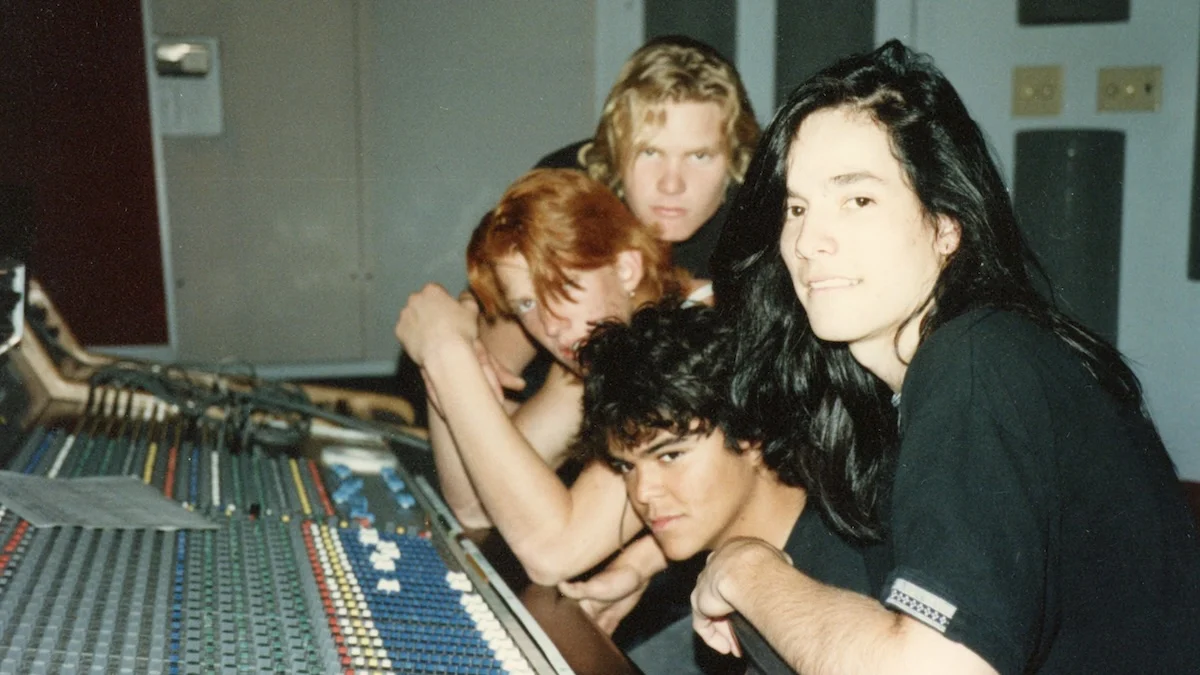
The seminal documentary chronicling the emergence of the California desert rock scene, Desert Age: A Rock and Roll Scene History, is set for a significant 10th-anniversary re-release. Originally crowdfunded via an IndieGogo campaign and released in 2016, the film serves as the definitive visual archive of a musical movement that fundamentally reshaped modern hard rock and stoner metal. To commemorate a decade since the project’s inception and its subsequent cultural impact, director Jason Georgiades has curated an expanded special edition. This updated version will debut with a premiere screening and panel discussion at the Festival Theaters in Palm Springs, California, on Saturday, November 7th, followed by a wide digital release on November 20th via the director’s official website.
The Genesis of a Cultural Movement
The California desert rock scene, centered largely around the Coachella Valley, remains one of the most distinct subcultures in American music history. Emerging in the late 1970s and gaining critical momentum throughout the 1980s and 90s, the scene was defined by isolation and creative necessity. Lacking traditional venues, musicians frequently held "generator parties"—spontaneous, illicit concerts held in the remote desert, powered by portable generators.
This environment acted as a pressure cooker for talent, fostering a sound characterized by heavy, hypnotic grooves and psychedelic sensibilities. The documentary captures the transition of this regional phenomenon into a global powerhouse, tracing the evolution from obscure local acts like Yawning Man and Across the River to the international success of Kyuss and Queens of the Stone Age.
Chronology of the Desert Sound
The history documented in Desert Age can be segmented into three distinct phases of development:
- The Formative Era (1975–1983): Characterized by the influence of punk and hard rock, this period saw the arrival of traveling acts like Black Flag, whose 1981 Palm Springs show is highlighted in the new 10th-anniversary footage. This period set the stage for the DIY aesthetic that would define the region.
- The Proliferation Era (1984–1992): The rise of bands like Yawning Man and the formation of Kyuss. During this time, the "desert sound" began to crystallize, blending heavy blues with ambient, sprawling soundscapes.
- The Commercial Breakthrough (1993–2000): The dissolution of Kyuss and the subsequent formation of Queens of the Stone Age brought the desert aesthetic into the mainstream, with artists like Josh Homme and Dave Grohl becoming global icons.
New Archival Material and Restorations
The 10th-anniversary re-release is not merely a digital remaster; it functions as an archival expansion. Director Jason Georgiades has integrated previously unseen audio and visual artifacts, specifically focusing on the intersection of the desert scene and the broader American punk movement. The inclusion of new documentation regarding Black Flag’s 1981 appearance in Palm Springs provides essential context for the grit and intensity that influenced early desert pioneers.
The production team spent years digitizing fragile source material. This included scanning disintegrating concert flyers, recovering lost photographic negatives from private collections, and syncing audio from bootleg recordings that had previously been relegated to the archives of local musicians. By doing so, the film effectively acts as a historical repository, ensuring that the ephemeral nature of 1980s music culture is preserved for future research and appreciation.
Director’s Perspective and the Human Element
The creation of Desert Age was deeply personal for Georgiades. In a statement regarding the project’s origins, the director noted that the documentary began following a conversation with Gary Arce, the founding guitarist of the highly influential Yawning Man.
"Looking back, I’m reminded that the day I lost one of my best friends was also the day I began making new ones," Georgiades reflected. "I like to think my grandmother had something to do with that. From that moment on, I started making friends all over the world who shared the same passion for desert rock and roll. They trusted me to tell their stories."
This trust is evident in the film’s lineup, which features in-depth interviews with key figures including Josh Homme, Dave Grohl, Brant Bjork, Nick Oliveri, Jesse Hughes, and Mario Lalli. By focusing on the personal narratives of these artists, the film avoids the clinical tone of a traditional music documentary, opting instead for a communal oral history.
The Palm Springs Premiere and Q&A
The premiere event on November 7th is designed to bridge the gap between the historical archive and the living community. The screening will be followed by an interactive Q&A session moderated by writer and anthropologist Natasha Berenek. The panel will feature a cross-section of the scene’s architects, including:
- Mario Lalli: A central figure in the desert scene, often cited as the "godfather" of desert rock.
- Brant Bjork: The drummer and songwriter behind the rhythm section that defined the early Kyuss sound.
- Sean Wheeler: A vocalist whose contribution to the desert scene remains legendary.
- Sophia Possidon: A key contributor to the scene’s visual and cultural documentation.
This gathering serves as an acknowledgment of the endurance of the desert sound, which continues to influence contemporary bands worldwide. Tickets for the event are currently available through the film’s official digital portals.
Sociological Implications of the Desert Scene
The legacy of the desert rock movement provides a compelling case study in musicology. Unlike the highly commodified scenes of Los Angeles or New York during the same period, the desert scene thrived due to its geographic isolation. This isolation forced a reliance on local peer support and original songwriting rather than mimicking the trends of the music industry.
The data captured in Desert Age confirms a high rate of cross-pollination among bands. Musicians often played in multiple groups simultaneously, creating a "revolving door" of collaboration that prevented the stagnation of the sound. This communal structure is a central theme of the documentary, which argues that the "desert spirit" is not a specific genre, but a philosophy of creative freedom.
Analysis of the Impact on Hard Rock
The inclusion of artists like Dave Grohl in the documentary underscores the movement’s significance to mainstream rock history. The influence of Kyuss and the subsequent output of Queens of the Stone Age provided a necessary alternative to the grunge movement of the 1990s, offering a more groove-oriented and technically complex take on heavy music.
By preserving the "raw and primitive" origins of these bands—as Georgiades describes them—the 10th-anniversary re-release allows contemporary listeners to understand the evolution of heavy music in its proper context. The restoration of these artifacts serves as a reminder that major cultural movements often begin in obscurity, fueled by little more than a shared location and a desire to experiment.
Availability and Legacy
Following the Palm Springs premiere, the expanded 10th-anniversary edition will be available for purchase and streaming on November 20th via the director’s website. The release is expected to attract significant interest from both die-hard fans of the genre and historians of American underground music.
As a documentary, Desert Age succeeds in its primary mission: to transform a collection of fragmented memories and decaying flyers into a coherent, lasting narrative. It is a testament to the idea that the spirit of the desert—often characterized by outsiders as "dry"—is, in reality, a deeply fertile environment for artistic expression. With this re-release, Georgiades has solidified the documentary’s place as the final word on one of the most authentic and enduring scenes in rock and roll history.