TKO Group Holdings, the sports and entertainment powerhouse formed by the merger of UFC and WWE, has reported a robust financial performance for the third quarter, headlined by a significant surge in UFC-driven revenue and an overall expansion of its EBITDA margins. The company’s latest fiscal report signals that its strategy to leverage high-demand live events is yielding substantial dividends, prompting leadership to raise its full-year guidance for the second time in 2024.
Total revenue for the quarter reached $1.36 billion, a 21% increase compared to the same period in the previous year. Even more notable was the growth in adjusted earnings before interest, taxes, depreciation, and amortization (EBITDA), which spiked 54% to $555.7 million. This surge in profitability pushed the company’s adjusted EBITDA margin to 41%, a significant jump from the 32% margin reported in the third quarter of 2023.
The UFC Engine: A Catalyst for Growth
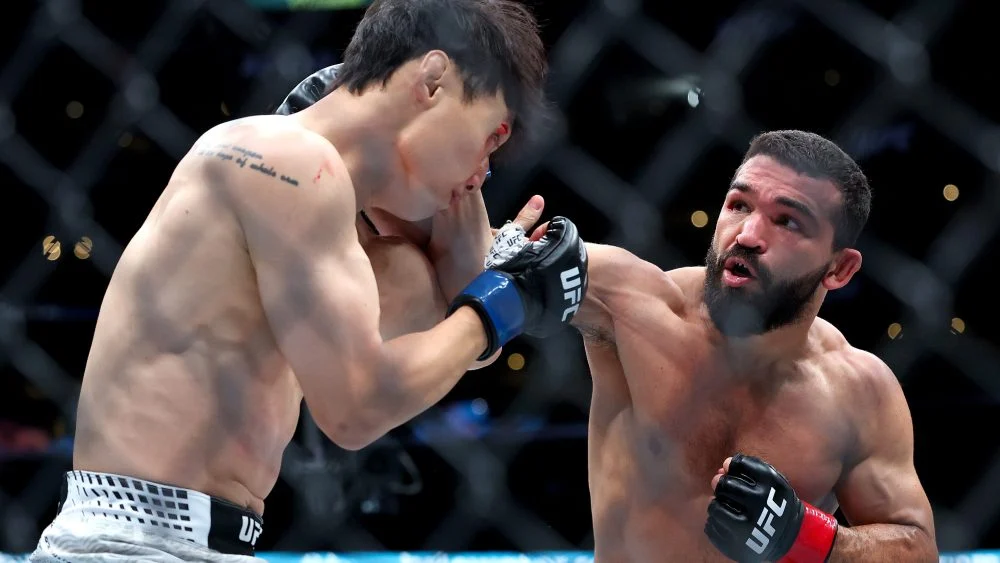
The primary driver of this quarterly success was the UFC, which experienced a banner period characterized by consistent sellouts and optimized media rights performance. UFC revenue climbed 60% year-over-year, totaling $519.2 million. The growth was distributed across multiple revenue streams: a $132.3 million increase in media rights and content production, a $36 million rise in live events and hospitality, a $20.5 million gain in partnerships and marketing, and a $5.2 million boost in consumer product licensing.
This performance is largely attributed to the UFC’s aggressive global expansion strategy. By securing major international markets and hosting premium events in high-capacity venues, the league has effectively maximized its gate receipts and hospitality packages. The integration of "On Location," TKO’s premium hospitality arm, has played a critical role in this, allowing the company to capture a greater share of the high-net-worth fan base that increasingly views UFC cards as premier travel destinations.
WWE Performance and Comparative Context
While UFC experienced a breakout quarter, WWE’s contribution reflected a more nuanced picture. Revenue figures for the wrestling promotion were impacted by a scheduling anomaly: the third quarter of the previous year included three additional events on the main roster compared to the current period. This calendar variance illustrates the volatility inherent in live event-based business models, where the timing of marquee shows can shift quarterly comparisons.
Despite this, WWE remains a foundational asset for TKO. The company continues to benefit from the ongoing digitization of its library and the transition of its content to broader streaming platforms. Executives at TKO have emphasized that the long-term fundamentals for WWE remain unchanged, with a pipeline of premium live events expected to drive steady engagement through the remainder of the fiscal year.
Strategic Financial Outlook and Guidance
Reflecting the strength of the quarter, TKO has adjusted its full-year outlook upward. The company now expects total annual revenue to fall between $5.790 billion and $5.830 billion, with adjusted EBITDA projected in the range of $2.295 billion to $2.315 billion.
This decision, described by management as a reflection of "conviction across the entire portfolio," underscores the company’s confidence in its long-term revenue visibility. A key pillar of this stability is the fact that the vast majority of TKO’s existing revenue streams—specifically media rights deals—are locked in for the next five to seven years. By insulating itself against short-term market fluctuations through long-term contracts, TKO has created a predictable financial floor that allows it to invest aggressively in live experiences.
Official Commentary and Leadership Perspective
Mark Shapiro, president and COO of TKO, framed the quarterly results as the successful culmination of what the firm dubbed its "year of execution."
"Our third quarter performance reflects the secular tailwinds powering live events and experiences around the world, and TKO’s assets sit front and center of that premium ecosystem," Shapiro said in a statement to investors. "As we close out our year of execution, our decision to raise full-year guidance for the second time this year is the clearest expression of our conviction. Our business is durable and our fundamentals are solid. Every facet of sports consumption is pointing north, and we see substantial runway ahead."
Shapiro’s comments highlight the broader industry trend of "experience-based consumption," where fans are increasingly willing to pay a premium for live, high-stakes sports content. TKO’s ability to monetize this trend through its combined portfolio of UFC and WWE appears to be a central thesis of its growth strategy.
Broader Market Implications
The success of TKO Group Holdings offers a window into the evolving landscape of professional sports media. In an era where traditional linear television audiences are fragmenting, the value of "must-watch" live events has skyrocketed. TKO’s business model is explicitly designed to capitalize on this scarcity. By operating both UFC and WWE, the company has effectively created a year-round content machine that commands premium advertising rates and attracts lucrative international media rights deals.
Furthermore, the integration of IMG—the global sports, events, and talent management company—within the TKO umbrella has provided the firm with unique cross-promotional capabilities. The "On Location" business, which manages luxury hospitality for major events, has benefited from this synergy, particularly following the successful integration of World Cup-related projects.
Analysts note that TKO’s ability to expand its EBITDA margins from 32% to 41% indicates significant operational efficiencies. By centralizing back-office operations, legal, and sales efforts for two massive global sports properties, TKO is achieving the kind of economies of scale that were previously difficult to reach for either organization on its own.
Timeline of the TKO Formation
The current financial trajectory is the result of a deliberate corporate evolution:
- April 2023: Endeavor Group Holdings, the parent company of UFC, announces a definitive agreement to form a new publicly traded company with WWE.
- September 2023: The merger officially closes, and TKO Group Holdings begins trading on the New York Stock Exchange under the ticker symbol "TKO."
- Late 2023 – Early 2024: The company embarks on its "year of execution," focusing on cost synergies and the alignment of sales and marketing teams.
- Q3 2024: TKO reports record revenue and EBITDA growth, signaling the successful realization of synergies and the power of its dual-brand strategy.
Future Challenges and Opportunities
Looking ahead, TKO faces the challenge of sustaining this momentum in a shifting macroeconomic environment. While the company is well-positioned, it remains susceptible to the broader economic pressures that affect consumer discretionary spending. However, the recurring nature of its media rights revenue acts as a significant hedge.
Furthermore, the expansion into new international markets remains a key priority. UFC’s success in markets like the Middle East and Southeast Asia provides a blueprint for WWE to follow, potentially unlocking new sponsorship and broadcasting revenue that has yet to be fully exploited. As TKO continues to integrate its operations and capitalize on the growing global demand for premium live sports, the company appears set to maintain its position as a dominant force in the sports and entertainment sector.
The company’s results serve as a barometer for the sports industry, suggesting that the "premium ecosystem" of live events is not only surviving but thriving. As the year draws to a close, investors will be looking to see if TKO can maintain these elevated margins while continuing to scale its global footprint. For now, the "year of execution" seems to have provided the solid foundation necessary for the company’s next phase of growth.