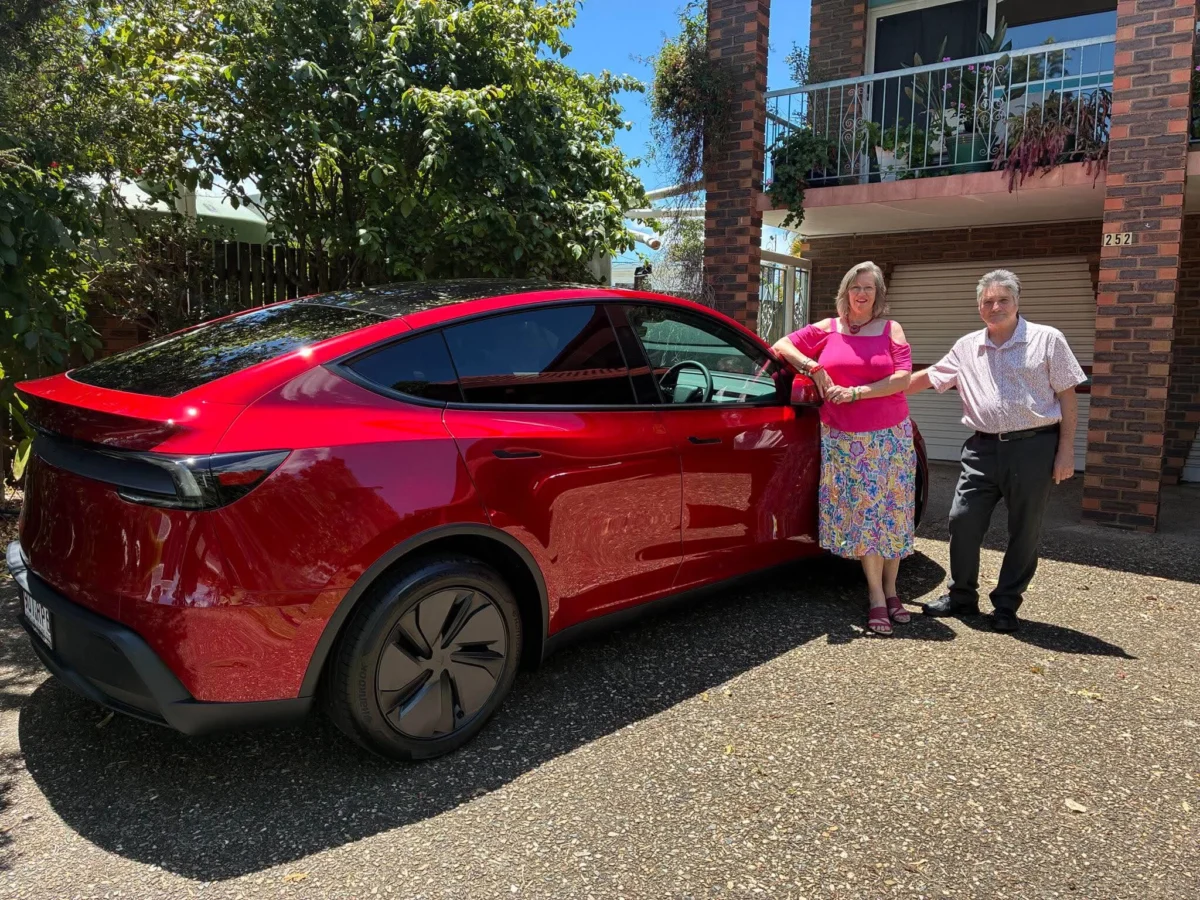
The transition from a 2019 Tesla Model 3 to a 2027 Tesla Model Y represents more than just a change in vehicle ownership; it serves as a microcosm for the rapid maturation of the Australian electric vehicle (EV) market. As recent owners Majella and David Waterworth discovered during their delivery experience in Brisbane, the landscape of EV acquisition has shifted from a niche, high-risk endeavor to a mainstream, high-volume retail operation. This evolution highlights a broader trend: as the demographic of EV buyers widens to include older generations seeking improved ergonomics and comfort, the infrastructure and support systems surrounding these vehicles have expanded to meet unprecedented demand.

The Shift in Consumer Demographics and Vehicle Ergonomics
The primary motivation for many long-term EV owners upgrading to newer platforms—such as the Model Y—is the change in vehicle architecture. While the Tesla Model 3 remains a celebrated benchmark for efficiency and performance, its lower ride height can present accessibility challenges for aging drivers. The Model Y, with its increased ground clearance, higher seating position, and larger aperture for ingress and egress, is increasingly becoming the vehicle of choice for the "baby boomer" demographic.
This demographic shift is significant. In the early days of Tesla’s Australian presence, buyers were largely early adopters—technology enthusiasts willing to navigate a lack of public charging infrastructure and skepticism from legacy automotive media. Today, the purchase of a vehicle like "REDD"—the owners’ 2027 Tesla Model Y—reflects a market where the vehicle is chosen for practical, day-to-day utility rather than solely for its technological novelty. The ability to retain a beloved previous vehicle within the family, as in the case of the Waterworths passing their Model 3 to their daughter, demonstrates a growing secondary market for used EVs, which is critical for long-term fleet electrification.

A Chronology of Tesla’s Retail Expansion in Australia
The contrast between the 2019 delivery experience and the 2026/2027 experience is stark. In 2019, Tesla operated from centralized, cramped facilities where the handover process was abbreviated due to limited staffing and lower vehicle volume. Today, Tesla’s delivery centers in major Australian hubs are high-throughput environments.
The current operational model features dedicated sales representatives, comprehensive customer orientation, and a visible, high-volume logistics chain. Observations from delivery centers confirm a steady stream of trade-ins, where internal combustion engine (ICE) vehicles are being surrendered in exchange for electric alternatives. This systematic turnover is evidence that the "tipping point" for EV adoption in Australia has passed, with new vehicle deliveries occurring in waves that rival traditional automotive manufacturers. The presence of hundreds of vehicles awaiting delivery at a single site suggests that supply chain constraints, which plagued the industry during the 2020–2022 period, have largely been mitigated.

Data-Driven Insights: The Market Transformation
The Australian automotive market has undergone a dramatic reconfiguration. In 2019, plug-in vehicles represented less than one percent of total new car sales. As of late 2026, the Tesla Model Y has consistently secured its position as one of the highest-selling passenger vehicles across all drivetrain categories, frequently outselling traditional best-sellers like the Toyota RAV4.
This shift is underscored by several key technological advancements that make modern EVs more viable for the average consumer:

- Battery Chemistry: The adoption of Lithium Iron Phosphate (LFP) batteries has been a game-changer. Unlike previous nickel-based chemistries, LFP batteries are designed to be charged to 100% regularly without significant degradation, removing one of the primary "range anxieties" associated with daily EV ownership.
- Charging Infrastructure: While public high-speed charging remains a focus for highway travel, the emphasis on residential charging has matured. The integration of home battery systems and smart-charging hardware allows owners to leverage domestic solar generation, effectively decoupling the vehicle from volatile retail fuel prices.
- Hardware and Safety: The implementation of Hardware 4 (HW4) in newer Tesla models provides advanced processing power for "Supervised" Full Self-Driving (FSD) capabilities, offering a higher level of driver-assist reliability than previous iterations.
Addressing the Infrastructure Myth
Despite the proliferation of EVs, the public discourse in Australia remains cluttered with concerns regarding the viability of electric transport in regional areas. A persistent narrative among critics is the lack of public charging stations in remote locales. However, industry experts and data suggest that the focus on public fast-charging ignores the reality of residential charging, which accounts for the vast majority of "refueling" events for EV owners.
The ability to plug a vehicle into a standard household power socket—even if only for overnight trickle charging—provides a degree of energy independence that ICE vehicles cannot match. The persistent call for more public chargers, while valid for tourism corridors, is often used as a rhetorical barrier to entry, ignoring the fact that the primary infrastructure for the majority of daily driving is already located in the average Australian garage.

Implications for the Automotive Industry
The transition to electric mobility has triggered a defensive response from some legacy automotive interests. Calls to "pause" the entry of new brands or protect the existing dealership model often cite the perceived threat to the local industry. However, these arguments frequently fail to account for the shifting consumer preference toward lower maintenance costs, superior cabin technology, and the environmental benefits of electrification.
The "real" motoring journalists of the traditional press are slowly adapting, moving from a position of skepticism to one of qualified acceptance as the performance of EVs becomes impossible to ignore. The integration of comfort features—such as heated steering wheels, ventilated seating, and improved acoustic insulation via double-glazed windows—has neutralized the argument that EVs are "spartan" or lack the refinement of traditional luxury vehicles.

Conclusion: The Road Ahead
The handover of the Model Y marks the beginning of a new chapter for many Australian families. With increased range, better safety technology, and the maturity of the ownership experience, the vehicle has transitioned from a risky investment to a standard household appliance. As the market continues to evolve, the focus will likely shift toward the integration of Vehicle-to-Grid (V2G) technology, where the EV acts as a mobile battery storage unit for the household and the wider grid.
For the owners of these new vehicles, the excitement may be more subdued than it was seven years ago, but that is a sign of success. When a revolutionary technology becomes so common that it is viewed as an ordinary, reliable, and logical choice, it has truly arrived. The story of "REDD" is, in essence, the story of the Australian automotive sector: a journey from the early, uncertain days of the first plug-in adopters to a future where the electric vehicle is the definitive standard for the modern road. As charging infrastructure continues to expand and the cost of entry remains competitive, the momentum toward full electrification appears not only sustainable but inevitable.