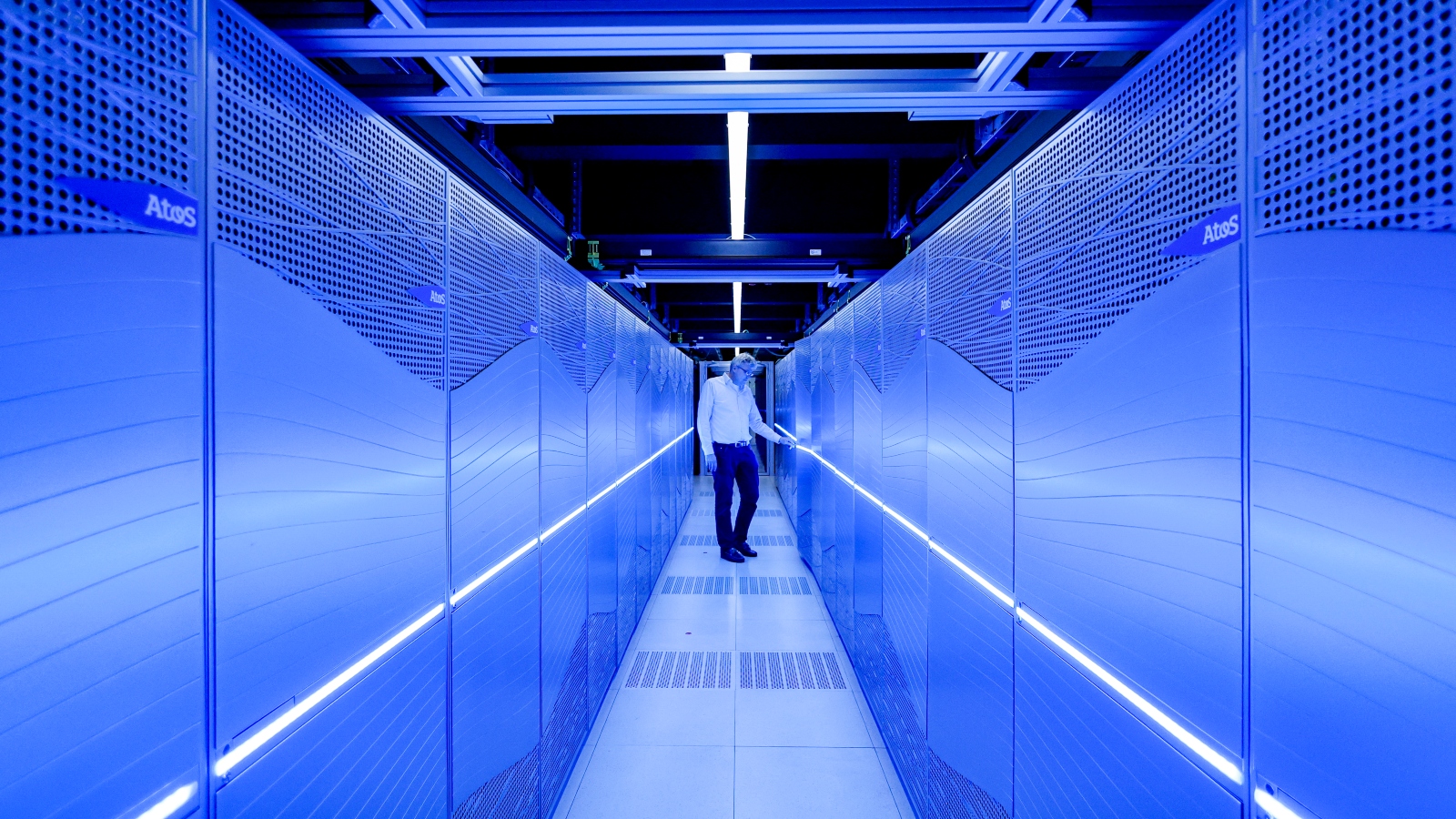
Inside a modern, five-story facility in the heart of Hamburg, Germany, technicians are carefully positioning heavy gray metal server racks alongside rows of identical hardware that already line the dim, chilled corridors of the German Climate Computing Center, known internationally as the DKRZ. As one of the premier global repositories for climate simulation data, the DKRZ is expanding its footprint to absorb an additional 5 petabytes of storage capacity, building upon a staggering existing archive of 254 petabytes. To contextualize the scale of this operation, a single petabyte of digital storage can comfortably house roughly 200 million high-resolution photographs.
Traditionally, the primary mission of the DKRZ has been to supply localized computing power and robust archiving services to the domestic German climate science community. However, these newly installed server racks have been designated for a vastly different, highly sensitive international operation: housing secure backup iterations of climate simulations generated thousands of miles away across the Atlantic Ocean. This urgent cross-border intervention is designed to ensure that critical scientific work performed by United States researchers ahead of the next major United Nations climate assessment—scheduled for publication in 2029—remains shielded from potential political interference, data purging, or ideological manipulation by the administration of U.S. President Donald Trump.
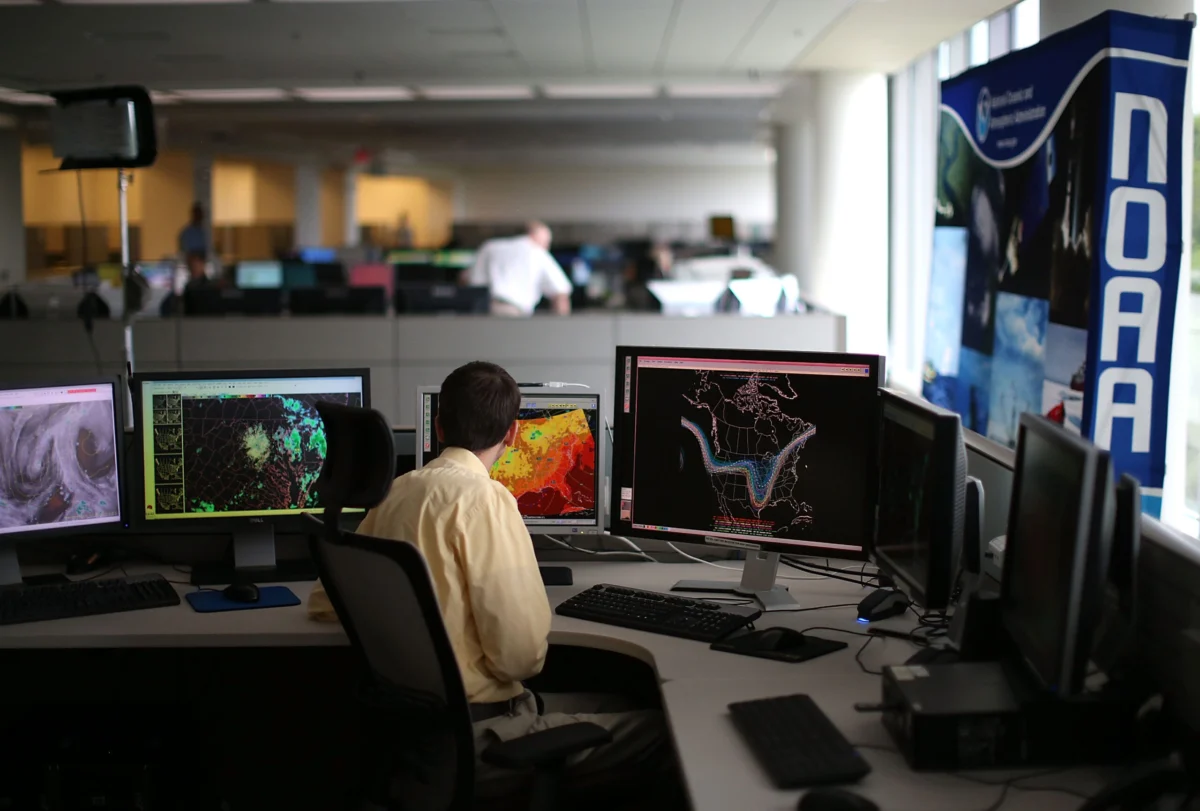
In recent months, the federal landscape for empirical research in the United States has shifted dramatically. The current U.S. administration has aggressively slashed funding for climate research, systematically buried peer-reviewed scientific reports, scrubbed references to anthropogenic global warming from dozens of federal government websites, and actively attempted to obstruct satellite infrastructure from collecting indispensable atmospheric and environmental data. For the international scientific community, these unprecedented policy maneuvers have triggered a profound erosion of trust, giving rise to an unprecedented data-rescue movement aimed at preserving public-domain scientific records before they vanish from primary servers.
A Precarious Foundation: Vulnerabilities in Modern Science
Historically, the baseline assumption of the global scientific enterprise was that publicly funded research data generated by premier superpowers like the United States would remain permanently accessible. Environmental datasets paid for by American taxpayers legally reside in the public domain. However, these vast digital collections do not exist as ethereal concepts; they are anchored to physical hard drives, magnetic tapes, and server farms located at specific institutions, universities, and federal agencies. They require continuous funding, dedicated engineering teams, and uninterrupted maintenance to remain viable.
This reliance on centralized physical infrastructure has historically left data vulnerable to natural disasters, technical failures, and human neglect. Yet, until recent political shifts, the prospect of domestic state actors deliberately dismantling or suppressing scientific repositories was considered an unimaginable scenario.
The fragility of this architecture was starkly illustrated in early April 2025, when researchers discovered that approximately 300 federally funded datasets curated over decades by NASA’s Socioeconomic Data and Applications Center (SEDAC) had been abruptly scrubbed. SEDAC had long served as a vital bridge between Earth-observation science and social research, seamlessly integrating remote sensing telemetry with socioeconomic metrics on human population growth, poverty distribution, and global infrastructure.
When the datasets vanished from active servers, a panicked coalition of international institutions scrambled to scrape and rescue the information, ultimately relocating the endangered files to the Harvard Dataverse Repository. Alex de Sherbinin, the former manager of SEDAC, noted that long-held assumptions regarding the permanent stewardship of public scientific data by U.S. agencies have proven entirely untenable in the face of the administration’s active hostility toward climate science.
Parallel vulnerabilities extend well beyond political shifts in Washington. Research institutions globally face rising threats from advanced cybercrime syndicates executing sophisticated ransomware attacks against academic networks in countries like Croatia and Germany. Meanwhile, active armed conflict—most notably Russia’s ongoing invasion of Ukraine—has directly targeted universities and laboratories, resulting in catastrophic losses of historical meteorological records and biodiversity databases. These compounding global threats have transformed data redundancy from an administrative afterthought into an urgent global security imperative.
The International Response and the German Data Resilience Initiative
Confronted with the potential loss of foundational American research, European scientific bodies have mobilized unprecedented financial and logistical resources. In late 2025, the German Research Foundation (DFG)—the nation’s principal science funding organization—established a dedicated $35 million funding initiative aimed at building secure digital havens for public-domain U.S. datasets.
The flagship endeavor hosted at the DKRZ is officially designated as CMIP7-ark, functioning explicitly as an infrastructural lifeboat for the U.S. contribution to the seventh assessment report by the United Nations Intergovernmental Panel on Climate Change (IPCC). Alongside CMIP7-ark, six auxiliary projects targeting distinct categories of endangered U.S. scientific datasets have been greenlit, operating under descriptive security titles such as SHIELD and SEND (Secure Endangered Earth Data).
Kathrin Winkler, a program manager at the German Research Foundation, summarized the rationale behind the initiative without diplomatic equivocation. Beyond the immediate threat of data deletion, Winkler pointed to a compounding risk that surviving data could be ideologically manipulated or selectively edited to distort empirical findings. By creating independent European mirrors of these archives, international scientists hope to insulate the global baseline of climate knowledge from national political volatility.
The friction between Washington and the international scientific apparatus deepened significantly in January 2025, when the U.S. government officially withdrew from both the IPCC and the United Nations Framework Convention on Climate Change (UNFCCC). Despite the official federal withdrawal, hundreds of American climate scientists continue to participate in global assessments as independent researchers. To ensure these scientists are not silenced or cut off from international collaboration, organizations like the American Geophysical Union (AGU) have stepped into the institutional vacuum.
When the U.S. government declined to officially nominate or dispatch American experts to IPCC proceedings in 2025, the AGU established the U.S. Academic Alliance for the IPCC. Operating independently of federal oversight, the alliance successfully nominated nearly 300 U.S. scientists to serve as authors and contributors for the upcoming UN climate assessment. Concurrently, the AGU launched its comprehensive Global Data Resilience Project during a high-level convening in Berlin in March 2026, bringing together nearly 100 top-tier Earth and space scientists from across North America and Europe.
Ben Zaitchik, president-elect of the AGU, addressed the Berlin gathering by declaring that the scientific community has reached a critical historical inflection point. According to Zaitchik, while initial emergency interventions focused heavily on data triage to maintain immediate accessibility, the community must now fundamentally reinvent how global research infrastructure is organized, distributed, and maintained for multi-generational viability.
Logistical Hurdles and the Mechanics of Cross-Border Rescue
Moving petabytes of complex climate simulation data across continents is a formidable technical and financial challenge. Transferring raw petabyte-scale datasets exclusively via standard internet infrastructure can take many months, while leasing dedicated, high-speed fiber-optic connections is often prohibitively expensive. Consequently, data archivists frequently rely on a time-tested, analog logistical method affectionately known within the IT community as the "sneakernet"—physically packing massive arrays of high-capacity hard drives and magnetic tapes into secure shipping containers and transporting them via commercial aircraft, cargo ships, or armored ground transport.
Furthermore, true data preservation requires more than simply hoarding raw numerical files. To ensure that archived data remains functional decades into the future, institutions must also capture and store the specialized software, metadata, and analytical code required to read, process, and interpret the information.
Frank Oliver Glöckner, a professor of Earth systems data science at the University of Bremen and director of the PANGAEA long-term data repository—jointly operated by the university and the Alfred Wegener Institute for Polar and Marine Research—emphasized the comprehensive nature of these new protocols. Glöckner’s team is actively preparing to integrate substantial datasets originating from a prominent U.S. climate research center slated for closure by federal budget cuts.
"We’re developing rigorous protocols and procedures for exchanging data, distributing multiple redundant copies globally, and ensuring that the data remains analytically viable indefinitely," Glöckner explained. In a surprising philosophical assessment, he added that the hostile posture of the Trump administration has ultimately done the global scientific community a service by brutally exposing the inherent dangers of centralizing vital research archives within a single national jurisdiction.
Other specialized European cultural and scientific institutions are similarly expanding their rescue operations. The Senckenberg Natural History Museum in Frankfurt has initiated data-salvage protocols to preserve vulnerable wildlife monitoring logs captured by trail cameras in active conflict zones like Ukraine, alongside fragile biodiversity datasets originating from war-torn Yemen.
Broader Implications and Future Vulnerabilities
The paradigm shift toward decentralized, cross-border data archiving carries profound implications for the future of international diplomacy, open-science standards, and technological resilience. Scientific data is no longer viewed merely as an academic resource for publishing papers; it serves as the foundational bedrock for global public safety, disaster preparedness, meteorological forecasting, agricultural planning, and industrial risk management. When governments move to restrict or dismantle scientific oversight, the destabilizing ripple effects are felt immediately across global markets, public health sectors, and municipal infrastructure planning.
Looking forward, computer scientists and data architects are advocating for fully integrated global digital pipelines that would allow researchers to instantly mirror critical data assets across multiple international nodes with the flick of a digital switch.
Yet, as Christopher Kadow of the DKRZ points out, the vulnerability of scientific infrastructure is not uniquely confined to the United States. The rise of nationalist and anti-science political movements across other Western democracies presents emerging domestic risks. Kadow noted that the Alternative for Germany (AfD)—an extreme far-right political party that routinely rejects established climate science—recently secured historic state-level election victories within Germany itself.
"We don’t know what political shifts may occur in Germany down the road," Kadow cautioned, emphasizing that no nation is completely insulated from ideological pressures. "We aren’t entirely protected from risks or developments like those currently unfolding in the United States."
As the international scientific community prepares for the release of the landmark 2029 United Nations climate assessment, the subterranean corridors of facilities like the DKRZ in Hamburg stand as testaments to a new era of scientific defense. By welding together redundant storage networks, establishing robust cross-border coalitions, and treating vital earth data as an endangered global heritage, scientists are actively engineering a resilient digital ark capable of weathering the storms of political turbulence and ideological suppression for decades to come.