
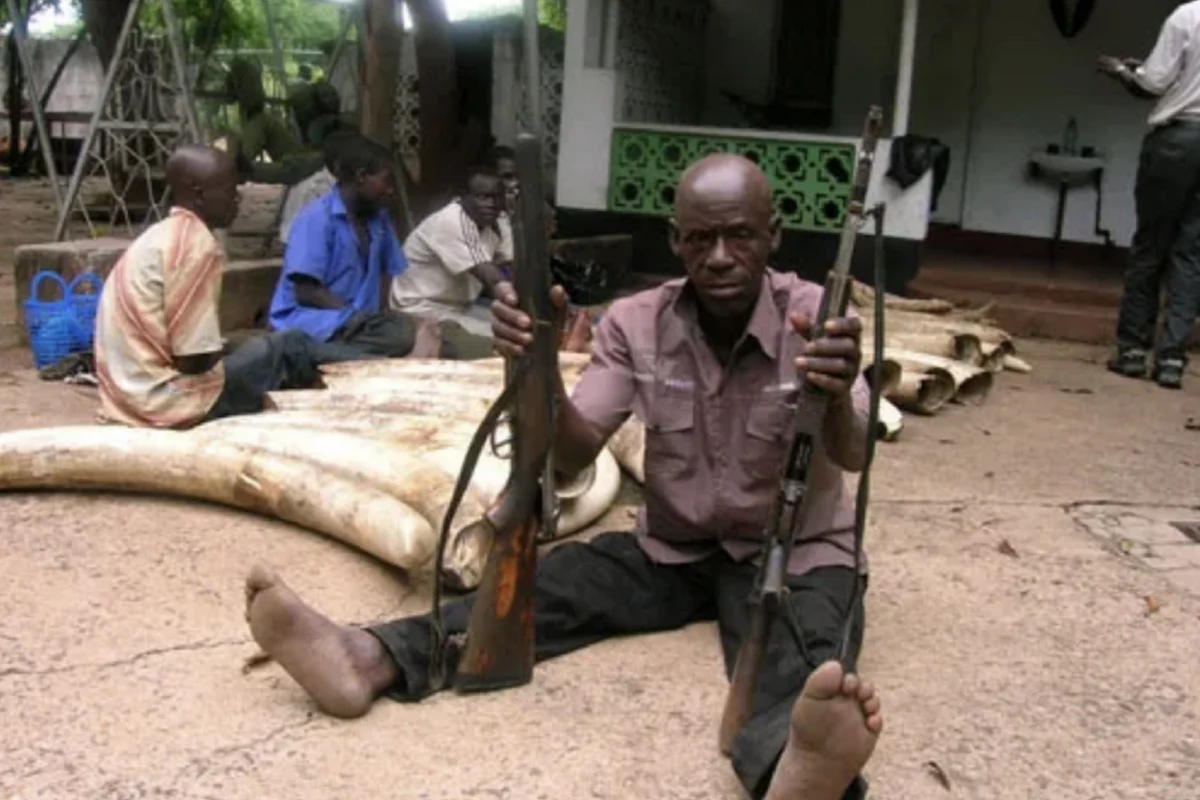
Deep within a Zambian correctional facility, an inmate sits reflecting on the intricate path that led to his incarceration. He recalls a seemingly ordinary encounter with an intermediary who supplied him with a mobile phone and a specific contact number. The instructions were clear: the intermediary’s uncle in the capital city of Lusaka was eager to purchase illicit ivory and pangolin scales. The promises dangled before him were transformative for a man facing economic hardship. He was told the financial compensation would finally allow him to construct a permanent home for his family and secure formal education for his children. Instead, the venture ended in arrest, prosecution, and a lengthy prison sentence for an elephant-related wildlife offense.
This individual’s journey from rural subsistence farming to the lower rungs of international trafficking syndicates highlights a systemic challenge facing conservationists and law enforcement agencies. Wildlife crime is rarely a monolith driven purely by malicious intent; rather, it is a complex, multi-tiered industry. The ecosystem of illicit trade spans from grassroots participants who opportunistically capture or harvest animals, to logistics middlemen, heavily armed poaching gangs, and high-level international crime syndicates ruling over lucrative black markets. While law enforcement agencies frequently apprehend and prosecute the lower-tier links in this chain, these individuals are easily replaceable. Consequently, removing street-level poachers does little to disrupt the overarching syndicates or halt the devastating depletion of protected species.

To better comprehend the root causes driving individuals toward grassroots wildlife offenses, a collaborative research initiative was launched by Wildlife Crime Prevention (WCP) Zambia in partnership with Copperbelt University. The resulting study surveyed more than 300 inmates incarcerated across dozens of correctional facilities throughout the country. By examining the demographic backgrounds, personal motivations, and socioeconomic pressures of convicted offenders, researchers aimed to answer a fundamental question: what drives ordinary citizens to take their first steps into wildlife crime, and how can society prevent them from reoffending upon their release?
Unpacking Zambia’s Geographic and Legal Landscape
Zambia occupies a precarious and central position within the global illegal wildlife trade. Sharing borders with eight different nations, the country functions simultaneously as a major source region for wildlife products and a critical transit corridor for international contraband moving across southern and central Africa. According to data compiled by researchers, individuals incarcerated for wildlife-related offenses constitute approximately 7% of Zambia’s total prison population—a significant figure that underscores the scale of judicial enforcement within the forestry and wildlife sectors.
The legal framework governing wildlife protection in Zambia is exceptionally stringent, reflecting the government’s commitment to curbing the eradication of iconic megafauna. Penalties vary widely depending on the nature of the infraction and the specific species involved. A first-time conviction for hunting within a protected area without a proper license typically yields a prison sentence ranging from three to 10 years. For more severe infractions—such as the unlawful possession of trophies from protected species, or crimes directly tied to elephants and rhinoceroses—penalties escalate dramatically, carrying mandatory prison terms of five to upwards of 20 years.

Despite these severe deterrents, the illegal trade persists, driven largely by systemic economic vulnerabilities in rural communities where alternative sources of income remain scarce.
Inside the Methodology: Surveying the Correctional System
To gather empirical data on these offenders, the research team secured approval from the Zambia Correctional Service to conduct comprehensive interviews inside 32 correctional facilities across the nation. Over the course of the study, researchers completed 302 interviews with incarcerated individuals, collecting detailed demographic information and posing open-ended questions designed to uncover the personal narratives behind their convictions.
The demographic profile of the respondents revealed distinct patterns regarding who populates Zambia’s wildlife-related prison population. Approximately half of the participants were middle-aged adults over the age of 41. Out of the 302 respondents, all but nine were men, highlighting a pronounced gender disparity in grassroots wildlife crime participation. An overwhelming majority of the inmates were first-time offenders within the formal justice system; however, roughly one-third candidly admitted to having engaged in prior undetected acts of wildlife crime before their eventual capture.

The offenses leading to incarceration were diverse, prompting researchers to categorize them into seven broad domains: bushmeat hunting, elephant poaching, pangolin trafficking, rhinoceros-related crimes, illegal fishing, firearm-related wildlife violations, and a general category encompassing miscellaneous infractions. Many inmates were convicted of multiple concurrent offenses. Among these categories, bushmeat-related infractions emerged as the most prevalent, closely followed by crimes involving highly protected and heavily trafficked species such as pangolins and elephants.
Opportunity, Subsistence, and the Absence of Safety Nets
The empirical findings of the study challenged simplistic assumptions about the motivations behind wildlife crime. When asked about the primary catalysts for their involvement, 40% of the respondents pointed directly to opportunity—such as stumbling upon an animal or receiving an unprompted offer from a buyer. For another 16%, the driving force was immediate existential need, including desperate circumstances involving food insecurity, housing deficits, or mounting medical bills.
Many of the incarcerated individuals identified as subsistence farmers whose livelihoods were at the mercy of unpredictable environmental conditions and climate variability. This volatility left them acutely vulnerable to sudden, catastrophic expenses without any cushion of financial resilience. As one anonymous study author noted, the rural landscape lacks a functional social safety net. Residents cannot easily walk into a commercial bank to secure a loan, and formal savings practices are rare. Unless an individual maintains ties to a wealthy relative residing in an urban center, viable economic opportunities are virtually nonexistent.

This dynamic was echoed in the personal accounts of the inmates themselves. One respondent recalled walking toward Mozambique to sell tomatoes when he serendipitously encountered a pangolin. Having heard local rumors that pangolins commanded high prices on the black market—and driven by a desire to build a permanent home for his family—he seized the moment, a decision that ultimately cost him his freedom.
Post-Release Realities and the Challenge of Recidivism
A critical component of the WCP Zambia study involved examining the future outlook of inmates approaching the end of their sentences, as well as evaluating their risk of reoffending. While the research team did not directly interrogate inmates about their absolute intentions to return to poaching, they explored post-release expectations, community reception, and the perceived availability of legal livelihoods.
Roughly one-third of the respondents explicitly stated a desire to avoid future involvement in wildlife crime. Conversely, about 5% expressed either a clear intent to reoffend or deep apprehension regarding the likelihood of being pulled back into the trade due to economic desperation. When asked about their biggest fears upon leaving prison, participants frequently cited the total absence of alternative income sources and the risk of reconnecting with former criminal associates. One inmate bluntly warned that releasing him back into society with zero economic prospects would almost certainly drive him straight back into illicit activities.

Interestingly, the study revealed contrasting perceptions regarding social stigma. Approximately 80% of the male respondents expressed little to no concern about facing societal stigma or rejection from their families and communities upon release. In contrast, roughly half of the female respondents reported anxiety regarding how they would be received back home, though the researchers cautioned that the small sample size of only nine women precluded establishing a definitive gender pattern.
Environmental crime experts have noted that these findings complicate conventional criminological models. Meredith Gore, a researcher at the University of Maryland who has extensively studied environmental crime in Zambia but was not directly involved in this study, emphasized that standard models of recidivism may not neatly apply to wildlife offenses. The absence of heavy social stigma for convicted men in certain rural communities, combined with desperate economic realities, creates an environment where the social deterrents usually associated with criminal incarceration are significantly diluted.
Bridging the Gap: Alternative Livelihoods and Holistic Intervention
Recognizing that punitive incarceration alone is insufficient to stem the tide of wildlife crime, conservation organizations and researchers are shifting their focus toward holistic, post-release reintegration strategies. Traditional vocational training inside correctional facilities—such as carpentry courses—often falls short if released individuals lack the financial capital to acquire necessary tools upon returning to their communities.

To address this gap, WCP Zambia recently completed a six-month pilot project designed to connect inmates with their families prior to release, allowing them to proactively plan their reintegration and identify sustainable, legal economic pathways. Led by wildlife criminologist and study lead author Emma Richards, the initiative aims to tailor interventions to the specific economic responsibilities and support systems of each individual. As part of this targeted outreach, WCP Zambia has provided released offenders with agricultural equipment, livestock resources, and foundational startup assistance for small retail grocery businesses.
Experts argue that these grassroots economic alternatives are vital for reducing repeat offenses. By listening directly to local communities and addressing their economic priorities, conservationists hope to build a buffer against the predatory recruitment tactics of international syndicates.
Ultimately, the landmark study serves as a foundational step in redefining how conservationists and criminologists approach wildlife crime in Zambia. By humanizing the individuals caught at the bottom of the trafficking chain—recognizing them not merely as hardened criminals, but as vulnerable participants navigating severe economic deprivation—stakeholders hope to foster more compassionate, data-driven, and effective solutions for both human communities and vulnerable wildlife populations alike.









Leave a Reply