
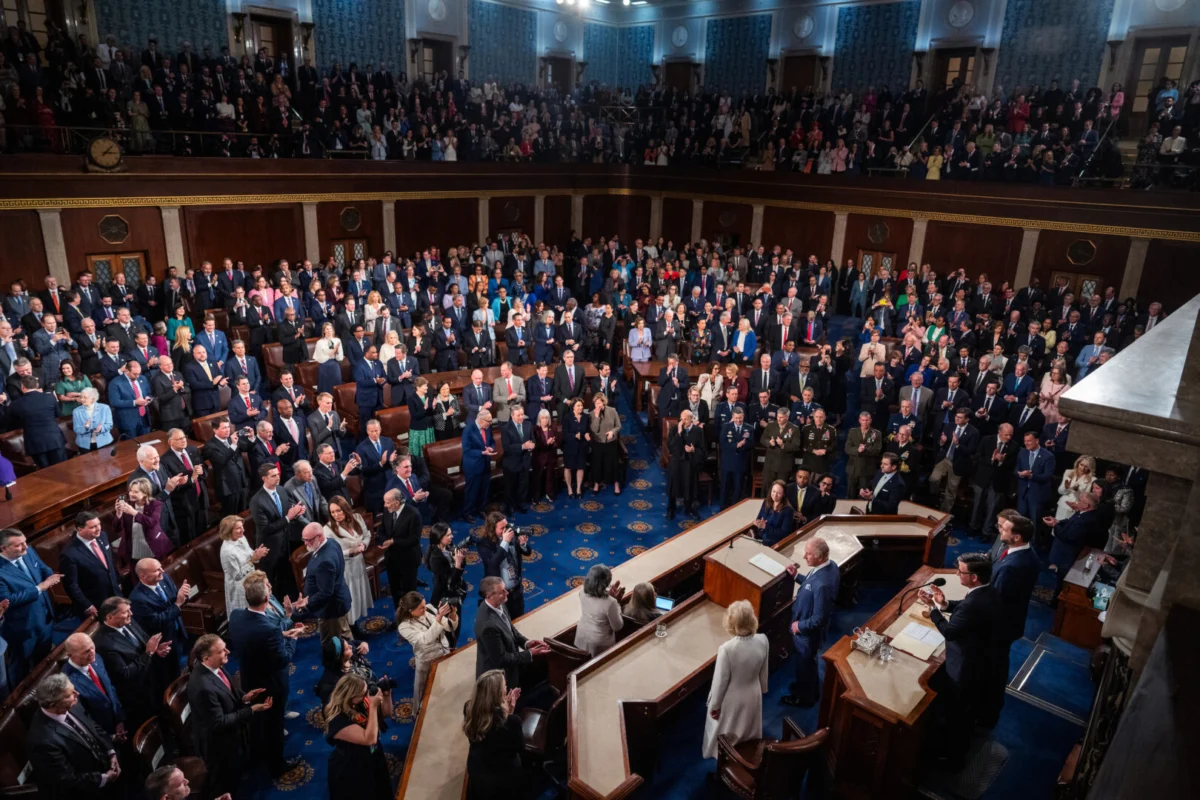
In a display of historical resonance and diplomatic grandeur, King Charles III delivered a landmark address to a joint session of the U.S. Congress, a rare honor extended to only a handful of foreign dignitaries and the second time a reigning British monarch has done so. The atmosphere within the House chamber was steeped in the expected pomp and circumstance, featuring a ceremonious entrance, multiple standing ovations from bipartisan lawmakers, and even the symbolic presence of a George Washington impersonator observing from the galleries. This momentous occasion, designed to celebrate the enduring "Special Relationship" between the United States and the United Kingdom and to commemorate America’s upcoming 250th anniversary of independence, projected an image of unity and shared values on the global stage. Yet, beneath the veneer of cross-Atlantic camaraderie, the reality of American domestic politics presented a stark contrast, as U.S. lawmakers found themselves embroiled in intense, behind-the-scenes squabbles over critical legislative priorities.
The Royal Visit: Pomp and Diplomacy
The King’s visit, part of a broader state tour, was meticulously choreographed to highlight the deep historical, cultural, and strategic ties between the two nations. Arriving in Washington D.C., King Charles III, accompanied by Queen Camilla, first met with President Joe Biden and First Lady Jill Biden at the White House, reinforcing the executive branch’s diplomatic engagement. The meeting served as a prelude to the evening’s State Dinner, a traditional hallmark of high-level international diplomacy.
His address to Congress was the undisputed centerpiece of the visit. Stepping into the hallowed halls of American democracy, King Charles III was met with an enthusiastic reception, a clear signal of the respect held for the British monarchy and the strategic importance of the Anglo-American alliance. In his remarks, the King eloquently praised Congress as a "citadel of democracy created to represent the voice of all American people to advance sacred rights and freedoms" and lauded the House chamber itself as a place "of debate and deliberation." His speech touched upon themes of shared heritage, democratic ideals, and collaborative efforts on global challenges.
He invoked the spirit of cooperation that has defined the alliance through various historical junctures, particularly highlighting the solidarity forged in the aftermath of the 9/11 terror attacks and the ongoing commitment to global security. A significant portion of his address was dedicated to current international crises, notably the war in Ukraine. "Today, Mr. Speaker, that same, unyielding resolve is needed for the defense of Ukraine and her most courageous people — in order to secure a truly just and lasting peace," Charles affirmed, underscoring the critical role of NATO and the "hardwired" defense, intelligence, and security ties between the U.S. and UK, relationships "measured not in years, but in decades." The King’s words resonated with a bipartisan commitment to supporting Ukraine against Russian aggression, a rare point of consensus in an otherwise fractured political landscape.
This visit carried significant historical weight. It marked only the second time a reigning British monarch had addressed a joint session of Congress, the first being his mother, Queen Elizabeth II, in 1991. Her address then also emphasized the enduring bond between the two nations following the Cold War. Before that, King George VI visited the U.S. in 1939, meeting with President Franklin D. Roosevelt and engaging with congressional leaders, a pivotal moment ahead of World War II. Charles III’s address continued this tradition, leveraging the symbolic power of the monarchy to reinforce diplomatic relationships at a time when global stability faces numerous challenges. The upcoming 250th anniversary of American independence in 2026 provided a poignant backdrop, allowing the King to acknowledge the historical journey from colonial ties to a robust, independent alliance, framing the past not as a source of division but as a foundation for a mature and vital partnership.
Undercurrents of Discord: The Legislative Battle
Despite the outward display of unity and reverence for the King, the U.S. Congress remained deeply entrenched in its own internal battles. In the hours immediately preceding and following Charles III’s address, the legislative machinery of the House of Representatives ground to a near halt, ensnared in contentious debates over a critical "rule" that would govern floor debate on a bundle of high-stakes measures. The legislative package included an ambitious bill to authorize essential agriculture programs (the Farm Bill), a crucial budget resolution aimed at ultimately funding parts of the Department of Homeland Security (DHS), and the contentious renewal of a key government surveillance authority set to expire imminently (Section 702 of the Foreign Intelligence Surveillance Act, or FISA).
The Rules Committee, typically the gatekeeper of House floor action, became the epicenter of this legislative gridlock. A Monday night hearing extended well into Tuesday afternoon and then evening, as lawmakers struggled to reach consensus on the terms under which these must-pass bills would be considered. The sheer volume and disparate nature of the legislation packaged together proved to be a significant sticking point. Rep. Anna Paulina Luna, R-Fla., vocalized the frustration of many, tweeting, "It is a mistake for @SpeakerJohnson to put FISA, the farm bill, and reconciliation all under the same rule. Separate them out." This sentiment reflected a broader dissatisfaction, particularly among conservative factions, who often seek individual votes on significant legislation to allow for more targeted amendments and clear accountability.
The legislative logjam had tangible consequences. A scheduled 4:30 p.m. House vote on the rule was repeatedly delayed, first pushed to Wednesday morning at 10:30 a.m., as the Rules Committee continued its marathon debate, sifting through amendment after amendment. The inability to pass a simple procedural rule highlighted the deep ideological rifts and the challenges of governing with a razor-thin majority.
Each of the bundled bills carried immense national importance:
- The Farm Bill: A massive, multi-year piece of legislation, typically renewed every five years, that dictates agricultural policy, food assistance programs (like SNAP), conservation efforts, and rural development. Its expiration or delay has profound implications for farmers, consumers, and the nation’s food security.
- DHS Funding/Budget Resolution: Part of the annual appropriations process, failure to pass a budget resolution or subsequent appropriations bills can lead to government shutdowns, disrupting critical services and creating economic uncertainty. Funding for the Department of Homeland Security is often contentious, intertwined with debates over border security and immigration policy.
- FISA Section 702: A powerful tool for U.S. intelligence agencies to collect foreign intelligence from non-U.S. persons located outside the United States. While deemed vital for national security by intelligence officials, it has faced increasing scrutiny and calls for reform from both privacy advocates and some conservatives due to concerns over potential "backdoor" searches of American citizens’ data and broader civil liberties implications. Its expiration would significantly hamper the intelligence community’s ability to monitor foreign adversaries.
The King’s address, meant to inspire and unify, momentarily paused the bickering. But as soon as Charles exited the chamber, the "citadel of democracy" reverted to its state of internal conflict, illustrating the profound challenges facing American governance.
A Fragile Majority and Fractured Governance
The legislative paralysis was a vivid demonstration of the precarious position of House Speaker Mike Johnson, R-La. Managing a slim and often unpredictable Republican majority, Johnson frequently finds himself navigating a treacherous path between the demands of his party’s conservative flank and the necessity of bipartisan cooperation to pass critical legislation. Rep. Aaron Bean, R-Fla., offered a pragmatic, if slightly resigned, perspective on the situation: "We knew [the King] was gonna be here for a long time before the speech. And in Congress, we have to chew gum and walk at the same time." He further elaborated on the inherent difficulties: "We’ve got 535 members that all have a different timeline. They have different thoughts. They have different likes, and so we have to consolidate them and work things out. When the King comes, who are we to say no to the King?" His comments underscored the complex reality of legislative management, where even high-profile diplomatic events must contend with the relentless demands of domestic policy.
The dysfunction was not confined to the House. Senate Majority Leader John Thune of South Dakota expressed "sympathy" for Speaker Johnson’s predicament, acknowledging the difficulties of managing such a narrow majority. "He’s got to manage his challenges there and we have to manage our challenges here," Thune stated, emphasizing the bicameral hurdles. He stressed the urgency of the pending legislation: "But one way or the other, we’ve got to get these agencies funded and of course, we’ve also got to make sure that FISA doesn’t go dark." Thune’s remarks highlighted the inter-chamber coordination challenges, admitting, "We’re trying as best we can to coordinate strategy with the House, but, you know, it’s just a unique situation. We’ve got very narrow margins and people with real strong opinions. It’s going to take, obviously, I think the heavy involvement of the White House to bust some of these things loose." This assessment pointed to the deep polarization that necessitates executive intervention to bridge congressional divides.
Democrats, observing the Republican struggles, found a moment for political commentary. Rep. Teresa Leger Fernández, D-N.M., posted on social media, suggesting a preference for the royal interlude: "Republicans want to listen to the King instead of govern? Given what they want to do, I kind of prefer listening to the King." This sarcastic jab underscored the partisan frustrations, with Democrats effectively signaling their willingness to let the Republican majority grapple with its internal divisions, especially on controversial measures like FISA, without offering an easy path forward.
Security Concerns and Heightened Tensions
Adding another layer of stress to an already chaotic legislative week was a recent security scare. Just days before the King’s visit, a reported incident involving a gunman attempting to breach the White House Correspondents’ Association dinner added to the heightened security posture around Washington D.C. While details of the incident itself were not widely publicized, its occurrence in proximity to a high-profile gathering underscored the constant threat landscape and the need for robust security protocols for major events.
In response, visible reminders of increased security measures were evident around the Capitol complex on the day of the King’s address. Bike rack fencing, a common sight during high-alert situations, was erected in the hours leading up to the royal visit, creating a physical perimeter and reinforcing the sense of vigilance. This was a stark reminder of the January 6th Capitol attack and the ongoing efforts to bolster security for lawmakers and public events.
King Charles III himself subtly acknowledged these underlying concerns in his address, delivering a message of resilience in the face of threats. "Whatever our differences, whatever disagreements we may have, we stand united in our commitment to uphold democracy, to protect all our people from harm, and to salute the courage of those who daily risk their lives in the service of our countries," he stated, vowing that "such acts of violence will never succeed." His words served as a powerful statement against extremism and a testament to the shared resolve of both nations to protect democratic institutions and their citizens. The security measures, though sometimes inconvenient, were a necessary backdrop to ensure the safety of all participants in this historic diplomatic event.
Historical Echoes and Modern Realities
The King’s address and the underlying political drama offered a compelling tableau of the enduring "Special Relationship" between the U.S. and UK, juxtaposed against the complex realities of modern American governance. The 250th anniversary of American independence, still a few years away, loomed as a significant milestone. The King’s visit served as an early, symbolic acknowledgment of this journey, celebrating not just the past but the current strength of an alliance that has navigated centuries of change. The themes of democracy, shared values, and international cooperation that Charles articulated were precisely what one would expect from such a high-level diplomatic engagement.
However, the rapid return to congressional infighting once the royal delegation departed underscored a fundamental tension. The image of a united, functioning democracy presented to the King, and by extension to the world, stood in stark contrast to the internal struggles that have increasingly characterized U.S. politics. The inability to swiftly pass foundational legislation like the Farm Bill or reauthorize critical national security tools like FISA, or even agree on a budget resolution, speaks to a deeper malaise within the American political system.
The "Special Relationship" itself, while robust, is not immune to these internal dynamics. A U.S. Congress perpetually on the brink of shutdown or unable to pass essential bills can impact America’s global standing and its ability to act decisively on the world stage, potentially affecting its allies. The calls for White House intervention from Senate leadership further illustrate the extent of the congressional gridlock, signaling a need for executive leadership to break legislative stalemates.
Reactions and The Road Ahead
Reactions to the legislative delays were predictably divided. Beyond the direct quotes, the broader implications resonated with various factions. Hardline conservatives, often wary of omnibus bills and demanding specific reforms to FISA, likely saw the delay as an opportunity to push for their priorities, even if it meant slowing down the legislative process. Moderate Republicans, keen to demonstrate governing competency, would have been frustrated by the inability to move forward, understanding the political cost of inaction. Democrats, while critical of Republican disunity, also understood the strategic advantage of observing their opponents struggle, particularly on issues like FISA where they often have their own concerns about government overreach.
The legislative battles were not merely procedural; they had significant implications for national security, economic stability, and civil liberties. The looming expiration of FISA Section 702, in particular, presented a critical deadline, threatening to "go dark" and potentially compromise intelligence capabilities if not reauthorized or reformed in time. The Farm Bill’s delay would create uncertainty for agricultural sectors already facing economic pressures.
The immediate road ahead for Congress was clear: resolve the procedural deadlock, pass the rule, and then tackle the substantive debates on the bundled bills. The King’s visit, while a diplomatic triumph, served as a poignant backdrop, highlighting the urgent need for American lawmakers to find common ground and demonstrate the very "debate and deliberation" that King Charles III praised, rather than succumbing to perpetual bickering. The challenge remained for the U.S. political system to live up to the ideals articulated by its royal guest, especially as it prepares to celebrate a quarter-millennium of its own democratic experiment.
Valerie Yurk contributed to this report.







Leave a Reply