
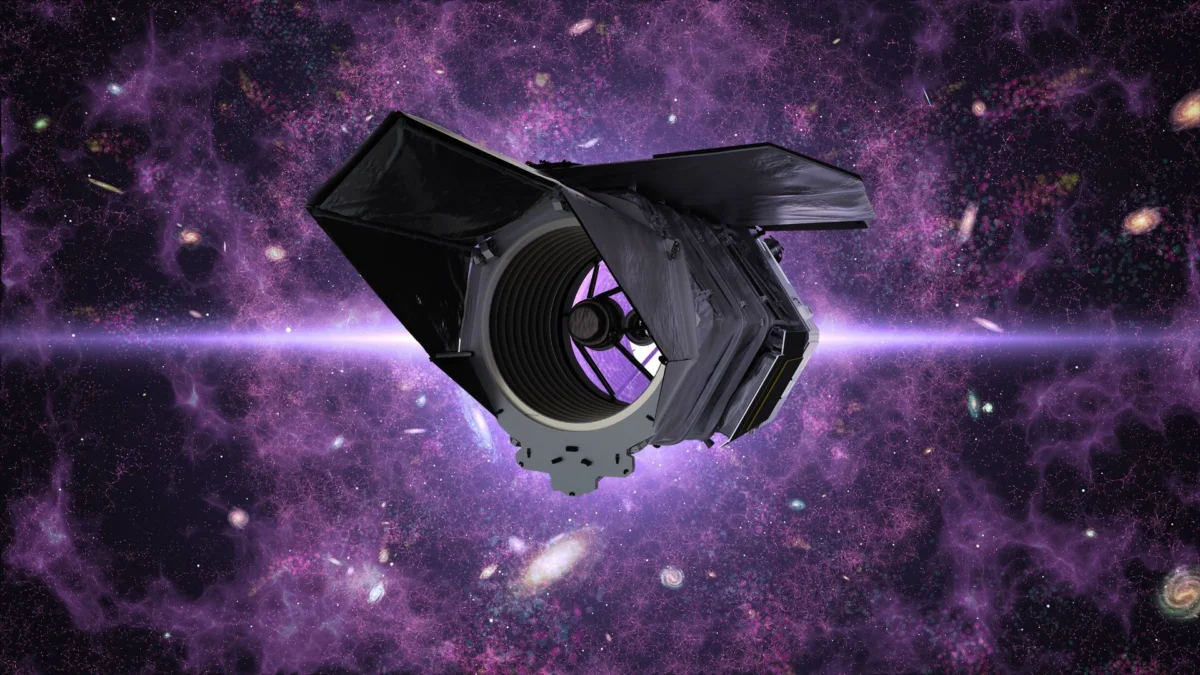
NASA is entering a transformative new era of astrophysical exploration as engineers and scientists put the final touches on the Nancy Grace Roman Space Telescope. Formerly known as the Wide-Field Infrared Survey Telescope (WFIRST), this next-generation observatory is designed to solve some of the greatest mysteries in modern astronomy. With a field of view 100 times greater than that of the Hubble Space Telescope’s infrared instrument, the Roman Space Telescope will peer deep into the cosmos to map billions of stars, hunt for distant exoplanets, and gather unprecedented data on the nature of dark energy and dark matter.
Scheduled for launch by May 2027, the spacecraft represents a monumental leap forward in our technological capacity to image and survey the universe. As ground teams conduct rigorous testing and integration phases, the international scientific community eagerly anticipates the observational power this observatory will bring to the table. By combining wide-angle imaging with deep spectroscopic surveys, NASA aims to answer foundational questions about the evolution and eventual fate of our expanding universe.
Main Facts and Mission Architecture
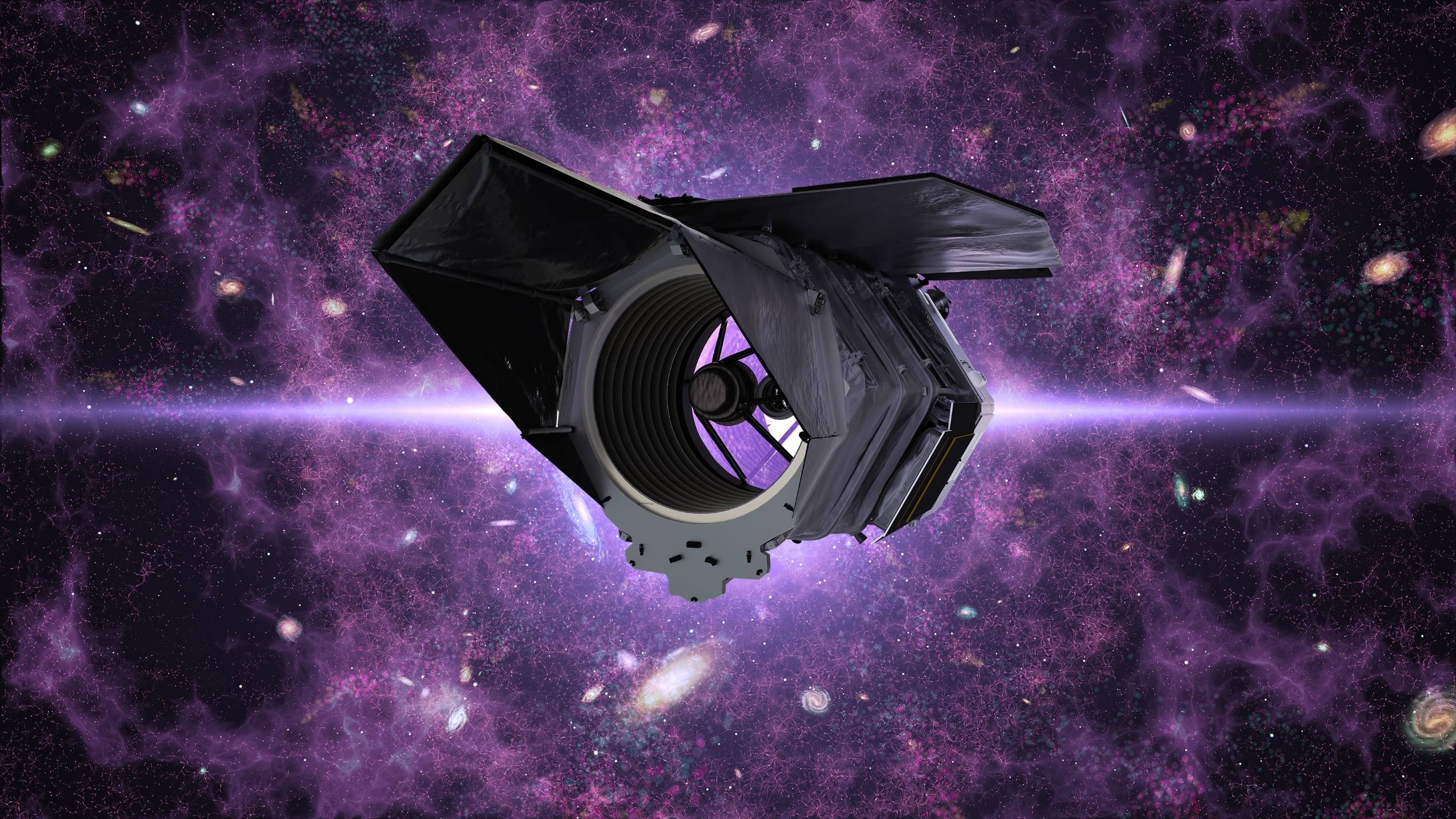
Named in honor of Nancy Grace Roman, NASA’s first Chief of Astronomer who is widely celebrated as the "Mother of Hubble," the space telescope is engineered to tackle cosmological puzzles that have stumped researchers for decades. The spacecraft features a 2.4-meter primary mirror—the exact same size as Hubble’s mirror—which grants it remarkable light-gathering capabilities. However, its primary instrument, the Wide Field Instrument, is equipped with a 300-megapixel sensor array that provides a panoramic view of the night sky, allowing researchers to capture vast expanses of space in a single exposure.
In addition to the Wide Field Instrument, the telescope carries a technological demonstration instrument: a Coronagraphic Instrument. This cutting-edge coronagraph is designed to block the blinding glare of host stars so that astronomers can directly image faint exoplanets orbiting nearby stars. While coronagraphs have been used on ground-based telescopes and past space missions, Roman’s version utilizes advanced masks, prisms, and deformable mirrors to achieve contrast levels thousands of times sharper than anything previously deployed in space. This capability will serve as a crucial stepping stone toward the future direct imaging of Earth-like planets.
Chronology and Development Timeline
The path to the Roman Space Telescope began long before its formal authorization. The mission traces its roots back to the 2010 Decadal Survey in Astronomy and Astrophysics, a comprehensive report compiled by the National Research Council that outlines the top scientific priorities for the upcoming decade. The survey recommended a wide-field infrared mission to study dark energy, exoplanets, and infrared astrophysics.
In 2016, NASA officially established the mission, then called WFIRST, moving it into the preliminary design phase. A significant milestone occurred in 2020 when the agency officially renamed the observatory after Dr. Nancy Grace Roman, recognizing her instrumental role in establishing NASA’s space astronomy program and championing the development of Hubble.
Despite logistical challenges and supply chain disruptions during the global COVID-19 pandemic, the project steadily advanced through its critical design reviews. By 2021 and 2022, engineers began assembling the hardware components, including the massive structural elements and the complex optical systems. In the years following, the focus shifted to rigorous environmental testing—subjecting the telescope components to extreme vibrations, thermal vacuum chambers, and acoustic testing to ensure they can withstand the violent forces of a rocket launch and the harsh, freezing environment of deep space. As the integration phase wraps up, NASA remains on track for a launch window that opens no later than May 2027.
Supporting Data and Technical Specifications
The sheer scale of the data and imagery expected from the Nancy Grace Roman Space Telescope will dwarf anything produced by its predecessors. During its primary five-year mission, the telescope is expected to catalog over a billion stars in the Milky Way and discover tens of thousands of new exoplanets using a technique known as gravitational microlensing.
Gravitational microlensing occurs when a foreground star or planet passes in front of a background star, bending the background light through its gravity and acting as a natural magnifying glass. While traditional methods like the transit method are biased toward finding large planets close to their host stars, microlensing allows astronomers to detect small, cold planets located far away from their host stars—similar to the outer planets of our own solar system.
Furthermore, Roman’s cosmological surveys will measure the shapes and distances of hundreds of millions of galaxies. By analyzing how the light from these distant galaxies has been warped by intervening matter over billions of years, scientists can construct a three-dimensional map of the distribution of dark matter throughout the universe. This mapping will provide critical constraints on the equations governing dark energy, the mysterious pressure driving the accelerated expansion of the cosmos.
Official Responses and Scientific Community Reactions
The astrophysics community has expressed overwhelming support for the mission, viewing it as the ideal complement to other flagship observatories like the James Webb Space Telescope (JWST) and the Euclid space telescope operated by the European Space Agency (ESA).
"The Nancy Grace Roman Space Telescope is designed to perform statistical astronomy on a grand scale," said a senior NASA astrophysicist involved with the project. "While JWST excels at examining individual, highly specific targets in exquisite detail with unprecedented infrared sensitivity, Roman will survey large swaths of the sky with incredible depth. It gives us the big picture, allowing us to find the rare and unusual objects that Webb can later study up close."
International partners have also lauded the mission. Collaboration agreements involve contributions from space agencies in Europe, Japan, and Canada, highlighting the global nature of modern cosmological research. These partnerships will ensure that the vast influx of data—projected to be in the petabyte range—will be processed, archived, and distributed efficiently to researchers worldwide.
Broader Impact and Implications for Astrophysics
The implications of the Roman Space Telescope extend far beyond the immediate mission goals of mapping dark energy and discovering exoplanets. The vast public archives generated by the survey will serve as a treasure trove for astronomers for decades to come, enabling serendipitous discoveries ranging from distant quasars and primordial galaxies to rogue planets drifting freely through interstellar space without a host star.
Moreover, the technology developed for the Roman mission paves the way for future flagship observatories. The lessons learned from engineering the Wide Field Instrument and the high-contrast coronagraph will directly inform the Habitable Worlds Observatory, a proposed concept aimed at directly searching for signs of life on Earth-like exoplanets in the 2040s.
As the launch date draws closer, the space science community stands on the precipice of a new golden age of discovery. By bridging the gap between wide-field surveys and deep-space imaging, the Nancy Grace Roman Space Telescope is poised to rewrite our understanding of the cosmos, shedding light on the invisible forces that shape our universe and bringing humanity one step closer to answering the enduring question: Are we alone in the universe?








Leave a Reply