
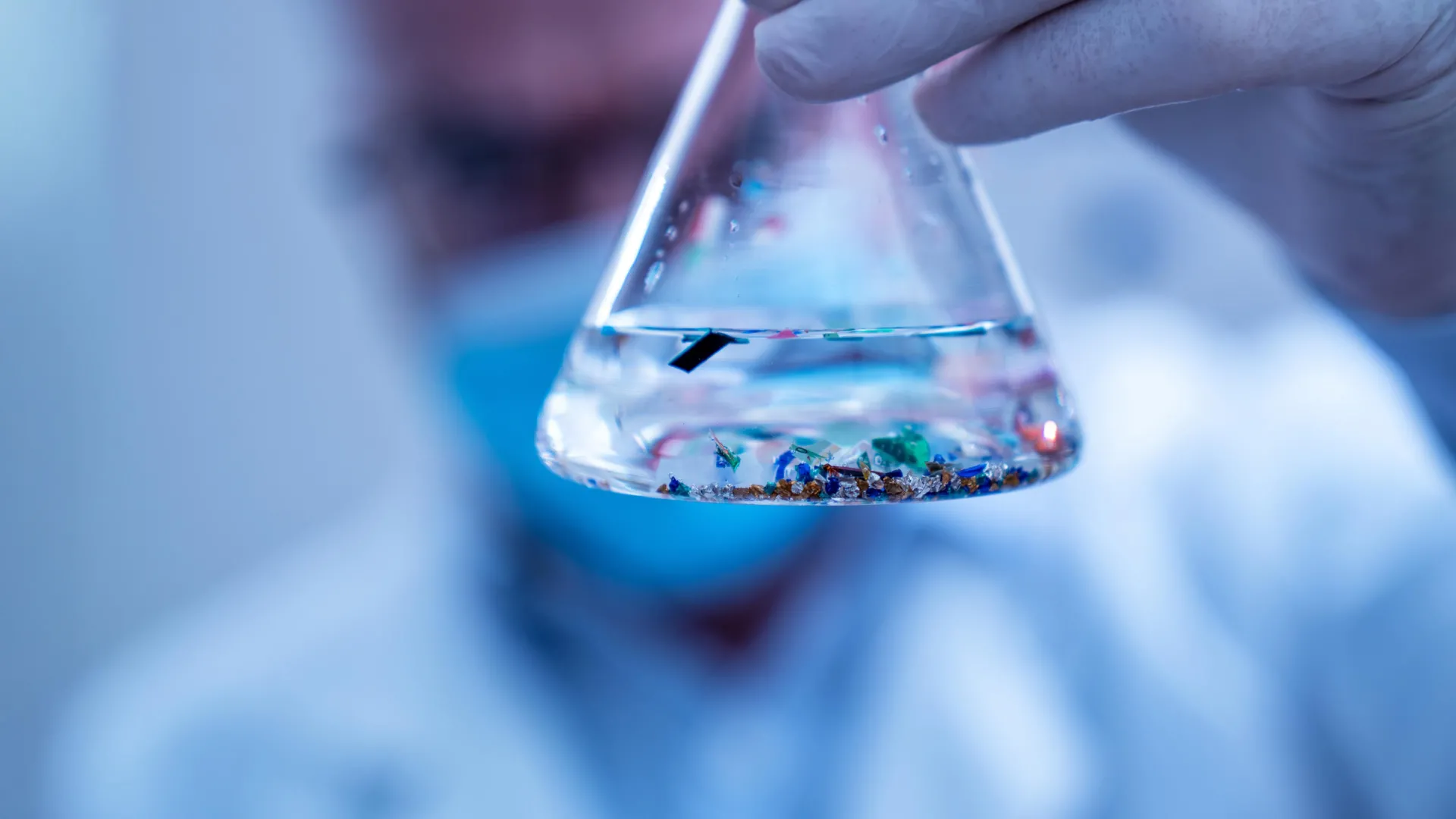
In a significant advancement for circular economy initiatives, researchers at the Department of Energy’s Oak Ridge National Laboratory (ORNL) have pioneered a novel chemical process capable of transforming polyethylene—the most ubiquitous plastic on the planet—into gasoline- and diesel-like fuels. By utilizing molten salts as both a reaction medium and a catalyst, the team has successfully demonstrated a pathway to upcycle low-value plastic waste into high-value liquid energy, achieving results that could fundamentally alter the economics of plastic recycling.
Polyethylene, which constitutes the primary material in everything from single-use shopping bags to heavy-duty industrial cutting boards, is notoriously difficult to process due to its chemical stability and low degradation rate in natural environments. As global plastic waste continues to accumulate in landfills and oceans, the development of scalable, efficient, and cost-effective recycling technologies has become a top priority for materials scientists worldwide.
The Chemistry of Molten Salt Catalysis
The research, published in the Journal of the American Chemical Society, centers on the use of molten salts containing aluminum chloride. Unlike conventional catalytic processes that rely on noble metals—such as platinum or palladium—which are prohibitively expensive for large-scale waste processing, this method employs readily available, low-cost inorganic salts.
The chemical mechanism functions by creating highly acidic catalytic sites. Through the use of advanced diagnostic tools, including soft X-ray spectroscopy and nuclear magnetic resonance (NMR), the team identified that charged aluminum atoms bond with three other atoms to form these sites. These sites act like molecular "scissors," systematically attacking the long, stubborn hydrocarbon chains that characterize polyethylene.
When these polymer chains encounter the acidic sites, they are cleaved into smaller hydrocarbon molecules. The team discovered that the structural composition of the starting polymer dictates the final output: simpler chains yield gasoline-like compounds, while more complex, branched polymer structures are more likely to generate diesel-like fuels. In laboratory settings, the team achieved a gasoline yield of approximately 60 percent under relatively mild reaction conditions.
A History of Molten Salt Innovation at ORNL
The application of molten salts at ORNL is not a new endeavor but rather a continuation of a multi-generational legacy of chemical research. During the 1960s, the laboratory made headlines with the Molten Salt Reactor Experiment (MSRE), which explored the use of molten salt mixtures as both nuclear fuel and coolant.
Decades later, Corporate Fellow Sheng Dai, who serves as the section head for separations and polymer chemistry at ORNL and the University of Tennessee, Knoxville (UTK), proposed leveraging the unique thermal stability and chemical properties of molten salts for a vastly different application: the chemical upcycling of plastic waste.
This pivot represents a strategic shift in how national laboratories are addressing the climate and waste crises. By repurposing existing expertise in inorganic chemistry and reactor physics, the ORNL team has bypassed the need for expensive, energy-intensive infrastructure typically associated with plastic pyrolysis.
Comparative Analysis: Pyrolysis vs. Molten Salt Processing
Traditional approaches to plastic-to-fuel conversion are almost exclusively rooted in pyrolysis, a thermal degradation process that requires temperatures ranging from 450 to 500 degrees Celsius to break down polymer chains. These extreme temperatures demand significant energy input, increasing the operational cost and the carbon footprint of the resulting fuel.
The ORNL method operates at temperatures below 200 degrees Celsius, a threshold comparable to a standard domestic kitchen oven. This temperature reduction is revolutionary for several reasons:
- Reduced Energy Expenditure: Lowering the thermal threshold significantly decreases the net energy required to drive the chemical reaction.
- Elimination of Auxiliary Reagents: The process does not require noble-metal catalysts, organic solvents, or external hydrogen, all of which are standard requirements in conventional industrial chemical synthesis.
- Streamlined Scaling: By removing the need for a separate chemical initiator—a compound usually required to "kick off" the reaction—the system becomes intrinsically more stable and easier to scale for industrial applications.
Investigating the Reaction Mechanism
To confirm the efficacy of the process, the researchers employed a suite of cutting-edge analytical techniques. The interdisciplinary team, which included postdoctoral researcher Liqi Qiu and staff scientist Zhenzhen Yang, conducted a forensic-level investigation into the reaction’s atomic behavior.
Neutron scattering, performed at ORNL’s Spallation Neutron Source, allowed the team to track hydrogen atoms, which are abundant in polymer chains. By tagging carbon ions with deuterium, researchers were able to trace the movement of atoms through the reaction as the polymers broke down. Meanwhile, researchers at the Advanced Light Source at Lawrence Berkeley National Laboratory utilized soft X-rays to observe the electronic interactions between aluminum and the polymer, confirming the presence of aromatic ring intermediates that act as a bridge for the catalytic activity.
Computational simulations, managed by Bobby Sumpter of the Center for Nanophase Materials Sciences, provided the final piece of the puzzle, visualizing the energy landscape of the reaction and confirming the stability of the intermediate states that allow the process to proceed so efficiently.
Economic and Strategic Implications
The potential implications for U.S. energy security and industrial competitiveness are substantial. By turning a liability—plastic waste—into a commodity, this technology could provide a new revenue stream for waste management facilities and manufacturers alike.
"Polymer source material is abundantly available from consumer waste, and our catalyst system is very cheap," noted Liqi Qiu. "This advance may be promising for industry because it removes the high barriers to entry that have previously hampered the commercialization of plastic-to-fuel technologies."
However, the team acknowledges that moving from laboratory-scale experiments to industrial-scale production remains a hurdle. A primary challenge identified in the study is the hygroscopic nature of the aluminum-based molten salts, which tend to absorb moisture from the environment, potentially destabilizing the catalyst over long-term use. The current focus of the research team is to develop methods for confining these salts, perhaps using carbon-based materials or halogens, to improve their longevity and ease of separation.
Future Outlook
The broader impact of this research extends beyond the production of gasoline. It represents a paradigm shift in the chemical industry’s approach to materials science. By focusing on the "atom-by-atom" manipulation of waste, scientists are moving closer to a truly circular economy where the end-of-life for a plastic product is simply the beginning of its next life as a high-value industrial chemical.
While the research team continues to refine the stability of the molten salt catalysts, the scientific community has lauded the work as a masterclass in interdisciplinary collaboration. By synthesizing expertise from polymer science, neutron scattering, computational physics, and inorganic chemistry, ORNL has demonstrated that the solutions to the world’s most pressing environmental challenges may already exist within the fundamental laws of chemistry—provided we have the tools to observe and manipulate them.
As the patent process moves forward, the researchers remain focused on optimizing the system to ensure that the environmental benefits of the process remain robust. If the technology can be successfully scaled, it may provide the missing link in the global effort to mitigate the impacts of plastic pollution while simultaneously supplementing the demand for high-value liquid fuels. For now, the successful demonstration of this low-temperature, low-cost conversion stands as one of the most promising developments in sustainable chemistry in the current decade.










Leave a Reply