
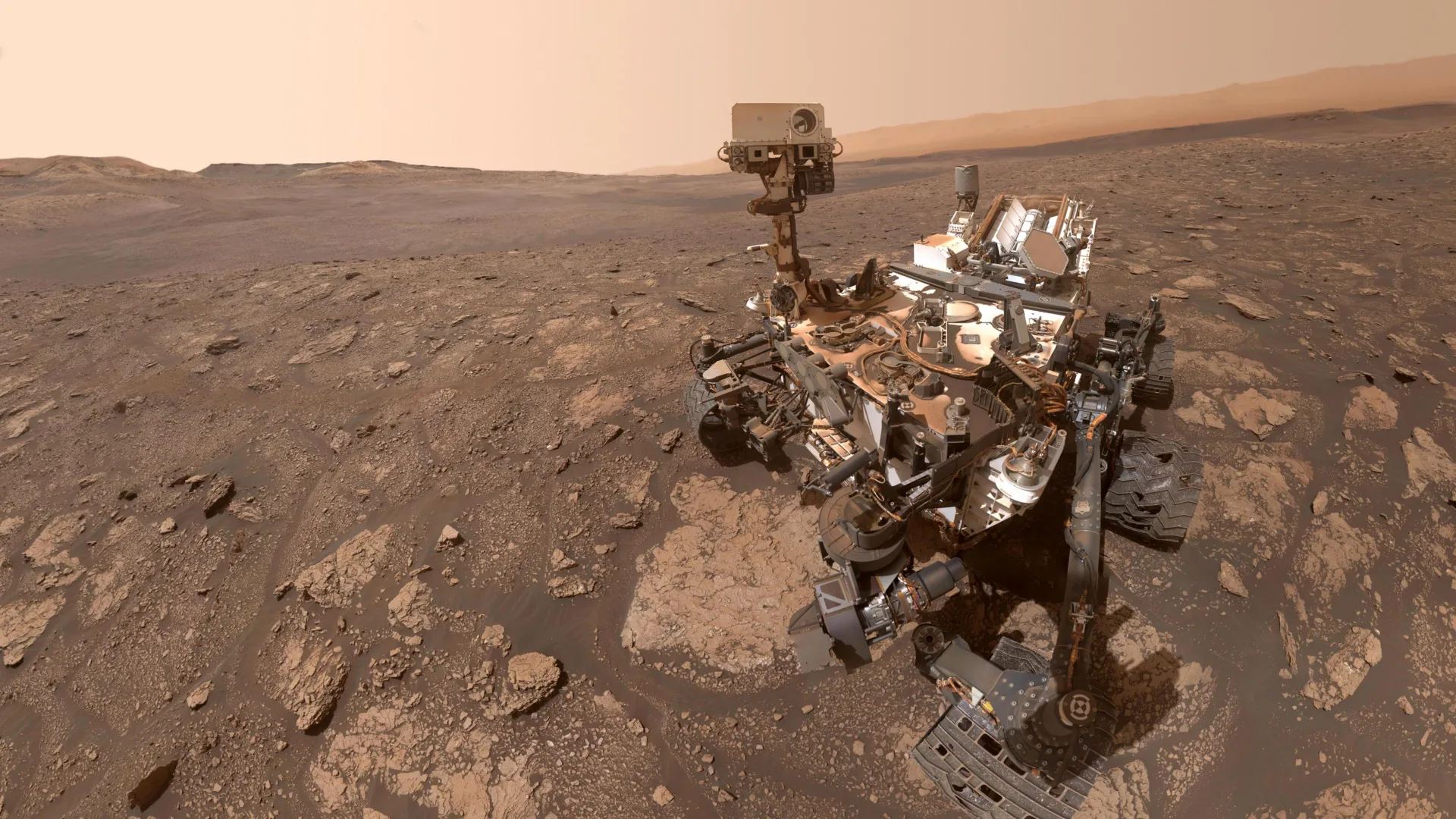
The search for life beyond Earth has taken a significant leap forward with NASA’s Curiosity rover identifying a diverse array of organic molecules on Mars, including compounds considered foundational to the origin of life on our own planet. This groundbreaking discovery, achieved through a sophisticated chemical experiment conducted on another celestial body for the first time, strongly suggests that the Martian surface possesses the remarkable ability to preserve molecular evidence of ancient biological activity. While these findings are immensely promising, scientists caution that the current experiment cannot definitively distinguish between organic compounds originating from past Martian life, naturally occurring geological processes, or extraterrestrial delivery via meteorites. To establish any conclusive evidence of ancient Martian life, the retrieval of Martian rock samples to Earth for meticulous laboratory analysis remains the ultimate goal.
A Landmark Experiment Reveals Preserved Martian Chemistry
The pioneering research was spearheaded by Dr. Amy Williams, a professor of geological sciences at the University of Florida and an integral member of both the Curiosity and Perseverance rover science teams. Curiosity, which touched down on Mars in August 2012, was tasked with investigating the planet’s past environmental conditions to determine its suitability for microbial life. Its companion, the Perseverance rover, landed in 2021 with a primary mission to actively seek direct signs of ancient life.
"We believe we are observing organic matter that has been preserved on Mars for an astonishing 3.5 billion years," stated Dr. Williams, who played a crucial role in the development of the innovative experiment. "Having concrete evidence that ancient organic matter can be preserved is incredibly valuable, as it directly informs our assessment of an environment’s habitability. Furthermore, if our objective is to locate evidence of life in the form of preserved organic carbon, this research unequivocally demonstrates its possibility."
The comprehensive findings from this historic experiment were published on April 21st in the prestigious scientific journal Nature Communications, marking a significant milestone in astrobiological research.
Unveiling Key Molecular Discoveries, Including DNA-Like Structures
The intricate chemical analysis performed by Curiosity yielded the identification of over 20 distinct chemical compounds. Among these remarkable discoveries was a nitrogen-containing molecule exhibiting a structural resemblance to compounds essential for the formation of DNA – a molecular signature never before detected on the Martian surface. The rover also identified benzothiophene, a larger, sulfur-containing molecule characterized by two fused rings. This type of molecule is commonly found to be delivered to planets through meteorite impacts.
"The very same chemical constituents that rained down upon Mars from meteorites are precisely those that fell upon Earth, and it is highly probable that these delivered the fundamental building blocks for the emergence of life as we understand it on our own planet," Dr. Williams explained, underscoring the universal nature of these chemical precursors.
Gale Crater’s Clay Minerals as Guardians of Organic Heritage
Curiosity, meticulously operated by NASA’s Jet Propulsion Laboratory (JPL) in Southern California, has been diligently exploring Gale Crater since its arrival in August 2012. This ancient region is believed to have once harbored a substantial lake, providing a potentially habitable environment billions of years ago. The crucial experiment that yielded these findings was conducted in 2020 within the Glen Torridon region of Gale Crater. This area is particularly rich in clay minerals, which are known to have formed in the presence of water. These clay minerals possess a unique geological property: they are exceptionally adept at trapping and preserving organic material over vast timescales, rendering them ideal locations for investigations aimed at uncovering signs of past life.
The preservation capabilities of these clay minerals are a critical factor in the significance of this discovery. Studies on Earth have shown that certain clay minerals can protect organic molecules from degradation caused by radiation and oxidation, thereby extending their lifespan significantly. The presence of such well-preserved organics on Mars suggests that similar protective mechanisms may have been at play on the Red Planet.
The SAM Instrument and the Power of TMAH Chemical Analysis
The sophisticated analysis was made possible by the Sample Analysis at Mars (SAM) instrument suite, a suite of advanced laboratory instruments aboard the Curiosity rover. Dr. Jennifer Eigenbrode, an astrobiologist at NASA’s Goddard Space Flight Center and a co-author of the study, plays a leading role in managing the SAM instrument team. SAM has been instrumental in generating many of the mission’s most significant findings concerning Mars’s chemistry, atmosphere, and its potential to support life, both past and present.
In this particular experiment, scientists employed a chemical reagent known as tetramethylammonium hydroxide (TMAH) to facilitate the breakdown of larger organic molecules into smaller, more manageable fragments. These fragments could then be meticulously examined by SAM’s onboard gas chromatograph and mass spectrometer. Given that Curiosity has a limited supply of TMAH – approximately two cups – the research team had to meticulously plan the experiment, carefully selecting the most promising sampling sites to maximize the scientific return from this precious resource.
The use of TMAH is a crucial innovation. It acts as a solvent and a chemical agent that can liberate organic compounds that may be bound within the Martian rock matrix. Without such a method, many of these organic molecules might remain inaccessible to the rover’s analytical instruments, hidden within the mineral structure. This technique represents a significant advancement in in-situ analysis capabilities for extraterrestrial exploration.
Implications for Future Mars and Titan Missions
The resounding success of this TMAH-based experimental approach is already profoundly influencing the trajectory of future planetary exploration missions. Upcoming endeavors, including the European Space Agency’s Rosalind Franklin rover, slated for a future Mars landing, and NASA’s ambitious Dragonfly mission to Saturn’s moon Titan, are designed to incorporate similar TMAH-based experiments. These future missions will leverage this proven methodology to conduct even more comprehensive searches for organic compounds in diverse and potentially life-bearing environments beyond Earth.
"We have now established that complex organic molecules of significant size are preserved within the shallow subsurface of Mars, and this holds immense promise for the preservation of large, complex organics that could serve as definitive biomarkers for life," Dr. Williams emphasized, highlighting the broader implications for the search for extraterrestrial life.
Broader Context: The Long Road to Martian Life Detection
The discovery of organic molecules on Mars is not entirely unprecedented. Previous missions, including NASA’s Viking landers in the 1970s, detected chemical signatures that could have been interpreted as organic. However, the Viking results were ambiguous and could also be explained by non-biological processes. More recently, the Curiosity rover itself has identified simpler organic molecules, such as thiophenes, benzene, and toluene, in Martian rocks.
What sets this latest discovery apart is the variety and complexity of the organic molecules identified, particularly the nitrogen-containing compound resembling DNA precursors. Furthermore, the successful execution of a chemical extraction and analysis technique on Mars provides a crucial validation of methods that will be essential for future, more definitive life-detection missions.
The long-standing question of whether life ever existed on Mars has driven decades of exploration. Early missions focused on determining if Mars had liquid water, a fundamental requirement for life as we know it. The discovery of ancient riverbeds, lakebeds, and minerals that form in water has confirmed that Mars was once a much wetter and potentially more habitable world. Curiosity’s exploration of Gale Crater, a former lakebed, and Perseverance’s search in Jezero Crater, another ancient lake delta, are direct consequences of this understanding.
The identification of organic molecules, coupled with evidence of past habitability, strengthens the case for a detailed investigation into the possibility of past Martian life. However, the challenge remains: distinguishing between biosignatures (evidence of life) and abiotic organic matter (organic matter formed by non-biological processes). Meteorites, for example, can deliver complex organic molecules to planetary surfaces. Geochemical reactions within the planet itself can also produce organic compounds.
The Scientific Process: From Detection to Confirmation
The current findings represent a critical step in the scientific process of searching for life on Mars. The identification of preserved organic molecules, including those that could serve as building blocks for life, is a significant achievement. However, as Dr. Williams and her colleagues rightly point out, further steps are necessary for definitive confirmation of past life.
This next phase will likely involve sample return missions, where carefully selected Martian rock and soil samples are brought back to Earth for analysis in sophisticated laboratories. On Earth, scientists have access to a far wider array of advanced analytical techniques and instruments that can provide a much more detailed and sensitive examination of the samples than is possible with instruments carried on a rover. These analyses could include isotopic ratio measurements, detailed structural analyses, and the search for specific complex biomolecules or fossilized microbial structures.
The Perseverance rover is currently collecting samples for a future Mars Sample Return campaign, a collaborative effort between NASA and the European Space Agency. These samples are being cached in strategically chosen locations on the Martian surface, awaiting retrieval by future missions. The success of Curiosity’s chemical analysis experiment further bolsters the scientific rationale for such a complex and costly undertaking.
Official Reactions and the Path Forward
NASA officials have consistently expressed enthusiasm for the scientific progress made by the Curiosity mission. While specific official statements directly reacting to this Nature Communications paper may not be immediately available in the provided text, the agency’s broader commitment to astrobiology and the search for life is well-documented.
"This discovery is a testament to the ingenuity and persistence of the scientific teams operating our robotic explorers," a hypothetical NASA spokesperson might say. "The identification of these ancient organic molecules on Mars brings us closer than ever to understanding whether life ever arose on the Red Planet. It underscores the importance of continued investment in robotic and human exploration, and it provides critical data to guide our future missions, including sample return."
The implications of this discovery extend beyond Mars. The success of the TMAH technique opens new avenues for the search for life on other ocean worlds, such as Jupiter’s moon Europa and Saturn’s moon Enceladus, where similar subsurface oceans are believed to exist and could potentially harbor life. The preservation mechanisms observed on Mars may be mirrored in these icy environments.
In conclusion, the Curiosity rover’s latest findings represent a profound advance in our understanding of Mars’s ancient environment and its potential for harboring life. The identification of a diverse range of organic molecules, including those with structural similarities to the building blocks of life, coupled with the demonstration of effective preservation mechanisms, paints an increasingly compelling picture of a once-habitable Mars. While the definitive answer to whether life ever existed on the Red Planet remains elusive, this discovery significantly strengthens the scientific imperative to continue the search, with sample return missions now standing as the critical next frontier.









Leave a Reply