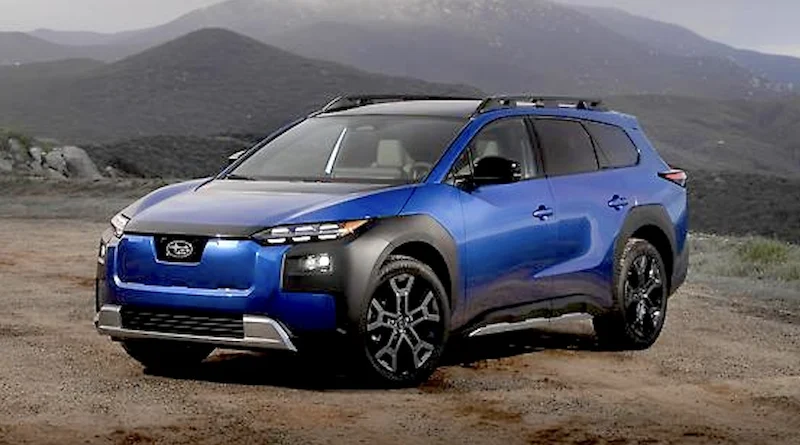
The automotive industry is currently witnessing a fascinating convergence of demographics, shifting consumer priorities, and electric vehicle (EV) market dynamics. Subaru, long known for its rugged, outdoorsy brand identity, has successfully tapped into this intersection with its newly launched Trailseeker SUV. Despite a volatile US market that saw a significant cooling of EV demand in the previous year, the Trailseeker has carved out a respectable foothold, demonstrating that a well-targeted marketing strategy—coupled with a deep understanding of the modern "pet-parent" demographic—can serve as a powerful catalyst for adoption.
As of the close of October 2026, Subaru has reported a total of 6,006 units sold for the Trailseeker, a figure that reflects steady growth since its limited market entry in January and subsequent volume deliveries in April. While these numbers are modest compared to industry stalwarts like Tesla, the Trailseeker is emerging as a critical component of Subaru’s electrification strategy, signaling a potential shift in how legacy automakers bridge the gap between internal combustion engine loyalty and the transition to battery-electric propulsion.
A Legacy of Pet-Centric Marketing
The success of the Trailseeker is inextricably linked to the "Subaru Loves Pets" initiative, a marketing cornerstone that has evolved significantly since its inception in 2008. Over the last eighteen years, the cultural perception of pets has undergone a profound transformation. In many contemporary households, pets are no longer mere animals; they are viewed as integral family members, often wielding as much influence over household decision-making as any human inhabitant.
Subaru’s research, conducted in partnership with Talker Research, underscores this shift. The study, which surveyed 2,000 American pet owners, revealed that 73% of respondents are more inclined to choose road travel over flying specifically to ensure their pets can accompany them. Furthermore, 68% of these owners admit that their pets directly dictate their holiday travel logistics, with nearly half (45%) having rejected travel opportunities that failed to accommodate their animal companions. By positioning the Trailseeker as the ultimate pet-friendly vehicle—complete with specialized cargo space and safety features—Subaru is not just selling a car; it is providing a solution to a logistical challenge for millions of families.
The Generational Divide in EV Interest
The demographic data surrounding this trend reveals a sharp generational divergence, which is proving to be a stronger predictor of EV interest than traditional political leanings. According to data from the Zero Emission Transportation Association (ZETA), while EVs have become a point of political friction in Washington, the consumer reality is defined by age.
Polling from September 2026 indicates that 75% of adults aged 18–34 and 72% of those aged 35–49 express a high likelihood of purchasing or leasing an EV within the next five years. This optimism wanes significantly in older cohorts, with only 23% of adults aged 65 and older showing similar intent.
When cross-referenced with pet ownership data, the alignment becomes clear. The Talker Research study found that 75% of Gen Z and 70% of millennials have traveled with a pet within the last five years, compared to 58% of Gen X and 40% of baby boomers. Because younger generations are statistically more likely to view their pets as central to their travel plans, the "pet-friendly" branding of the Trailseeker acts as a strategic gateway to the younger demographic most inclined to make the switch to an electric vehicle. For these buyers, the priority is not just the powertrain, but the versatility of the space—specifically the ability to accommodate crates, carriers, and specialized gear. Subaru reports that 35% of EV and hybrid drivers prioritize this cargo flexibility, a figure that significantly outpaces the 26% reported by the broader automotive market.
Engineering Excellence and Industry Recognition
Beyond marketing, the Trailseeker has earned tangible praise for its mechanical and technological implementation. On October 13, 2026, the vehicle secured a position on the prestigious Wards 10 Best Engines & Propulsion Systems list. Evaluators praised the vehicle for its 375-horsepower output and its responsive electric powertrain.

Robin Warner, manager of the Wards program, specifically highlighted the vehicle’s "completely reasonable" price point relative to its performance, noting that the $39,995 MSRP offers a competitive value proposition. The Trailseeker provides an estimated range of 281 miles and utilizes advanced battery preconditioning systems. These systems allow the vehicle to maintain consistent DC fast-charging speeds—up to 150 kW—even in extreme cold, such as 14 degrees Fahrenheit, effectively mitigating one of the most common consumer concerns regarding EV usability in varied climates.
The momentum continued late in the year when the Trailseeker was named "Car of the Year" in the 2027 TopGear.com US Car Awards. The recognition focused on the vehicle’s off-road capabilities, particularly the "set-and-forget" X-MODE system, which allows the SUV to navigate challenging terrain with 8.5 inches of ground clearance. This validation from enthusiasts and industry critics alike has helped solidify the Trailseeker’s status as more than just a niche "green" car, positioning it instead as a legitimate, rugged, and useful addition to the Subaru family.
Macro-Economic Factors and the Path Forward
The broader context of the US automotive market has been reshaped by significant geopolitical and economic events. The conflict in Iran, which began in February 2026, sent global oil prices on an upward trajectory. This surge in fuel costs has fundamentally altered the consumer calculus regarding vehicle ownership. Even as the federal government moved to rescind the $7,500 EV tax credit, the increased affordability of operating an electric vehicle—relative to a volatile gasoline market—has incentivized consumers to consider EVs as a hedge against energy instability.
While President Donald Trump has consistently characterized the conflict as nearing a peaceful resolution, the ongoing nature of the negotiations has kept fuel prices elevated, indirectly supporting the business case for EVs. For manufacturers like Subaru, this environment creates a unique opportunity to grow their EV footprint.
However, the Trailseeker faces a stiff internal challenge. The brand’s traditional gas-powered lineup, particularly the Outback, continues to command massive market share, with over 118,000 units sold between January and October 2026. This indicates that while the Trailseeker is a success, it must compete for the attention of a brand-loyal base that is still heavily invested in combustion-engine technology.
Future Implications for the Automotive Sector
The trajectory of the Trailseeker provides several key insights for the future of the automotive industry. First, it demonstrates that specialized marketing—in this case, focusing on the human-animal bond—can bypass broader cultural cynicism regarding EVs. By framing the electric transition through the lens of a family-centric lifestyle, Subaru has successfully lowered the barrier to entry for cautious consumers.
Second, the data confirms that the "EV divide" is indeed generational. As younger, pet-owning demographics gain more purchasing power, their preferences for space, efficiency, and sustainability are likely to dictate the design requirements for future SUVs. Manufacturers that ignore these lifestyle-driven priorities risk alienating the very segment most likely to drive the growth of the EV sector in the coming decade.
Finally, the success of the Trailseeker suggests that "ruggedness" and "electrification" are no longer mutually exclusive concepts. By emphasizing off-road performance alongside battery innovation, Subaru has effectively neutralized the argument that EVs are inherently fragile or restricted to urban environments. As the industry moves toward 2027, the Trailseeker stands as a case study in how to leverage brand identity to navigate a complex, shifting, and highly competitive global market. Whether this success can be replicated at scale across the broader industry remains a critical question, but for Subaru, the formula appears to be working.