Democracy runs on mathematics. From the granular tallying of individual ballots to the complex algorithms used to draw legislative district maps, the machinery of self-governance relies on numerical choices that dictate the distribution of power. Despite this, the American education system has long treated mathematics and civics as disparate, siloed disciplines. As educators grapple with how to prepare a generation for a landscape increasingly defined by misinformation, data polarization, and structural institutional challenges, a growing movement of researchers and teachers is arguing that the intersection of math and civics is not merely an academic exercise, but a requirement for a resilient, transparent democracy.
The Myth of the Zero-Sum Curriculum
For decades, the standard K-12 pedagogical model has been framed through a zero-sum lens. The assumption is that instructional time is a finite commodity; if a school district prioritizes "core" subjects like advanced algebra or language arts, then time for social studies and civics must inevitably be sacrificed. This false dichotomy has led to a compartmentalized classroom experience where students learn the mechanics of percentages in a math lab and the history of the voting rights movement in a history class, rarely seeing the two converge.
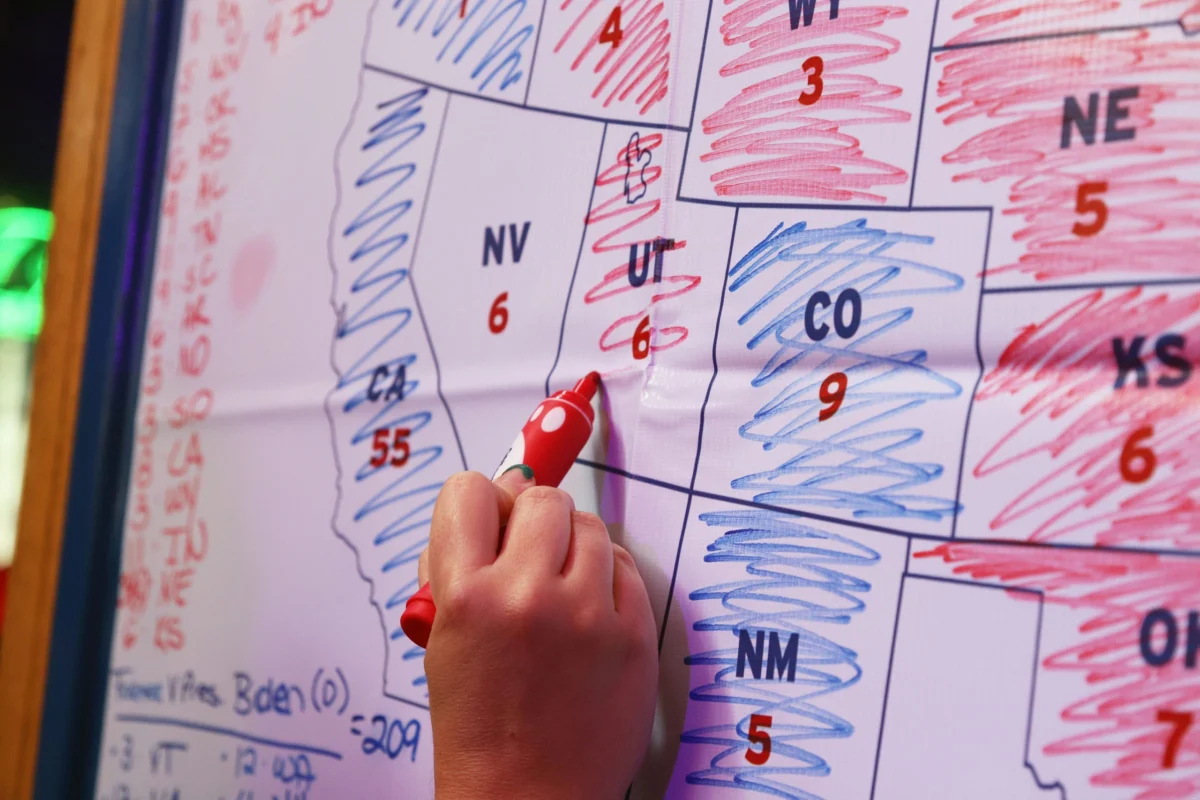
However, recent studies from the University of Southern California and Wellesley College suggest that this separation is a pedagogical missed opportunity. By integrating math-civics concepts—such as the statistical analysis of voter turnout, the geometry of gerrymandering, and the weighted math behind the Electoral College—educators can foster a more rigorous understanding of the mechanisms that govern public life. Proponents of this interdisciplinary approach argue that these topics provide "real-world" relevance that boosts student engagement, answering the perennial classroom question: "When will I ever use this?"
A Chronology of Civic Quantitative Literacy
The push to bridge this gap did not emerge in a vacuum. It follows a period of heightened public discourse surrounding democratic integrity.
- 2019: Education Week and other scholarly outlets begin highlighting the "math-civics" intersection, noting that foundational concepts of fairness—such as proportional representation—are fundamentally mathematical problems.
- 2020-2022: The COVID-19 pandemic and subsequent election cycles in the United States bring data literacy to the forefront. Public debate shifts toward the mechanics of voting, including the rise of ranked-choice voting (RCV) and the implications of population distribution on district maps.
- 2023-2024: Researchers at the University of Southern California and Wellesley College launch a formal study, interviewing 123 educators across California, Florida, Illinois, Massachusetts, New York, and Texas. The goal is to map the barriers to and pathways for integrating these subjects.
- 2025-2026: The research team, led by Anna Saavedra and Ismar Volić, begins the process of lobbying state departments of education to incorporate math-civics standards into existing frameworks, seeking to move beyond elective-only models.
Data as a Tool for Democratic Transparency
The utility of quantitative literacy in a democracy is best exemplified by the study of political data. When students analyze voter turnout, they are not just performing arithmetic; they are learning to interpret statistical variables such as age, socioeconomic status, and racial demographics. This analysis allows students to evaluate why turnout remains uneven across different cohorts, transforming a abstract civics lesson into a concrete data science project.
Furthermore, the study of districting—often referred to as the "geometry of democracy"—provides a visceral lesson in spatial reasoning. By applying geometric principles to maps, students can visualize how the drawing of district lines (gerrymandering) can effectively dilute or consolidate voting power. These lessons serve as an essential defense against misinformation; a student who understands the underlying math of an election system is inherently better equipped to identify and critique structural flaws or manipulative practices.
Educator Perspectives and Institutional Barriers
The research team’s interviews with teachers and administrators across six states revealed a clear consensus: there is widespread enthusiasm for this interdisciplinary approach, but systemic support is severely lacking.

Teachers reported that when they do integrate these topics, it is typically an "ad-hoc" initiative, often triggered by an election cycle or a specific teacher’s passion. This creates a geography of inequality where students in certain classrooms receive a comprehensive education in democratic mechanics, while others remain limited to rote memorization of governmental structure.
"The educators we interviewed expressed a strong desire to see these connections," notes Anna Saavedra of the USC Schaeffer Institute. "They see it as a way to reduce polarization by grounding debates in shared, objective facts. However, without alignment to state standards and curriculum support, teachers are often forced to choose between covering mandated content and exploring these deeper, critical thinking exercises."
Elementary school educators noted that they are uniquely positioned to teach these concepts because they teach multiple subjects, allowing for a seamless blending of math and social studies. Middle school teachers, meanwhile, highlighted that current math standards often align well with basic probability and statistics, making it a natural entry point for civics education. High school educators see the greatest potential in AP Statistics and Government courses, though they caution that if these topics are confined to electives, they will fail to reach the students who would benefit most from a foundational understanding of civic systems.
The Broader Impact: Democracy as a Technical System
The broader implication of this research is a redefinition of what it means to be a "prepared citizen." Traditionally, civics education has focused on the history of laws, the branches of government, and the biographies of leaders. While these remain essential, the modern democratic project requires a high degree of quantitative literacy.
When citizens are unable to parse the mathematical validity of a voting system, they become more vulnerable to disenfranchisement and the influence of bad-faith actors who leverage data to obfuscate the truth. As noted in the Princeton University Press work Making Democracy Count, the ability to evaluate democratic systems as "fair" or "representative" is a specialized skill that must be taught.
The research team is now working to ensure that this is not left to chance. By partnering with core math curriculum providers and engaging with national civics frameworks, they aim to institutionalize these concepts. Their objective is to move beyond the "extra credit" approach to civics and establish a standardized, rigorous curriculum that treats civic quantitative literacy as a core competency.
Future Outlook and Policy Recommendations
The path forward, according to the researchers, involves three distinct pillars:
- Alignment with State Standards: Departments of Education must explicitly include math-civics concepts in their K-12 learning standards. This ensures that the material is not just an optional enrichment but a foundational requirement.
- Pedagogical Support for Teachers: Simply adding topics to a curriculum is insufficient. Teachers need training and materials—such as ready-to-use lesson plans on data visualization and election math—to feel confident delivering this interdisciplinary content.
- Cross-Departmental Collaboration: Schools must break down the walls between the mathematics and social studies departments. By fostering collaboration between these two historically separate silos, administrators can create a learning environment that mirrors the complexity of the modern world.
As democracy continues to face challenges from both domestic and external pressures, the need for a citizenry that can navigate complex information has never been greater. If the goal of education is to produce participants capable of sustaining a free society, then the classroom must reflect the reality that democracy is not just a philosophy—it is a system of calculations. By teaching the mathematics that underpins the ballot box, the school system can empower the next generation of voters to demand transparency, challenge inequity, and actively participate in the ongoing refinement of the democratic experiment.