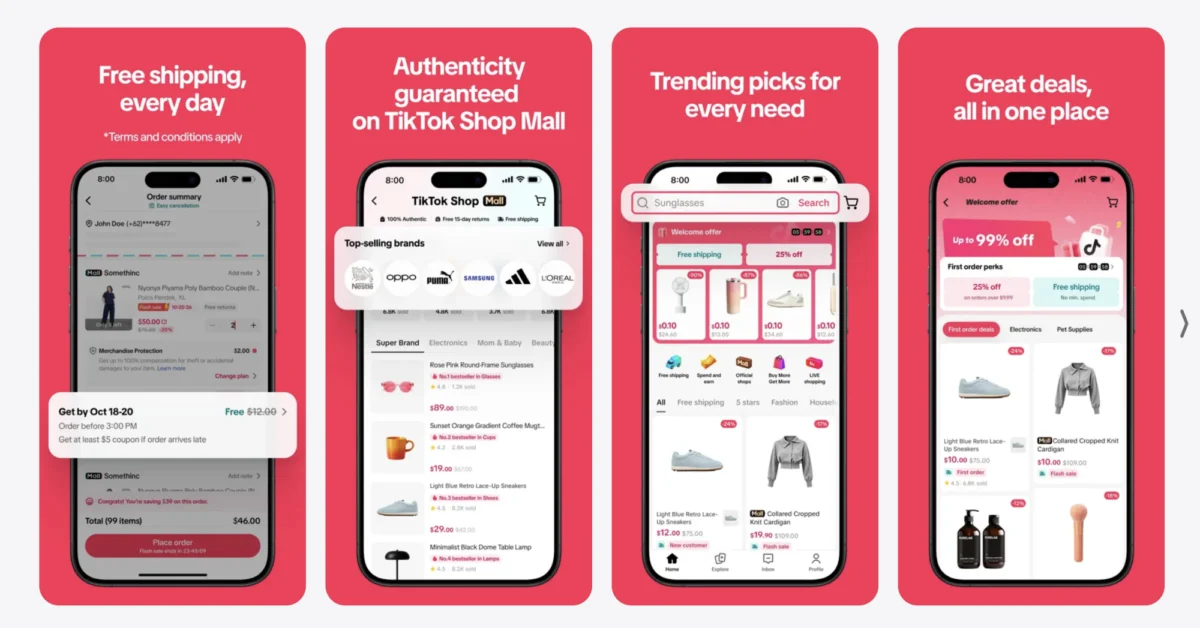
TikTok has officially pivoted its aggressive e-commerce strategy by launching a standalone TikTok Shop application, marking a significant departure from its legacy as a purely social-video platform. The new application, which has quietly appeared on both the Apple App Store and Google Play Store in Singapore, Malaysia, Thailand, and the Philippines, signals the platform’s intent to capture the intent-based shopping market currently dominated by industry titans like Amazon, Shopee, and Lazada.
The emergence of this dedicated storefront, first reported by social media analyst Matt Navarra, represents a strategic evolution in how the ByteDance-owned giant approaches consumer behavior. By segregating its shopping experience from the main entertainment-focused feed, TikTok is effectively testing whether its massive user base is ready to engage with the app not just for viral content, but as a primary destination for digital commerce.
A Strategic Shift Toward Dedicated E-commerce
For years, TikTok has successfully integrated "shoppable" moments into its main feed. Creators, influencers, and brands have utilized short-form video and live streaming to drive conversion, turning the platform into a powerful funnel for beauty products, home goods, and fashion. However, the introduction of a standalone application suggests that TikTok’s leadership recognizes the limitations of an integrated feed.
The new app provides a clean, catalog-focused interface. According to metadata from the store listings, users are greeted with personalized product recommendations, integrated livestream shopping events, and robust logistical features such as real-time order tracking and 24/7 customer support. By removing the distraction of non-commercial content, TikTok is positioning the app to compete directly with e-commerce marketplaces where the primary user motivation is transactional rather than recreational.

Chronology of TikTok’s E-commerce Expansion
The launch of the standalone app is the latest milestone in a long-term trajectory of service diversification for the platform.
- 2021-2022: TikTok begins rolling out its integrated "Shop" features globally, allowing creators to tag products directly in videos.
- 2023: The company invests billions into logistics, warehousing, and partner programs, focusing heavily on Southeast Asian markets where mobile-first shopping is the cultural norm.
- May 2026: TikTok expands its ecosystem with the launch of "TikTok GO," incorporating travel and hospitality booking services like hotel reservations and tour packages.
- Late 2026: The company experiments with vertical-specific tools, such as the "Must Eat" restaurant guide and the "PineDrama" short-form video streaming service.
- November 5, 2026: The standalone TikTok Shop application is released in select Southeast Asian markets, marking the company’s most significant move toward a diversified app ecosystem.
Data-Driven Market Entry
The choice of Singapore, Malaysia, Thailand, and the Philippines as the initial launch markets is far from coincidental. Southeast Asia is currently one of the world’s most competitive and high-growth e-commerce regions. According to recent digital economy reports, the region has seen an exponential rise in mobile-first consumers who bypass traditional retail in favor of social commerce.
In the Google Play Store, the app has already surpassed 50,000 downloads within its first few days, a figure that suggests a strong initial appetite among existing TikTok users. While the platform has not yet released official retention metrics, the presence of version 45.5.5 of the app indicates that development cycles are moving rapidly, with frequent updates to ensure stability and user interface refinement.
Corporate Structure and Data Governance
A noteworthy detail in the app’s store listing is the identified provider: TikTok Pte. Ltd. This legal entity is distinct from the TikTok USDS Joint Venture, which governs the platform’s operations within the United States. This distinction is vital for understanding the company’s global strategy.
While the U.S. operations remain under intense regulatory scrutiny regarding data security and algorithm transparency, the global business—managed primarily from Singapore and other international hubs—continues to pursue a more aggressive commercial agenda. By separating the e-commerce arm from the core social media algorithm, TikTok may be attempting to create a "firewall" between its content delivery systems and its retail operations, potentially simplifying regulatory compliance in future market entries.

The Broader Impact: From Discovery to Transaction
The fundamental question facing the industry is whether the "TikTok effect"—the ability to drive viral product discovery—can be sustained in a standalone retail environment. Historically, platforms like Amazon have relied on search intent, while TikTok has relied on discovery-driven impulse. By launching a separate app, TikTok is attempting to marry the two.
If successful, the standalone app will transform the user journey. Currently, a user might see a video of a product, click to the shop, and complete a purchase. In this new model, a user opens the app specifically to browse, utilizing the same recommendation engines that curate their "For You" feed to show them products they are likely to want. This creates a "looped" ecosystem where the user never needs to leave the TikTok brand to fulfill their shopping needs.
Implications for Competitors
The launch poses a direct challenge to regional incumbents like Lazada and Shopee, as well as global competitors like Temu and Amazon. These companies have spent years optimizing their logistics networks and customer trust. TikTok’s primary advantage remains its creator economy. By providing creators with a more robust, dedicated retail interface, TikTok can offer a "closed-loop" experience where the influencer’s content and the checkout process are seamlessly integrated.
Furthermore, the integration of exclusive deals, free shipping, and first-order incentives is a classic market-penetration strategy. It is designed to lower the barrier to entry for hesitant shoppers and establish a habit-forming routine.
Official Stance and Future Outlook
As of the time of publication, TikTok has maintained a relatively low profile regarding the official global rollout of the app. Requests for comment regarding potential expansion into North American or European markets have not yet been addressed.

Industry analysts suggest that the company is likely waiting to gather performance data from the Southeast Asian launch before committing to a wider release. If the standalone app demonstrates higher conversion rates than the in-feed shopping experience, it is highly probable that we will see a similar rollout in other major markets by 2027.
The move also aligns with a broader trend of "super-app" development, where companies like Meta, ByteDance, and Google attempt to capture every minute of a user’s digital life. By creating dedicated apps for specific services—such as PineDrama for entertainment, Must Eat for dining, and now TikTok Shop for retail—ByteDance is building a constellation of services that all feed back into the central TikTok ecosystem.
The Future of Social Commerce
The evolution of TikTok from a social media platform into a multi-faceted commercial powerhouse is perhaps the most significant shift in the digital economy of the mid-2020s. The launch of the standalone Shop app confirms that the company no longer views itself as a mere content curator, but as a full-service retail utility.
As the retail landscape becomes increasingly digital, the battle for the consumer’s attention will be won by the platforms that can most effectively transition users from "scrolling for fun" to "scrolling for value." With this new application, TikTok has signaled that it is no longer content with being just the catalyst for a purchase; it intends to be the store as well. Whether consumers will migrate their shopping habits to a dedicated TikTok environment remains the definitive test for the company’s long-term commercial viability. For now, the world of social commerce is watching the Southeast Asian market closely, as the success of this app could dictate the future of digital retail for years to come.