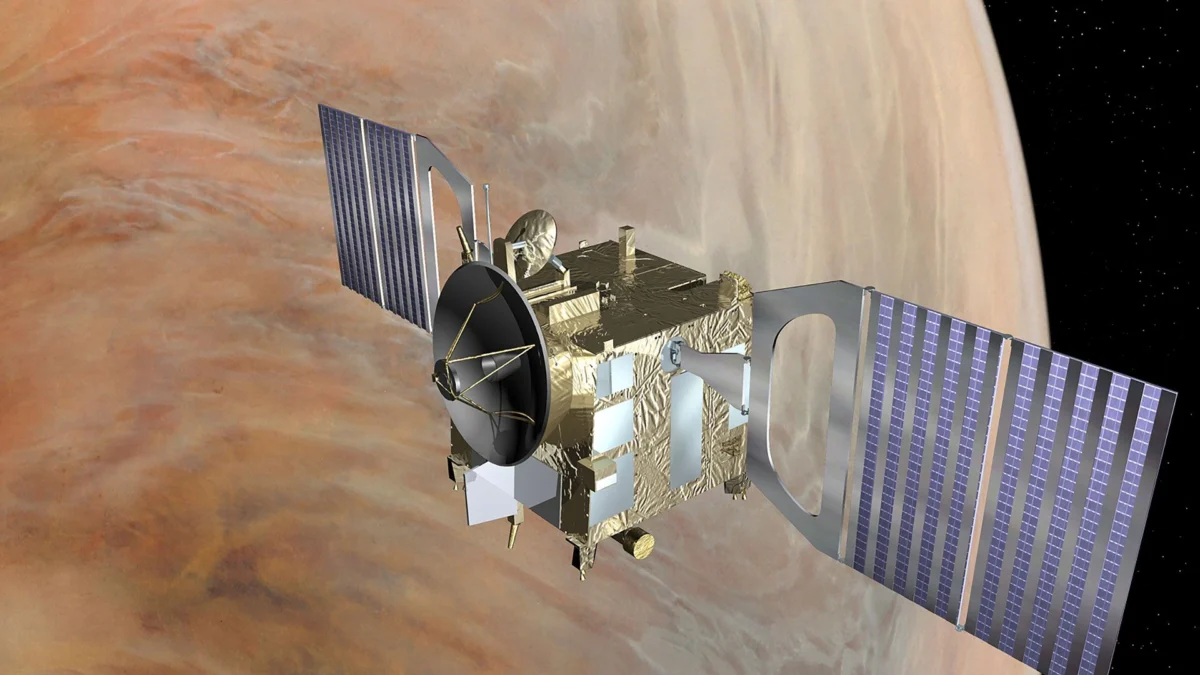
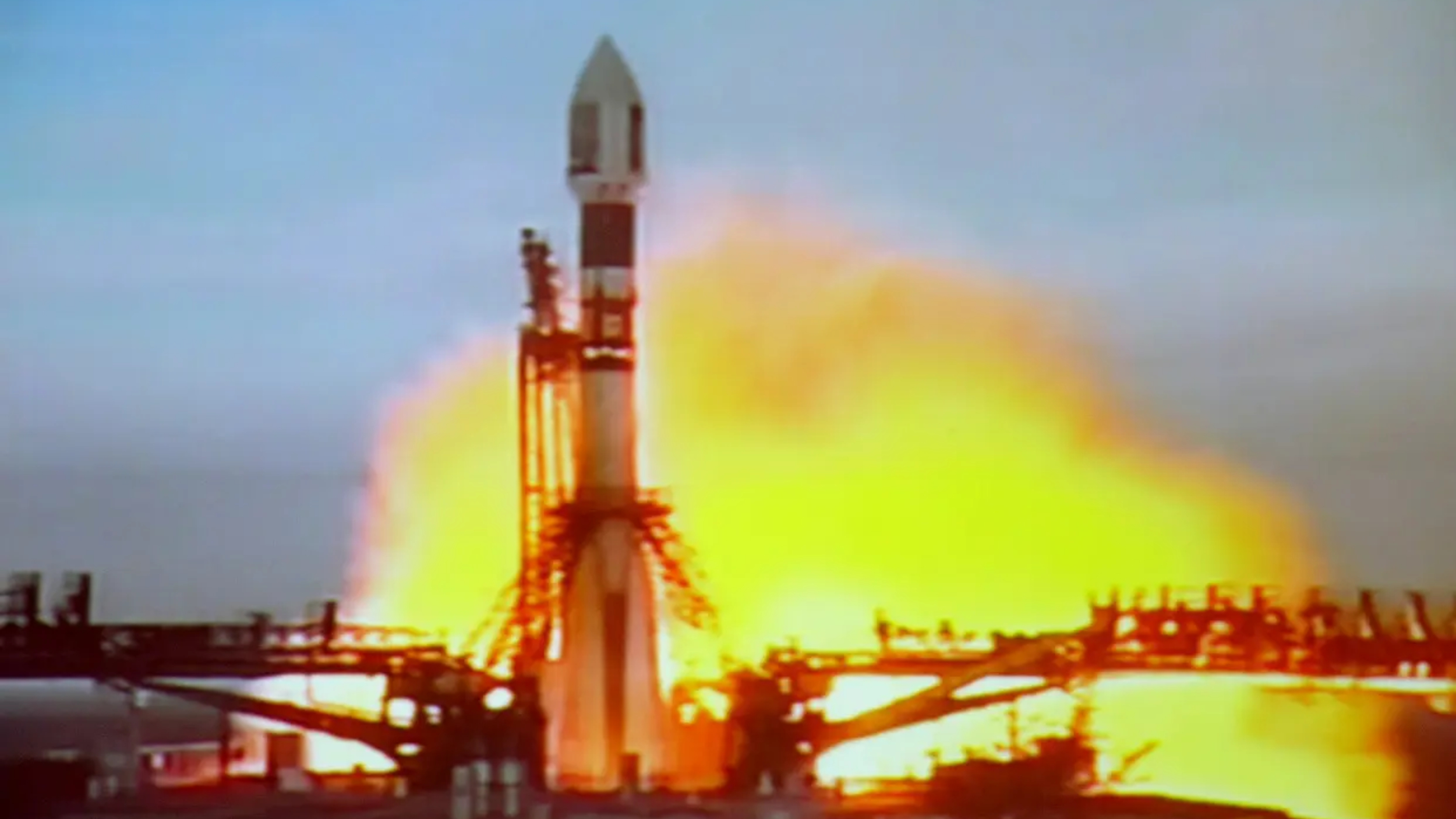
On November 8, 2005, the European Space Agency launched its inaugural mission to Venus, the Venus Express spacecraft, marking a pivotal expansion in humanity’s quest to understand the enigmatic and volatile twin of our own planet. Launched from the Baikonur Cosmodrome in Kazakhstan aboard a Russian Soyuz-Fregat rocket, the mission represented a sophisticated leap in European planetary exploration, aiming to peer through the thick, toxic shroud of Venusian clouds to reveal the geological and atmospheric processes occurring on the surface and within the upper layers of the planet’s atmosphere.
For decades, Venus had remained a formidable target for space agencies. Characterized by a runaway greenhouse effect, the planet boasts a surface temperature hot enough to melt lead—averaging around 465 degrees Celsius (870 degrees Fahrenheit)—and an atmospheric pressure at the surface roughly 90 times that of Earth. Despite these brutal conditions, Venus Express arrived in orbit on April 11, 2006, after a five-month transit, beginning a scientific tenure that would redefine our understanding of the planet’s dynamic environment.
A Legacy of Atmospheric Discovery
The primary objective of the Venus Express mission was to conduct a comprehensive study of the Venusian atmosphere. Before this mission, several aspects of the planet’s climate remained shrouded in mystery. The spacecraft carried a suite of seven specialized instruments, including spectrometers, cameras, and plasma analyzers, designed to probe the planet from its surface up to the outer reaches of its exosphere.
One of the most significant findings during the mission was the detailed observation of the "south polar vortex." Scientists had long noted peculiar, shifting structures at the poles, but Venus Express provided unprecedented imagery and thermal data confirming the existence of a complex, double-eyed atmospheric hurricane that shifts its shape and intensity periodically. This discovery offered vital clues into how energy is transported across the Venusian atmosphere, which rotates at a speed far faster than the solid planet itself—a phenomenon known as super-rotation.
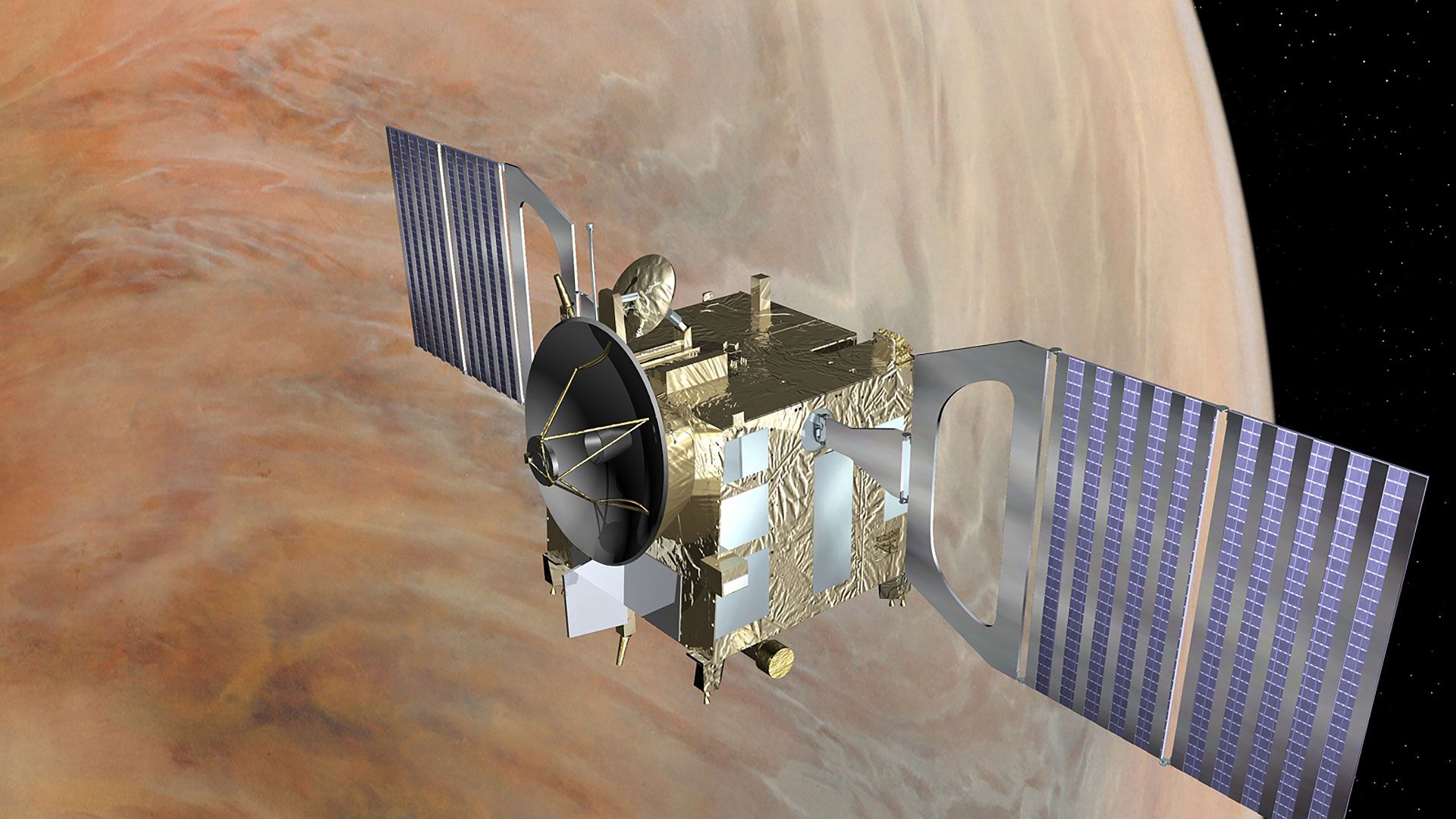
Furthermore, the mission’s findings regarding the planet’s magnetic environment were groundbreaking. Venus does not possess a global intrinsic magnetic field like Earth, which led many to believe it was magnetically "dead." Venus Express, however, discovered the presence of "induced" auroras. These light displays occur when solar wind interacts with charged particles in the planet’s upper atmosphere. This observation forced planetary scientists to re-evaluate how planets without internal dynamos interact with the sun, providing a template for studying exoplanets orbiting other stars.
Chronology of a Resilient Mission
The operational life of Venus Express serves as a case study in spacecraft longevity and the ingenuity of mission controllers. Following its 2005 launch and 2006 orbit insertion, the probe spent eight years in its primary mission phase. It was designed to orbit the planet in a highly elliptical path, ranging from 250 kilometers at its closest point to 66,000 kilometers at its furthest.
By 2014, the spacecraft had significantly depleted its propellant reserves. However, rather than concluding the mission, the European Space Agency (ESA) opted for an ambitious final act: "aerobraking." In mid-2014, engineers directed the probe to dip deeper into the upper reaches of the Venusian atmosphere than ever before. This maneuver was designed to test the spacecraft’s durability and gather high-resolution data on the density and composition of the thin upper atmosphere.
The spacecraft survived this daring maneuver, but by December 2014, its fuel was effectively exhausted. Without the ability to maintain its altitude against the atmospheric drag, the orbit of Venus Express began to decay. On January 19, 2015, the ESA confirmed that the spacecraft had likely burned up in the atmosphere, marking the end of its nine-year odyssey.
The Search for Volcanic Activity
Among the most debated topics in planetary science is the current geological status of Venus. For years, evidence of volcanic activity was anecdotal, based on sulfur dioxide fluctuations in the atmosphere detected by previous missions. Venus Express provided some of the most compelling evidence to date. By utilizing the VIRTIS (Visible and Infrared Thermal Imaging Spectrometer) instrument, researchers identified localized "hot spots" on the surface that appeared and disappeared over short durations.
These thermal signatures were consistent with lava flows, suggesting that Venus might be volcanically active today, rather than a geologically dead world. This implication is profound, as volcanic activity is a primary driver of atmospheric composition. Understanding if Venus is currently outgassing volcanic material provides a necessary baseline for climate modeling, helping scientists differentiate between natural planetary cycles and the catastrophic climate change that rendered the surface inhospitable.
Strategic Importance and Global Context
The success of Venus Express established the European Space Agency as a major player in deep-space exploration. Prior to this mission, the landscape of Venusian research was dominated by the United States—through the Mariner and Pioneer missions—and the Soviet Union, which famously landed several Venera probes on the surface in the 1970s and 1980s. By becoming the third organization to successfully orbit Venus, the ESA signaled its capability to execute complex, long-duration missions in one of the most challenging environments in the solar system.
The mission’s impact extends far beyond the data it returned. It served as a bridge between the historical era of exploration and the modern push to understand Earth’s climate trajectory. The Planetary Society has frequently cited the study of Venus as a "cautionary tale." By modeling the greenhouse effect on Venus, where carbon dioxide accounts for 96% of the atmosphere, researchers have gained better insights into the climate sensitivity of Earth. While the two planets are often called "twins" due to their similar size and composition, their divergent evolutionary paths offer a masterclass in planetary habitability.
Technological Hurdles and Future Outlook
Operating a spacecraft at Venus requires overcoming extreme thermal gradients and high-energy radiation. The success of the Venus Express mission proved that a dedicated orbiter could survive for nearly a decade despite the harsh environment. The technological lessons learned during the mission—specifically regarding solar panel degradation in intense radiation environments and the navigation of complex atmospheric drag—have been integrated into subsequent missions, including the joint ESA-JAXA BepiColombo mission to Mercury.
BepiColombo’s use of Venus for gravity-assist maneuvers in 2018 and beyond highlights the ongoing relevance of the planet in modern space travel. Every time a spacecraft swings by Venus to shed or gain velocity, it utilizes the gravitational well that Venus Express mapped with such precision.

Scientific Implications for the Future
As the scientific community looks toward the next generation of Venus exploration, including NASA’s upcoming DAVINCI and VERITAS missions, the data legacy of Venus Express remains foundational. The mission proved that even a relatively small, cost-effective spacecraft—when equipped with the right instrumentation—could produce a decade of world-class science.
The discovery of potential volcanic activity, the mapping of the polar vortex, and the observation of induced auroras have fundamentally altered the consensus on Venus. It is no longer viewed as a static, monolithic hellscape, but as a dynamic laboratory of planetary evolution. The "hothouse" status of the planet remains a primary focus for scientists attempting to understand the limits of life in the universe. If a planet of similar size and origin to Earth can transform into an environment where temperatures remain constant regardless of day or night, what mechanisms prevent such a catastrophe on our own world?
In the final analysis, the Venus Express mission was more than just an orbital survey. It was an exercise in scientific perseverance. From its launch on a cold November day in 2005 to its fiery conclusion in the Venusian clouds in 2015, the mission expanded the boundaries of European spaceflight and left behind a wealth of data that will continue to inform our models of planetary formation and climate stability for decades to come. As we continue to gaze at the "brightest planet" in the night sky, we do so with the knowledge provided by a lone spacecraft that ventured into the fire to bring back the secrets of a world that mirrors our own in ways both beautiful and terrifying.