
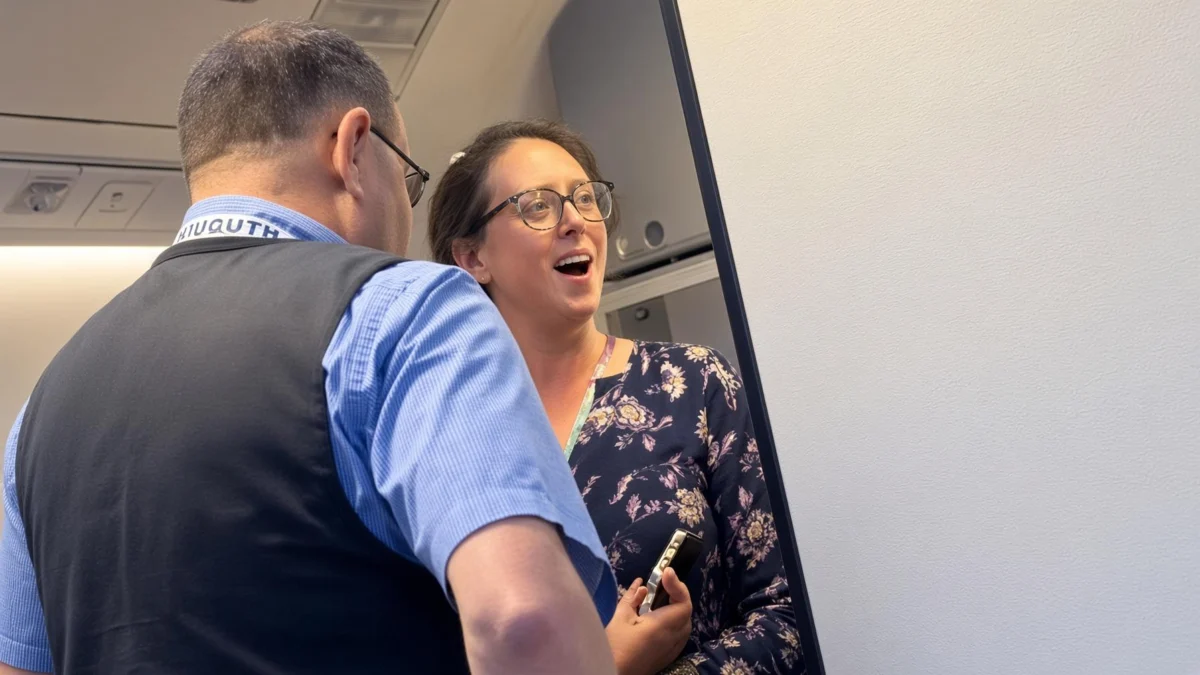
A routine boarding procedure aboard a Southwest Airlines flight escalated rapidly into a public relations and operational spectacle, culminating in the removal of a disgruntled traveler who accused a crew member of physical assault over a mandatory carry-on bag check. The roughly two-and-a-half-minute video, initially circulated online by aviation platform A Fly Guy and later highlighted by travel industry analysts at Live and Let’s Fly, lays bare the mounting frustrations shared by modern airline passengers and the strict logistical imperatives managed by commercial carriers.
The incident, which took place at the aircraft boarding door, underscores a wider, systemic friction point within the commercial aviation sector: the growing discrepancy between passenger expectations regarding cabin storage and the rigid protocols airlines employ to maintain on-time departures.
Chronology of the Boarding Door Confrontation
The sequence of events began on the jetbridge, where ground personnel mandated that a passenger surrender her carry-on luggage for a gate check. According to the captured footage, the situation deteriorated once the traveler reached the aircraft door. Believing the directive was entirely unwarranted due to the presence of available space further down the cabin, the passenger refused to relinquish the item smoothly.
Upon entering the aircraft threshold, a verbal dispute erupted between the traveler and a flight attendant. The passenger repeatedly hurled accusations of "assault and battery" at the crew member, claiming that physical contact had occurred during the handling of her belongings. Throughout the exchange, the flight attendant maintained a noticeably composed demeanor, countering that the passenger had approached the aircraft with a disruptive and contentious attitude.
As the argument stalled the boarding process, the flight attendant informed the passenger that her behavior had forfeited her right to travel on the flight. When she continued to stand in the doorway and dispute the ruling, the crew summoned local law enforcement to remove her from the aircraft. While the precise physical interactions that occurred prior to the recording remain unverified, the confrontation serves as a textbook example of how minor logistical disputes can spiral into security incidents.
The Logistics and Economics of Preemptive Gate-Checking
To understand the volatile reactions of passengers, industry analysts point to the operational calculus that drives gate agents to check bags long before overhead bins are definitively full. Airlines operate under strict departure windows, where delays can trigger cascading scheduling issues and financial penalties.
When overhead storage bins fill up unexpectedly toward the end of the boarding process, a traveler unable to find space must navigate against the flow of incoming passengers to return to the front of the aircraft. The bag must then be tagged, transported down the jetbridge, and loaded into the cargo hold—a sequence that can easily delay pushback by several minutes. To mitigate this risk, gate agents are trained to preemptively mandate gate checks based on estimations of passenger volume, bag sizes, and historical data.
However, this estimation process is inherently imperfect. Modern predictive software utilized by various airlines calculates suggested gate-check quotas based on aircraft type, passenger load factors, and route characteristics, rather than real-time, seat-by-seat sensors of available bin space. Furthermore, airlines face a distinct structural incentive to err on the side of caution: a late departure incurs direct operational penalties for the departure gate, whereas a passenger experiencing a minor delay at the baggage carousel at their destination does not reflect poorly on the originating station’s departure metrics.
The Evolution of Southwest Airlines and Baggage Policies

This particular incident highlights specific challenges faced by Southwest Airlines, a carrier historically known for its consumer-friendly baggage policies. For decades, Southwest distinguished itself from competitors by allowing every passenger two free checked bags. This policy naturally minimized the volume of luggage passengers attempted to haul into the cabin.
In recent years, however, shifting economic pressures and changing industry standards have altered passenger behavior. As rival airlines levied heavy fees for checked luggage, passengers increasingly packed their belongings into carry-ons to avoid extra costs. This shift increased the volume of bags brought to the boarding gate, intensifying the pressure on cabin crews and gate agents to manage limited overhead space. The introduction of assigned seating structures and fluctuating baggage philosophies across various carriers has further compounded the anxiety of travelers who fear being separated from their personal belongings.
Industry observers note that telling passengers that overhead bins are full, only for those passengers to subsequently walk past visibly empty storage compartments upon boarding, creates an acute sense of unfairness. This perceived dishonesty frequently transforms mild annoyance into aggressive pushback.
Broader Industry Precedents and Similar Incidents
The Southwest altercation is far from an isolated event. Similar confrontations occur with regularity across major U.S. carriers. Frequent flyer communities and aviation watchdogs routinely document instances where passengers clash with gate agents and flight attendants over gate-checking mandates.
In one notable prior incident involving United Airlines, a passenger chose to ignore instructions to check a carry-on bag, successfully boarded the aircraft, and subsequently documented roughly a dozen vacant storage slots near her assigned seat. In another case involving Delta Air Lines, a dispute over a gate-checked bag escalated when a passenger’s husband attempted to leverage a personal connection to the airline’s chief executive officer, resulting in a famously blunt dismissal from the flight attendant.
These recurring flashpoints have fueled a broader debate within the aviation community regarding potential solutions. Some industry experts have proposed the implementation of guaranteed overhead bin space systems, wherein travelers could pay a premium—either through higher fare classes, elite frequent flyer status, or a standalone ancillary fee—to secure designated storage space for a regulation-sized carry-on bag. Proponents argue that such a system would force airlines to accurately manage bin inventory and eliminate the lottery-style boarding process that currently defines economy travel.
Implications for Air Travel and Passenger Relations
The viral nature of the Southwest Airlines boarding door incident underscores the delicate balance required in modern commercial aviation. As airlines grapple with high passenger volumes, tight turnaround times, and the physical limitations of aircraft cabins, front-line employees are increasingly tasked with enforcing policies that directly impact passenger convenience.
For travelers, the episode serves as a cautionary tale regarding the legal and practical limits of protesting airline directives. Aviation security regulations grant flight crews broad authority to remove individuals deemed disruptive or non-compliant with crew instructions. Regardless of the objective validity of a gate-check request, physical altercations, prolonged arguments in aircraft doorways, and unfounded accusations of criminal conduct invariably result in denied boarding, law enforcement intervention, and potential placement on internal airline no-fly lists.
As airlines continue to refine their boarding algorithms and baggage management strategies, the industry faces an ongoing challenge: bridging the gap between operational efficiency and passenger satisfaction to prevent routine boarding procedures from boiling over into public crises.






Leave a Reply