
The Canadian government’s decision to permanently shutter its independent corporate human rights watchdog, the Office of the Canadian Ombudsman for Responsible Enterprise (CORE), has sent shockwaves through the global accountability community. For years, CORE served as an investigative recourse for vulnerable populations abroad seeking justice against Canada-based multinational corporations accused of environmental pollution, land grabs, and labor violations. However, following a protracted leadership vacuum under Prime Minister Mark Carney, the administration moved to completely dismantle the agency. Ottawa insists that a specialized foreign ministry body, the National Contact Point (NCP), will seamlessly absorb CORE’s mandate. Yet, human rights defenders, civil society organizations, and international legal experts warn that the NCP is structurally unequipped, historically ineffective, and fundamentally compromised by conflicts of interest, leaving affected communities worldwide completely without recourse.
The Demise of CORE: A Chronology of Neglect
The closure of CORE is the culmination of years of administrative neglect and political inertia. Established to evaluate grievances regarding alleged human rights abuses by Canadian entities operating abroad—primarily in the extractive, energy, and garment sectors—the office was designed to plug a glaring hole in corporate oversight. Despite its promising inception, the institution hit a critical wall two months into Mark Carney’s tenure as prime minister, when the ombudsperson position fell vacant.
For more than a year, Carney failed to appoint a successor. During this prolonged vacancy, CORE languished, unable to initiate or proceed with crucial investigations into mounting overseas mining and industrial complaints. By June, rather than revitalizing the agency or appointing leadership, the Carney administration declared CORE ineffective and officially eliminated the office.

At the time of its closure, CORE left behind a backlog of 24 active complaints and three files awaiting intake. Affected complainants, some of whom had waited years for answers, received abrupt administrative emails stating that all activities would cease immediately. They were given a stark choice: transfer their files to the Canadian NCP or close their cases entirely.
The Replacement: A Quarter-Century of Underperformance
Global Affairs Canada, the country’s foreign ministry, defended the decision by stating that the government chose to permanently streamline the ombudsperson’s work into the National Contact Point, citing the latter’s longer institutional history. However, accountability advocates argue that pointing to the NCP’s longevity only highlights its dismal track record.
Established under Organisation for Economic Co-operation and Development (OECD) guidelines, the NCP functions as a nonjudicial grievance mechanism to promote responsible business conduct. Yet, a review of its historical data reveals profound institutional failure. Since 2000, out of 33 cases submitted to the Canadian NCP, only three have ever reached a formal joint agreement. In one of those rare instances, it was an overseas NCP that actually spearheaded the resolution. Furthermore, even when agreements were brokered, they rarely resulted in meaningful redress or restitution, instead settling for vague, agreed-upon actions that often fell far short of what victims sought.
The Canadian NCP declined to respond to media inquiries regarding its internal case tally. However, Brittany Fletcher, deputy director of media relations at Global Affairs Canada, maintained that responsible business conduct remains a government priority. She noted that the NCP would continue its operations with an enhanced staff complement to promote awareness of OECD guidelines and assist in dispute resolution.

Structural Flaws and the Illusion of Impartiality
Critics argue that simply adding personnel to the NCP—which operated with only two dedicated staff members from 2017 until recently—fails to address deep-seated structural issues. Chief among these concerns is the office’s positioning within the Trade Strategy Bureau of Global Affairs Canada.
A 2019 peer review conducted by representatives from the NCPs of Belgium, Denmark, the United Kingdom, and the OECD Secretariat explicitly warned that lodging the Canadian NCP within the trade promotion apparatus creates an inherent conflict of interest. Civil society groups argue this positioning severely compromises the office’s perceived and actual impartiality, tilting the scales in favor of corporate interests over human rights.
Catherine Coumans, research coordinator for MiningWatch Canada, noted that civil society originally fought for CORE precisely because the NCP was structurally incapable of providing justice.
"What we wanted the ombudsman to be able to do was exactly what was missing from the National Contact Point, which is to do independent investigations and make findings of fact about whether harm had in fact occurred," Coumans explained. She added that relying on the NCP effectively grants Canadian corporations immunity from accountability. "What this essentially means is that it’ll be business as usual for Canadian mining companies operating overseas. They have nothing to be concerned about. They won’t have to improve their practices. They will not be held to account in Canada in any way."

Case Studies in Institutional Failure: The Democratic Republic of Congo and Malaysia
The real-world human cost of this institutional vacuum is best illustrated through specific cases where complainants found themselves stonewalled by the Canadian NCP.
In the Democratic Republic of Congo (DRC), human rights defender John Namegabe Bugabo represents 129 individuals from the villages of Mege and Bandayi. These residents allege they were violently and forcibly evicted from their land in 2021 to make way for an expansion of the Kibali gold mine, which is 45% owned by Canadian mining giant Barrick Mining Corp. According to the complaint, military and police forces destroyed homes, schools, places of worship, and vital agricultural infrastructure without prior consultation or compensation. Some residents protesting the demolitions were reportedly shot and killed.
Barrick Mining has consistently denied any direct role in the resettlement, maintaining that the operation was led entirely by the DRC government.
Bugabo initially submitted a complaint to the Canadian NCP in 2022, hoping for a repeat of a positive 2015 experience he had with the Netherlands NCP regarding labor disputes involving Heineken. However, after a single day of mediation in 2023, the Canadian NCP abruptly terminated talks, concluding that further dialogue was unlikely to yield a resolution. Its final recommendations urged Barrick to improve transparency regarding its security relationships and future resettlement expectations, but completely ignored demands for financial compensation for destroyed homes, livelihoods, and lost crops.

Faced with this dead end, Bugabo transferred his file to CORE, only to have the agency dissolved. Given the option to return his case to the NCP, Bugabo and other complainants refused out of a total lack of faith in the system, leaving communities homeless and without legal recourse five years after the initial evictions.
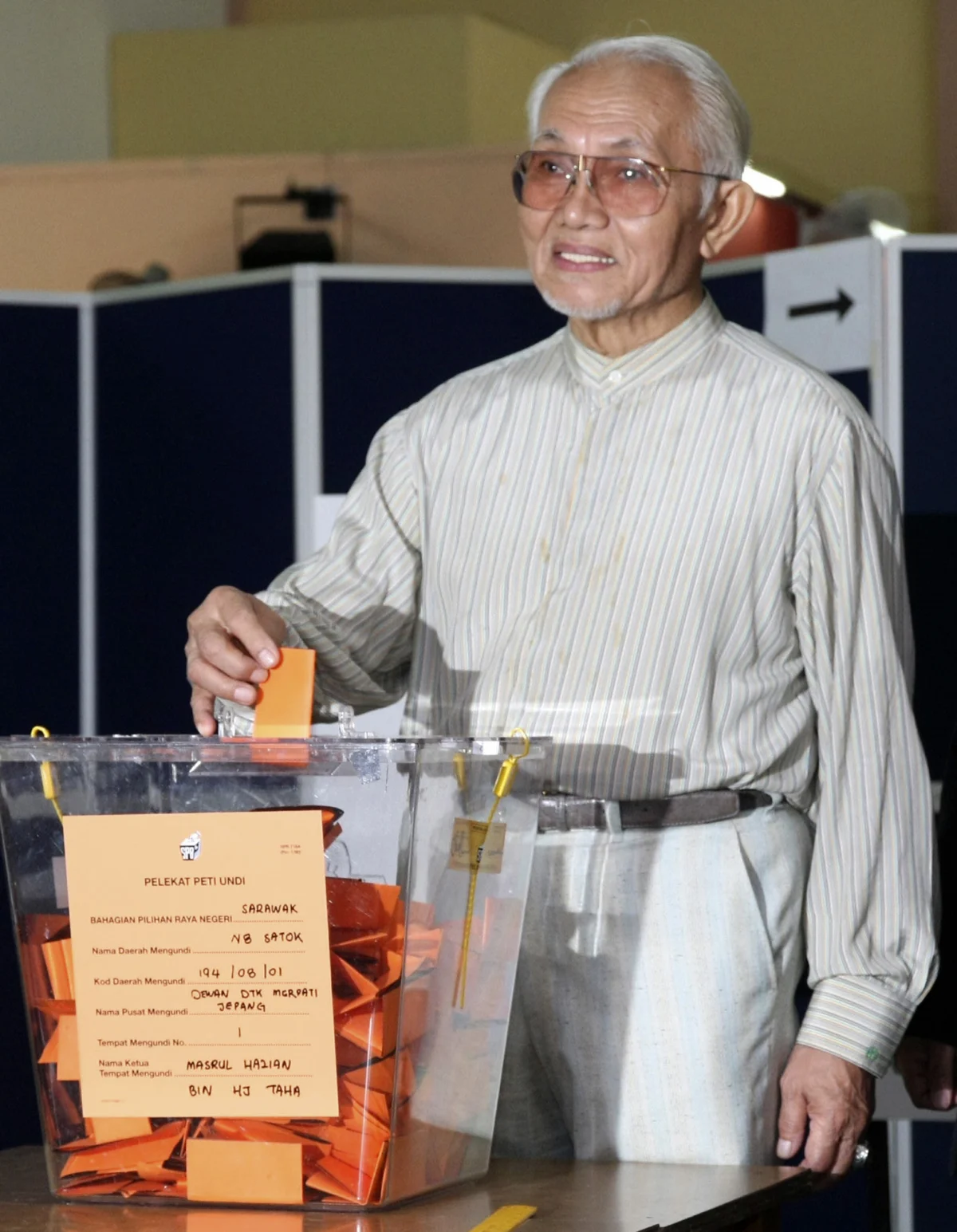
A similar breakdown of trust occurred in 2016, when the Swiss environmental NGO Bruno Manser Fonds filed a complaint against Ottawa-based real estate firm Sakto Corp. The NGO alleged that Sakto was tied to millions of dollars in illicit logging kickbacks stemming from massive rainforest deforestation in the Malaysian state of Sarawak during the tenure of Chief Minister Abdul Taib Mahmud.
Sakto vehemently denied the allegations, maintaining it is a 100% domestic Canadian company with no multinational ties, and launched defamation proceedings in Switzerland. While the Canadian NCP initially drafted an assessment finding that the OECD guidelines applied to the case, the process collapsed after intense corporate pushback. The NCP ultimately closed the file, pointing to aggressive communications, leaks of confidential documents, and political interference, including lobbying efforts directed at federal ministers by a Liberal Member of Parliament.
The fallout was severe. OECD Watch, a network evaluating global NCPs, filed a formal complaint against the Canadian NCP with the OECD Investment Committee. The committee ruled that the Canadian NCP had failed to fulfill its responsibilities, lacked transparency, and contributed to a widespread perception of partiality.
Global Implications and the Path Forward

Experts emphasize that Canada’s regulatory framework carries outsized global significance. Canada serves as the home base for approximately half of the world’s publicly traded mining and mineral exploration companies, making robust oversight a matter of international urgency.
Joseph Wilde-Ramsing, advocacy director for the Netherlands-based Centre for Research on Multinational Corporations (SOMO) and a founder of OECD Watch, notes that Canada’s accountability architecture lags far behind other developed nations. He contrasts Ottawa’s approach with the Netherlands, whose NCP is internationally lauded because it utilizes independent experts rather than government bureaucrats to oversee mediations and adjudicate disputes.
"The Canadian NCP’s track record is extremely poor," Wilde-Ramsing said, echoing civil society warnings about structural conflicts of interest.
As Canada’s NCP undergoes its second periodic OECD peer review, pressure is mounting from domestic and international advocates for fundamental reform. MiningWatch Canada and other accountability groups are demanding that the federal government either reinstate CORE with subpoena powers and true institutional independence or establish a brand-new investigative watchdog.
Without such reforms, critics warn that Canadian multinationals will continue to operate in foreign jurisdictions with virtual impunity, shielded from oversight by an under-resourced and politically vulnerable trade bureau. For human rights defenders like Bugabo, the stakes could not be higher.

"It is important for them to be strong," Bugabo said, "because if the company knows that the problem will be taken at hand, they will prevent themselves to do wrong."








Leave a Reply