Japan has successfully conducted the inaugural flight test of its experimental reusable rocket prototype, designated RV-X, marking a significant stride in the nation’s pursuit of advanced spaceflight capabilities. This pivotal event, which took place on July 11th at the Japan Aerospace Exploration Agency’s (JAXA) Noshiro test facility, represents a crucial step towards developing reusable rocket technology, a domain dominated by a select few global spacefaring entities.
A Brief but Monumental Hop
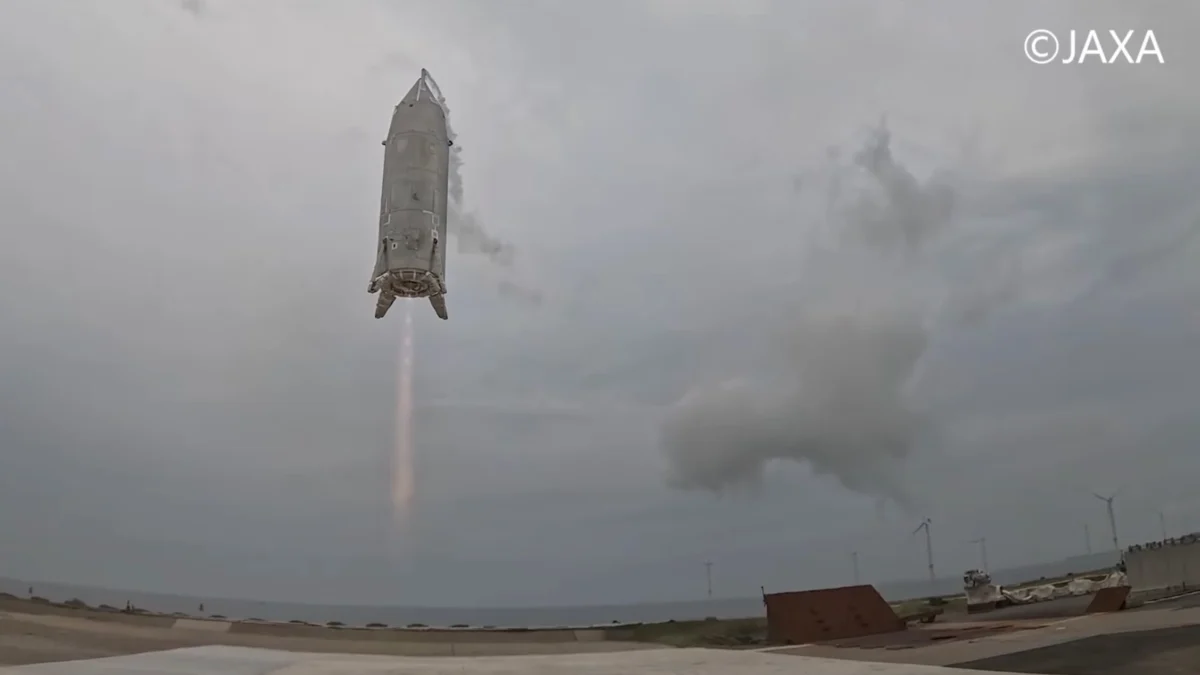
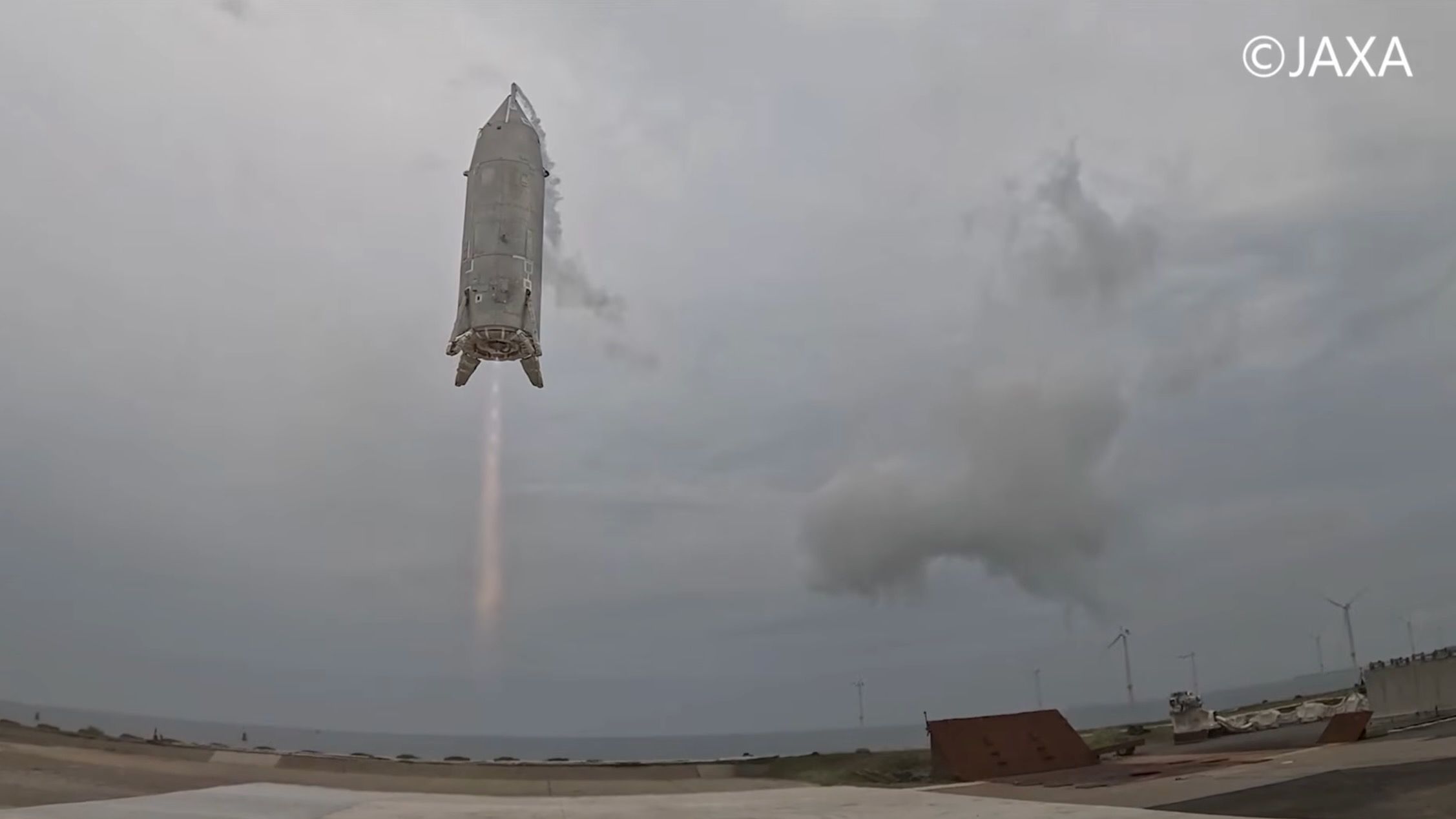
The RV-X test flight, though brief and characterized as a "hop" due to its limited duration and distance, was a meticulously planned and executed maneuver. The 24-foot-tall (7.3 meters) prototype, propelled by a single engine, ascended to an altitude of just over 33 feet (10 meters). It then traveled horizontally approximately 50 feet (15 meters) across the concrete launch pad before achieving a soft touchdown on the opposite side of its liftoff point. This controlled ascent, horizontal displacement, and gentle landing are fundamental requirements for any reusable launch system.
The success of this initial test positions JAXA and its industrial partners, notably Mitsubishi Heavy Industries, closer to realizing a technological feat that has only been achieved by a handful of orbital rocket developers. These include SpaceX with its Falcon 9, Falcon Heavy, and Starship programs, Blue Origin’s New Glenn, and most recently, China’s Long March 10B, which demonstrated a successful in-flight landing during an orbital launch. The RV-X project is designed to pave the way for future advancements in space launch economics and sustainability.
The RV-X Project: A Stepping Stone to Reusability
The RV-X prototype is not an end in itself but a critical precursor to a larger initiative: the CALLISTO (Collaborative, Advanced, Launch, and In-space, Test, and Simulation) project. CALLISTO is a collaborative endeavor involving JAXA, France’s National Centre for Space Studies (CNES), and the German Aerospace Center (DLR). The objective of CALLISTO is to design, build, and test a single-stage reusable rocket capable of vertical launch, landing, refurbishment, and subsequent reuse. This international partnership underscores the global recognition of the importance of reusable launch systems for reducing the cost of accessing space.
For Japan, the RV-X and the subsequent CALLISTO project represent a strategic move to enter the competitive landscape of reusable launch services. This initiative is particularly relevant given the status of Japan’s current advanced rocket, the H3. Introduced in 2023, the H3, while more efficient and cost-effective than its predecessor, the H-2A, was not designed with reusability in mind. The H3 has faced some challenges, with two of its eight launches not achieving full success, and its cost-effectiveness, while improved, still falls short of the potential offered by fully reusable systems. Therefore, JAXA is proactively developing the technologies that will underpin the H3’s eventual successor, ensuring Japan remains at the forefront of space launch innovation.
Chronology of Reusable Rocket Development in Japan
The development of reusable rocket technology in Japan has been a gradual but determined process, culminating in the RV-X test. While specific dates for early conceptualization are not widely publicized, the focus on reusability has gained significant momentum in recent years.
- Early 2020s (Estimated): Conceptualization and design work for the RV-X experimental vehicle likely began. This phase would have involved extensive simulations and analysis to determine the optimal configuration for a small-scale reusable demonstrator.
- Mid-2020s (Estimated): Construction and assembly of the RV-X prototype. This would have included manufacturing the rocket structure, integrating the propulsion system, and developing the control and guidance systems necessary for a vertical takeoff and landing.
- July 11, 2026: The historic first flight test of the RV-X prototype at JAXA’s Noshiro test facility. This event marked the culmination of years of design, engineering, and testing.
- Post-July 2026: The RV-X is slated for further, more ambitious test flights. These will progressively increase in altitude and complexity, aiming to validate the rocket’s control and landing capabilities under more demanding conditions.
- Future: The data and experience gained from RV-X will directly inform the development of the CALLISTO project, a larger, single-stage reusable rocket that aims to bring Japan into the mainstream of reusable launch services.
The Importance of Operational Feasibility
JAXA’s commitment to reusable rocket technology is driven by a clear understanding of the operational challenges involved. As stated on JAXA’s website, "Reusable rockets require consideration of operational feasibility." This statement highlights the agency’s focus on not just achieving flight, but on developing practical, repeatable procedures for maintenance, operation, vehicle handling, and launch pad setup.
The RV-X program is designed to address these operational aspects directly. By using an actual experimental vehicle for flight tests, JAXA aims to refine and establish operational procedures that will be essential for the repeated operation of future, larger reusable rockets. This hands-on approach is crucial for identifying and mitigating potential issues that might arise in a real-world operational environment, thereby reducing risks and costs associated with future missions.
Echoes of Early Starship Development
The RV-X test flight and the appearance of the prototype bear a striking resemblance to the early development stages of SpaceX’s Starship program. The "Starhopper," a suborbital prototype used by SpaceX for early hop tests, was famously compared to a water tower due to its rudimentary design. In 2019, the Starhopper successfully executed its first untethered hop, ascending approximately 65 feet (20 meters) before returning to the ground. This initial success was a critical validation of SpaceX’s approach to reusable rocket development.
Similarly, the RV-X, with its conical silver design, evokes memories of the Starhopper’s early flights. Both vehicles represent a fundamental approach to testing the core principles of vertical takeoff, controlled flight, and vertical landing – the bedrock of reusable rocket technology. The visual similarities are not coincidental; they reflect a shared understanding of the essential steps required to master this complex engineering challenge.
The Path Forward: Scaling Up Ambitions
The successful completion of the RV-X’s initial 33-foot hop is just the beginning. JAXA has ambitious plans for the prototype’s future flights. The agency intends to progressively increase the altitude of subsequent tests, with the next launch expected to reach heights of up to 330 feet (100 meters). These future flights will incorporate more complex maneuvers, including lateral movements and extended hover periods, before the rocket lands. This incremental approach allows JAXA to systematically test and refine the rocket’s control systems, propulsion, and landing mechanisms under increasingly demanding conditions.
The data gathered from these progressively challenging tests will be invaluable. It will not only inform the development of the CALLISTO project but also contribute to JAXA’s broader understanding of reusable launch vehicle dynamics. By mastering these technologies, Japan aims to unlock significant cost savings in space access, enabling more frequent and ambitious scientific missions, commercial satellite deployments, and potentially, future human space exploration endeavors.
Broader Implications for the Space Industry
The successful test of the RV-X prototype has far-reaching implications for the global space industry. The increasing adoption of reusable rocket technology is fundamentally altering the economics of spaceflight. By recovering and refurbishing rocket boosters, launch providers can significantly reduce the cost per kilogram to orbit. This reduction in cost has a cascading effect, making space more accessible for a wider range of applications.
For nations like Japan, investing in reusable technology is crucial for maintaining competitiveness in the rapidly evolving space sector. It allows them to participate in the burgeoning commercial launch market and to develop independent capabilities for future space endeavors. The collaboration with international partners on projects like CALLISTO also fosters knowledge sharing and strengthens global space cooperation.
The RV-X’s progression mirrors the trajectory of other reusable rocket programs, demonstrating that even small-scale, initial "hops" are vital learning experiences. These early tests allow engineers to gather critical data on flight control, engine performance, and landing dynamics in a relatively low-risk environment. As the technology matures, it enables the development of larger, more capable rockets that can carry heavier payloads to orbit more affordably.
The pursuit of reusability is not merely about cost reduction; it is also about environmental sustainability. Reducing the number of discarded rocket stages contributes to a cleaner space environment. Furthermore, the development of robust refurbishment and rapid turnaround processes can lead to more efficient and environmentally conscious launch operations.
JAXA’s commitment to this technology signals Japan’s long-term vision for its space program. By investing in foundational technologies like reusability, the agency is laying the groundwork for a future where space access is more routine, affordable, and sustainable. The RV-X’s first hop, though modest in scale, represents a giant leap in this strategic direction, echoing the pioneering spirit of early space exploration and charting a course for the future of Japanese and global spaceflight.