The rapid surge in American backyard poultry ownership that peaked in 2025 has hit a definitive inflection point in 2026, forcing millions of households to reconsider the viability of home-raised eggs against a backdrop of plummeting grocery prices and rising biosecurity risks. A dozen Grade A eggs, which reached a staggering peak of roughly $6.22 in March 2025 due to widespread supply chain disruptions, have stabilized significantly, averaging approximately $2.14 by June 2026. This dramatic market correction serves as the primary catalyst for a shift in the backyard poultry landscape, transforming what was once seen as a defensive hedge against inflation into a complex hobby defined by hidden costs, labor-intensive maintenance, and significant health considerations.
The recent history of this phenomenon is inextricably linked to the trajectory of Highly Pathogenic Avian Influenza (HPAI), commonly known as bird flu. Since the virus began its widespread trajectory in February 2022, it has decimated more than 166 million birds across both commercial and backyard operations. The resulting supply shortages triggered a 32.2% spike in retail egg prices in 2022, followed by compounding increases in subsequent years. As commercial producers struggled to maintain stock, panicked consumers flocked to hatcheries and agricultural retailers, driving the number of U.S. households keeping chickens from 5.8 million in 2018 to nearly 11 million by early 2025.
However, as the commercial poultry sector stabilized and HPAI detections slowed in early 2026, the economic rationale for keeping a backyard flock began to erode. Retail egg prices in May 2026 were 35.2% lower than the same period a year prior, and the U.S. Department of Agriculture’s Economic Research Service currently forecasts a 30.4% decline in retail egg prices for the full 2026 calendar year. For the average consumer, the "price signal" that spurred the initial boom has effectively reversed, leaving many new keepers with the realization that home-raised eggs are rarely cheaper than their store-bought counterparts when accounting for feed, bedding, and initial capital expenditures.
The Arithmetic of Home Production
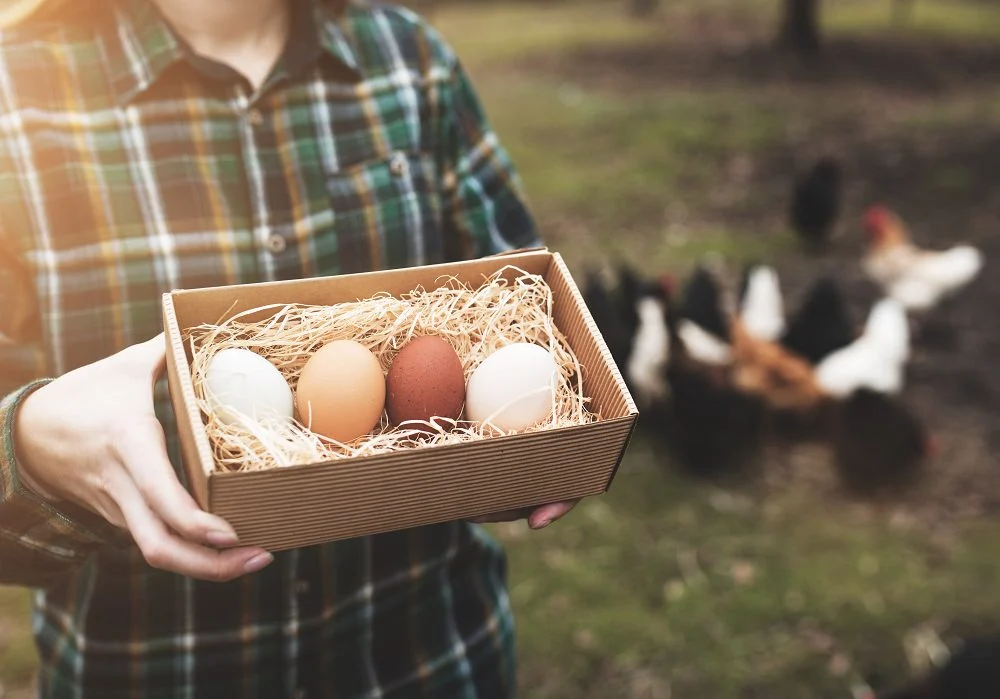
To understand the current shift, one must look at the caloric and economic output of a standard backyard coop. USDA data suggests an annual availability of roughly 22.9 dozen eggs per person in 2026. While a commercial layer can produce upwards of 300 eggs per year, backyard hens typically peak between 180 and 250 eggs during their first two years, followed by a steady decline in production.
Budgeting for a six-hen flock reveals the thin margins of this endeavor. While a flock might produce between 90 and 125 dozen eggs annually, the cost of feed, grit, and supplies ranges from $250 to $600 per year, not including the initial $500 to $2,000 investment for a coop, fencing, and infrastructure. When eggs are priced at $2.14 a dozen, the flock barely breaks even on variable costs. Even when compared to premium cage-free or organic eggs, the financial "payback" period is often measured in years rather than months. As a result, agricultural economists suggest that backyard flocks function better as a hedge against catastrophic grocery supply chain disruption rather than as a tool to combat routine price volatility.
The Biosecurity and Health Reality
While economic concerns remain top-of-mind for many, the public health implications of backyard poultry have become a matter of increasing concern for federal agencies. The H5N1 strain of bird flu has proven to be a persistent threat, with 71 human cases of influenza A(H5) reported in the U.S. since March 2024. Most concerning are the two fatalities among backyard flock owners reported between 2025 and late 2025, which have prompted the Centers for Disease Control and Prevention (CDC) to issue more stringent guidance regarding the handling of birds.
Beyond the specter of influenza, the rise in Salmonella outbreaks is perhaps the most immediate danger to the average household. As of July 2026, the CDC is actively investigating eight separate multistate outbreaks linked to contact with backyard poultry, resulting in more than 800 illnesses and over 200 hospitalizations. The data indicates that 84% of these patients had acquired their birds since the start of 2026, frequently from agricultural retail stores. Alarmingly, investigators have identified these bacterial strains within the shipping boxes used to transport chicks from hatcheries, proving that even "healthy-looking" birds can be carriers. Because a quarter of these patients are children under the age of five, the CDC has doubled down on its recommendation to keep live poultry out of residential kitchens and to ensure rigorous hand-washing protocols.
Municipal Governance and Regulation
The boom in ownership has also forced cities to grapple with the realities of urban farming. Municipal ordinances regarding flock size, coop placement, and the prohibition of roosters have become more sophisticated and rigorously enforced. Prospective owners must now navigate a patchwork of regulations that often include mandatory permitting, annual fees, and strict setback distances—frequently requiring coops to be located 25 to 50 feet away from neighboring dwellings. Furthermore, homeowners associations (HOAs) often maintain even stricter covenants that can effectively override permissive city codes. With several states passing preemption laws to prevent total municipal bans on hen ownership, the legal landscape remains in flux, and potential owners are advised to consult local zoning boards before making any investments in livestock.
Environmental Considerations and Future Outlook
The narrative that backyard flocks are inherently "greener" than commercial operations has also come under scientific scrutiny. While backyard eggs are often touted as having a lower carbon footprint, life-cycle assessments suggest the opposite may be true. Because backyard hens consume commercially formulated feed—often transported over long distances—without the economies of scale and high-efficiency production cycles of industrial farms, the carbon footprint per egg can actually be higher in a backyard setting. Backyard flocks primarily serve as a source of personal satisfaction and a potential means of waste reduction through the consumption of kitchen scraps, rather than as a solution for large-scale carbon mitigation.
As the industry moves into the second half of 2026, the trend of rapid expansion appears to be cooling. The "chick days" of early spring, which saw empty shelves in 2025, have seen a return to normalized supply levels. For those who choose to continue or start a flock, the guidance from the USDA’s "Defend the Flock" program remains the gold standard: practice strict biosecurity, keep detailed records of bird health, and maintain a clear understanding of the financial and biological risks involved.
The era of the "inflation-busting" backyard coop has largely passed, replaced by a more sober assessment of the commitment required to keep birds safely. For many, the true value of the backyard flock is no longer found in the ledger, but in the experiential connection to the food supply—a shift that marks the transition of backyard poultry from a temporary economic necessity back to a dedicated, long-term lifestyle choice. As the market enters a period of post-peak stabilization, both the poultry industry and the millions of backyard keepers it supports must prepare for a future defined by heightened biosecurity vigilance and a more realistic appraisal of what it takes to maintain a healthy, productive, and safe home flock.