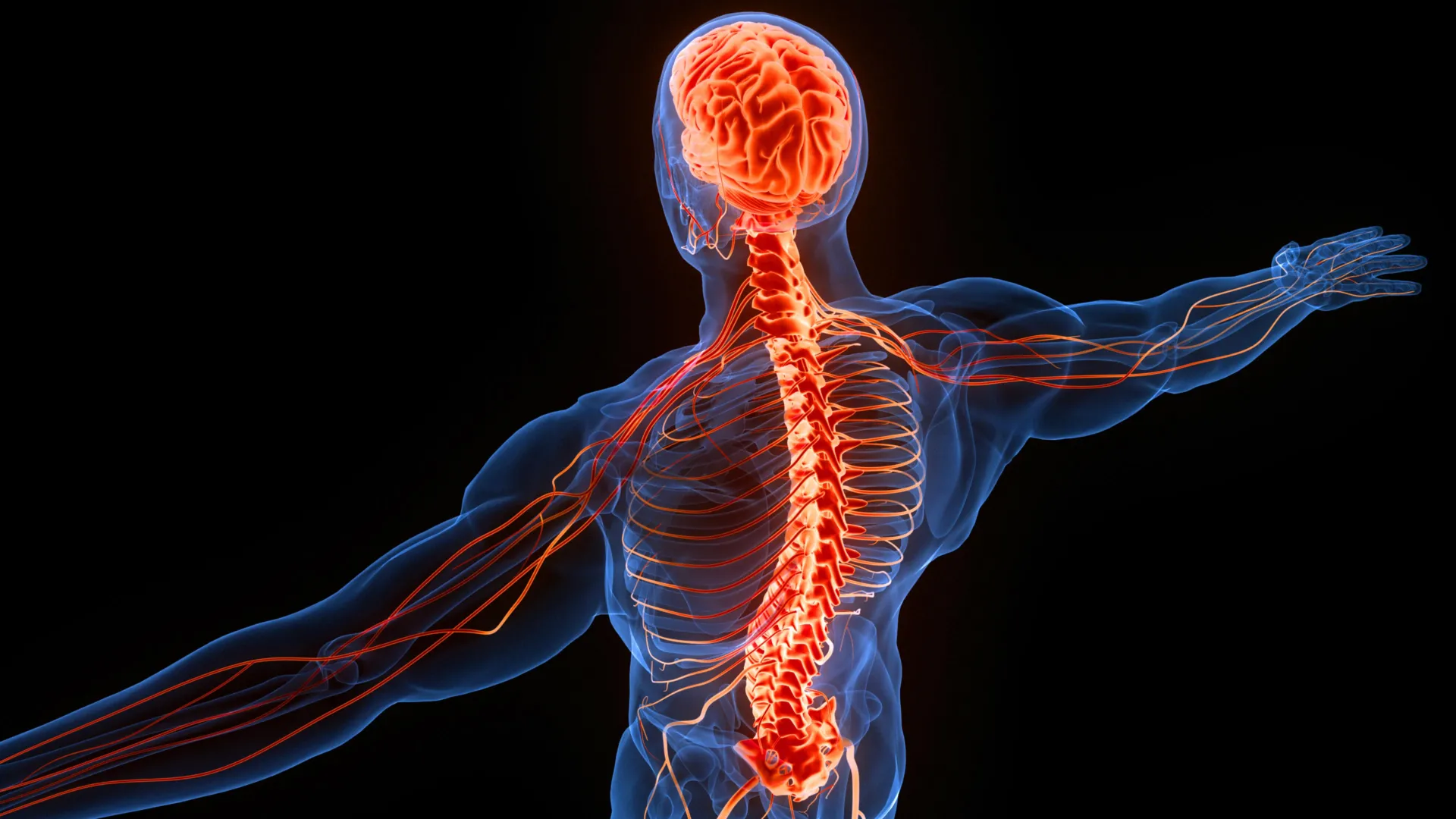
For centuries, the fundamental anatomical reality that the left hemisphere of the brain governs the right side of the body—and vice versa—has puzzled anatomists and neuroscientists alike. This "contralateral" organization is not merely a quirk of human biology; it is a pervasive feature of the vertebrate nervous system. Recent research spearheaded by Dr. Martin Wessendorf, an associate professor emeritus at the University of Minnesota, and neuroscientist Daniel Wang, suggests that this peculiar wiring is not an accidental adaptation, but a vestige of a sensory blueprint established over 500 million years ago.
Their findings, published in the journal Frontiers in Neuroanatomy, propose that the brain’s crossed connections are an evolutionary inheritance, deeply rooted in the visual systems of the earliest jawless vertebrates. By mapping the development of neural pathways across diverse species, the researchers argue that evolution favored the path of least resistance, repurposing ancient visual frameworks to organize motor and sensory functions as complex life evolved.
The Mechanism of the Crossed Connection
The human brain relies on a sophisticated, yet seemingly inverted, architecture. When light enters the eye, the lens acts as a refractive element, projecting a reversed image onto the retina. Consequently, light from the right visual field strikes the left side of the retina. This information is then routed through the optic nerve to the optic chiasm, where the fibers partially cross. This ensures that the left hemisphere receives a comprehensive view of the right visual field, and the right hemisphere receives a view of the left.
This process is not limited to vision. Within the midbrain lies the optic tectum—a structure present in every vertebrate species—which serves as a master integrator for sensory data. It creates a multimodal map where visual, auditory, and tactile information are spatially aligned. Because the optic tectum is inherently "crossed," the researchers suggest it became the foundational template for other neural circuits. As vertebrates evolved more complex motor and sensory systems, they simply "plugged" into this existing, pre-wired cross-lateral grid.
A Chronology of Evolutionary Development
The hypothesis hinges on a timeline that extends back to the Cambrian Period (roughly 538 to 486 million years ago). During this epoch, the first jawless fish developed rudimentary optic systems. According to Wessendorf and Wang, if these early creatures possessed an optic chiasm and a tectum organized by contralateral visual input, the fundamental layout of the vertebrate nervous system was effectively "locked in" before limbs even existed.
- Cambrian Period (500+ Million Years Ago): Emergence of the optic tectum and optic chiasm in primitive jawless fish. The "crossed" visual map becomes a standard neural architecture.
- Early Tetrapod Evolution: As vertebrates moved from water to land, the need to navigate three-dimensional environments intensified. The dorsal column pathway—responsible for touch and proprioception—emerged in amphibians and reptiles, adopting the existing crossed-wire architecture.
- The Rise of Mammals: The six-layered cerebral cortex allows for unprecedented sensory integration. The corticospinal tract, which coordinates fine motor control, develops, but it follows the established contralateral path rather than creating a new, direct-line system.
Examining the Sensory and Motor Pathways
To substantiate their theory, the researchers analyzed three specific pathways that illustrate how this crossed wiring has been maintained through millions of years of evolution.
The first is the dorsal column pathway. Found in all tetrapods, this system transmits fine touch and vibration. It ascends the spinal cord, crossing over in the brainstem. Its absence in fish, but presence in amphibians and birds, suggests this pathway was a secondary "add-on" that adopted the crossed-architecture of its predecessors.
The second is the spinothalamic tract, which handles pain and temperature. Interestingly, this pathway crosses within the spinal cord itself. Its presence in sharks and rays implies that the crossing of pain signals is an even older innovation than the dorsal column, potentially predating the emergence of terrestrial life.
Finally, the researchers examined the corticospinal tract, which is critical for human dexterity. While most mammals use this pathway for regulating sensory input, primates have adapted it to control skeletal muscles directly. This evolutionary shift—from sensory regulation to motor command—is a prime example of biological "exaptation," where a structure evolved for one purpose is repurposed for another.
Implications for Neuroscience and Evolutionary Biology
The findings challenge the "adaptive advantage" narrative that often dominates evolutionary biology. For decades, researchers searched for a specific survival benefit to the crossed-brain organization—such as better predator evasion or improved spatial processing. However, the data provided by Wessendorf and Wang suggest that the organization might not offer any distinct functional benefit at all.
Instead, the phenomenon may be an example of "evolutionary baggage." Because the visual system established a crossed wiring early in vertebrate history, it was more efficient for evolution to continue using that template than to re-wire the entire central nervous system from scratch. This implies that the anatomy of our motor control is restricted by the structural limitations of our ancient ancestors.
"Evolution is a tinkerer, not an engineer," noted a colleague familiar with the study. "It doesn’t start with a blank slate; it works with the parts that are already there."
Future Directions and Scientific Verification
The hypothesis provides a clear, testable roadmap for future paleontological research. If the researchers are correct, the anatomical signatures of the optic chiasm and tectum should be detectable in the fossilized braincases of ancient jawless fish. By using high-resolution CT scanning on Cambrian fossils, scientists could theoretically confirm the existence of these structures, providing definitive proof of the "evolutionary inheritance" theory.
Beyond paleontology, the study has significant implications for neurodegenerative medicine. Understanding that our motor pathways are built upon ancient sensory foundations may help scientists better understand how these systems fail in conditions like Parkinson’s disease or spinal cord injuries. If the corticospinal tract is essentially a sensory pathway repurposed for motor control, it may explain why certain neurodegenerative conditions impact both movement and sensory processing simultaneously.
Conclusion
The strange relationship between the left brain and the right body is not a biological error, but a persistent memory of our deepest ancestry. By tracing the evolution of these crossed pathways, Wessendorf and Wang have provided a compelling argument for why human anatomy is the way it is: we are walking, thinking organisms built on a 500-million-year-old structural foundation. This discovery serves as a profound reminder that the nervous system is a living archive, preserving the history of our species in every nerve fiber and every synaptic connection. As research continues, the bridge between our modern capabilities and our ancient origins grows ever stronger, revealing that we are, in many ways, still defined by the visual maps of the first vertebrates to ever navigate the prehistoric seas.