
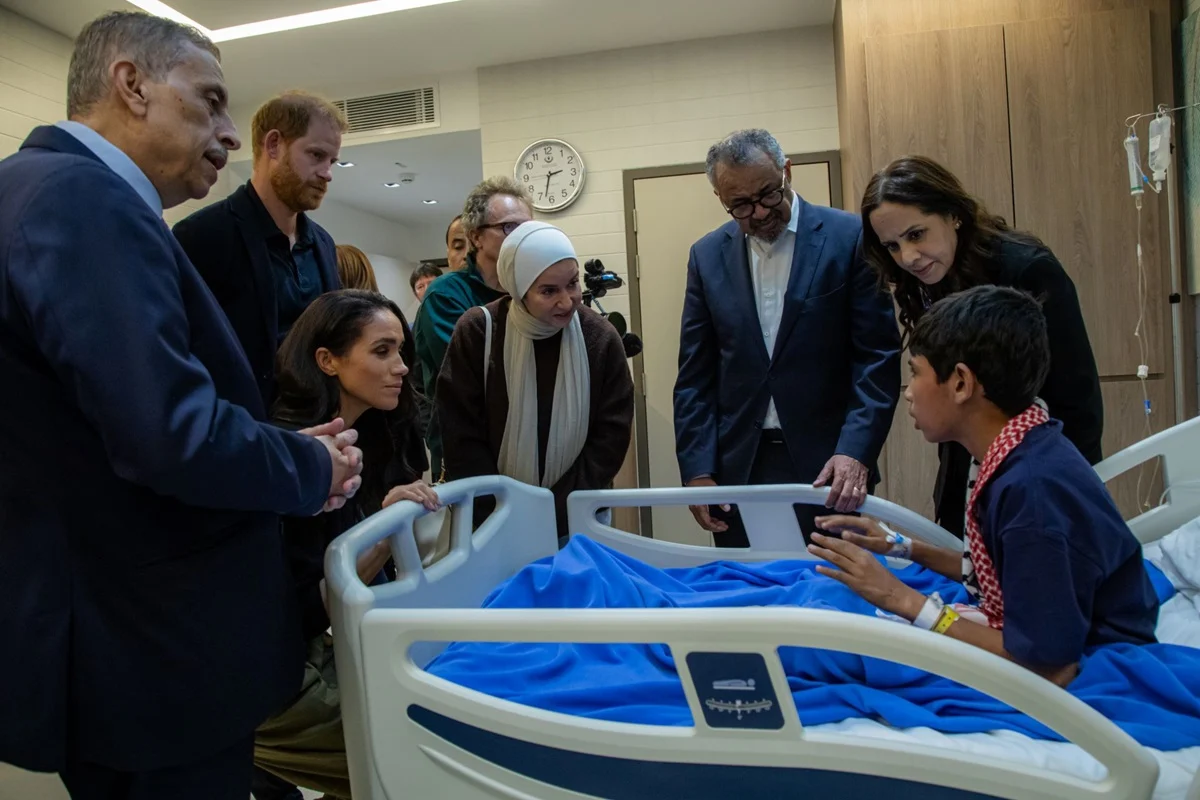
The international health community has increasingly turned its focus toward the Middle East as systemic challenges test the resilience of regional medical infrastructure. It was against this backdrop that Dr. Tedros Adhanom Ghebreyesus, Director-General of the World Health Organization (WHO), successfully concluded the initial phase of a vital two-day state visit to the Hashemite Kingdom of Jordan. The mission served to spotlight Jordan’s exemplary role as a regional humanitarian anchor, a champion of universal health coverage (UHC), and a primary safe haven for millions of displaced individuals fleeing regional conflicts.
Throughout the opening day of the diplomatic mission, Dr. Tedros engaged in high-level strategic dialogues with Hashemite leadership, international donor organizations, and frontline medical personnel. The discussions underscored the enduring partnership between the WHO and Amman, focusing specifically on bolstering national health systems, expanding specialized care pathways for vulnerable populations, and integrating comprehensive mental health services into routine primary care frameworks.
A Royal Audience and Strategic Health Priorities
The cornerstone of the visit’s first day was a formal audience with His Majesty King Abdullah II of Jordan. The meeting provided an essential platform to evaluate current health security metrics and map out future collaborative strategies between the WHO and the Jordanian government. Central to the dialogue was Jordan’s visionary leadership in promoting health as both a national security and a fundamental human right.
Discussions between Dr. Tedros and King Abdullah II centered on three core pillars: strengthening domestic health infrastructure to withstand external shocks, expanding population-wide access to equitable medical care, and sustaining robust emergency responses for regional crises. Special attention was dedicated to the ongoing humanitarian obligations facing the Kingdom, particularly concerning the influx of Palestinian patients evacuated from the Gaza Strip for specialized treatment, alongside the millions of refugees from Syria and neighboring territories who continue to find sanctuary within Jordanian borders.
Speaking after the high-level meeting, Dr. Tedros expressed profound gratitude for the Kingdom’s steadfast humanitarian posture. “I wish to express my appreciation to His Majesty King Abdullah II for his commitment to advancing universal health coverage,” Dr. Tedros stated. “I also extend my thanks to His Majesty and the people of Jordan for their solidarity and generosity in providing health services to more than three million refugees, primarily from Gaza and Syria, who are living in the country.”
Furthermore, the WHO Director-General lauded Jordan’s innovative approaches to emergency medical logistics, highlighting His Majesty’s pioneering Medical Corridor initiative. This vital operational pathway has consistently facilitated the transfer and treatment of critically ill and injured children from the Gaza Strip, ensuring they receive life-saving interventions that would otherwise be entirely inaccessible amid ongoing conflict. Through such measures, Jordan continues to demonstrate to the international community what it genuinely means to prioritize human dignity and universal welfare above geopolitical divisions.
On the Front Lines: Visiting Evacuated Pediatric Patients
Moving beyond high-level diplomatic engagements, Dr. Tedros transitioned from the royal palace to the clinical front lines, visiting a specialized, WHO-supported hospital facility tasked with managing complex medical cases evacuated from Gaza. The visit offered the WHO chief an intimate view of the immense human toll exacted by regional conflicts and the extraordinary measures required to mitigate them.
During the hospital tour, Dr. Tedros spent time conversing with young pediatric patients, their families, and the multidisciplinary teams of doctors, nurses, and specialists delivering intensive care. These medical professionals operate under immense pressure, administering life-saving treatments for severe traumatic injuries, advanced oncological conditions, and other critical pathologies.
The site visit served to underscore the indispensable nature of the medical evacuation corridor operating through Jordan. International health experts note that without such logistical lifelines, the mortality rates among critically injured civilians—particularly children—would escalate exponentially. Consequently, Dr. Tedros issued a renewed appeal to the international donor community for sustained, predictable financial and material support. Ensuring the uninterrupted functioning of these evacuation corridors requires robust multilateral backing to guarantee that every child and vulnerable patient in extremis can reach necessary specialized care without bureaucratic or financial delay.
Mobilizing Multilateral Resources and Mental Health Integration
As part of the day’s comprehensive agenda, the WHO Director-General convened a high-level roundtable meeting involving key health partners, international donor nations, United Nations agencies, and prominent philanthropic organizations. The primary objective of this assembly was to align international financing priorities with Jordan’s domestic health system strengthening strategies.
The dialogue addressed the mounting fiscal pressures faced by countries hosting exceptionally large refugee populations. Stakeholders reviewed mechanisms to scale up targeted humanitarian health actions, with a distinct emphasis on expanding mental health and psychosocial support services. Participants welcomed the ongoing collaboration among global partners and reaffirmed their shared commitment to investing in the resilience of Jordan’s health sector, viewing it as a strategic investment in broader regional stability.
In a subsequent bilateral session with Jordan’s Minister of Health, Dr. Tedros examined national progress toward achieving total universal health coverage. Jordan has progressively earned global recognition for its primary health care reforms, particularly its pioneering integration of mental health services into routine clinical practice. By embedding mental health diagnostics and therapeutics directly into community-level primary care clinics, the Kingdom has significantly reduced diagnostic barriers and minimized social stigmas. This progressive integration is closely aligned with and actively supported by the Director-General’s Special Initiative for Mental Health, serving as a replicable blueprint for low- and middle-income countries globally.
High-Profile Advocacy: The Role of Archewell Philanthropies
Adding a distinct dimension of global advocacy to the state visit, Dr. Tedros was accompanied throughout several key engagements by Prince Harry, Duke of Sussex, and Meghan, Duchess of Sussex. Participating in their capacities as founders of Archewell Philanthropies and long-standing global advocates for public health, the Duke and Duchess brought heightened international visibility to the pressing challenges confronting vulnerable populations in the Middle East.
Archewell Philanthropies has a sustained history of collaboration with the WHO, having previously supported critical global health initiatives ranging from equitable distribution frameworks for COVID-19 vaccines to specialized medical evacuation and mental health programs in crisis zones. During the Jordan visit, Prince Harry actively participated as a key ally of the WHO’s mental health mandate. His interventions emphasized the critical necessity of scaling up mental health investments across diverse community settings and humanitarian emergencies, directing particular focus toward the psychological wellbeing of men, adolescents, and children navigating the trauma of conflict.
Expressing his appreciation for their continued partnership, Dr. Tedros remarked, “I want to thank our partners, including Prince Harry, Duke of Sussex and Meghan, Duchess of Sussex, whose commitment to mental health and humanitarian action has helped bring visibility, resources and hope to some of the world’s most vulnerable communities. Their collaboration is helping to advance WHO’s mission to ensure health for all.”
Echoing these sentiments, Prince Harry reflected on the significance of the mission. “It is an honour to join the Director-General of the World Health Organization in Jordan, a country that is leading by example in compassion, resilience and innovation,” the Duke stated. “Through our work with Archewell Philanthropies, my wife and I have seen first-hand the impact of WHO’s efforts to support mental health and deliver life-saving care in emergencies. We remain deeply committed to advancing awareness, reducing stigma and expanding access to mental health support for all those affected by conflict and crisis. Mental health is fundamental to recovery, dignity and long-term peace, and we are proud to stand with WHO and partners around the world to make it a global priority.”
Background Context: Jordan as a Humanitarian and Medical Hub
To fully understand the gravity of Dr. Tedros’s visit, one must examine Jordan’s unique geopolitical and demographic position over the past several decades. Despite possessing limited natural resources and facing chronic economic headwinds, the Hashemite Kingdom has consistently maintained an open-door policy for populations displaced by war and instability.
According to data compiled by international agencies, Jordan currently hosts approximately 1.3 million Syrian refugees, alongside hundreds of thousands of refugees of other nationalities, including Iraqis, Yemenis, and Sudanese, in addition to its long-standing Palestinian refugee population. Absorbing this demographic volume places an immense, compounding strain on public infrastructure, particularly water, energy, and national health systems.
Despite these structural pressures, the Jordanian government has successfully integrated registered refugees into its national public health infrastructure, granting them access to subsidized primary, secondary, and tertiary health care services. This inclusive approach has preserved public health security across the region, preventing the outbreak of vaccine-preventable diseases and ensuring that chronic conditions among displaced populations are effectively managed. However, this burden has severely tested national fiscal capacities, making ongoing international burden-sharing, multilateral aid, and targeted WHO technical assistance absolutely vital for the maintenance of high standards of care.
Furthermore, Jordan’s strategic geographic location has rendered it the indispensable logistical backbone for humanitarian medical operations in the Levant. The medical evacuation corridors established through Amman act as the primary conduit for routing critically ill patients—particularly pediatric oncology cases and severe trauma victims from the Gaza Strip—into adequately equipped regional hospitals. Without Jordan’s institutional reliability and diplomatic facilitation, these patients would face near-certain mortality due to the systematic collapse of medical facilities within active conflict zones.
Broader Implications for Regional Health Security
Public health analysts observing the state visit note that the discussions between the WHO leadership and Jordanian authorities carry profound implications for regional health security frameworks. As protracted conflicts continue to destabilize the broader Middle East, the traditional demarcation between emergency humanitarian relief and long-term health system development is increasingly blurring.
The WHO’s engagement in Jordan highlights the necessity of building "shock-resilient" health systems—infrastructure capable of absorbing sudden, massive surges in patient volume without compromising the delivery of routine domestic health care services. By prioritizing primary health care as the foundational layer of universal health coverage, Jordan has demonstrated that even nations operating under severe fiscal constraints can achieve remarkable health outcomes if structural reforms are guided by equity, resilience, and strong political will.
Moreover, the integration of mental health into primary care settings addresses a historically neglected dimension of emergency response. In post-conflict and ongoing crisis environments, psychological trauma often manifests as chronic somatic illnesses, societal friction, and long-term developmental impediments, particularly among youth. By championing psychological first aid and institutionalizing mental health services, the WHO and Jordan are setting a new standard for holistic humanitarian intervention that views mental wellness as inseparable from physical survival.
Agenda for the Second Day and Concluding Engagements
As the state visit moves into its second and final day, Dr. Tedros’s itinerary remains intensive, designed to examine specialized sectors of Jordan’s health and social welfare ecosystem.
The Director-General is scheduled to visit the National Center for Rehabilitation of Addicts, a premier institution supported by the WHO that delivers integrated medical, psychological, and social intervention services for substance use disorders. This visit will highlight Jordan’s progressive, health-centered approach to addiction management, framing it as a public health challenge rather than a purely criminal justice issue.
Additionally, Dr. Tedros will hold consultative meetings with prominent community leaders and women’s empowerment organizations, including the Jordanian Hashemite Fund for Human Development (JOHUD). These sessions will explore grassroots public health initiatives, maternal and child health programs, and community-led resilience strategies that empower women as primary health custodians at the local level.
The mission will also feature an official tour of the renowned King Hussein Cancer Center (KHCC). As a leading regional center of excellence in oncology, KHCC plays an instrumental role in advancing cancer care, research, and specialized training across the Middle East. Discussions at the center are expected to focus on scaling up cross-border oncological care protocols and enhancing regional scientific collaboration to treat patients evacuated from conflict-affected zones.
The high-profile state visit will formally conclude with a series of debriefing sessions involving international donors, humanitarian operators, and diplomatic representatives. These final engagements are intended to synthesize the findings of the two-day mission, secure renewed financial and operational pledges for Jordan’s humanitarian corridors, and reinforce the Kingdom’s indispensable position as an enduring pillar of global health security, resilience, and humanitarian leadership.







Leave a Reply