
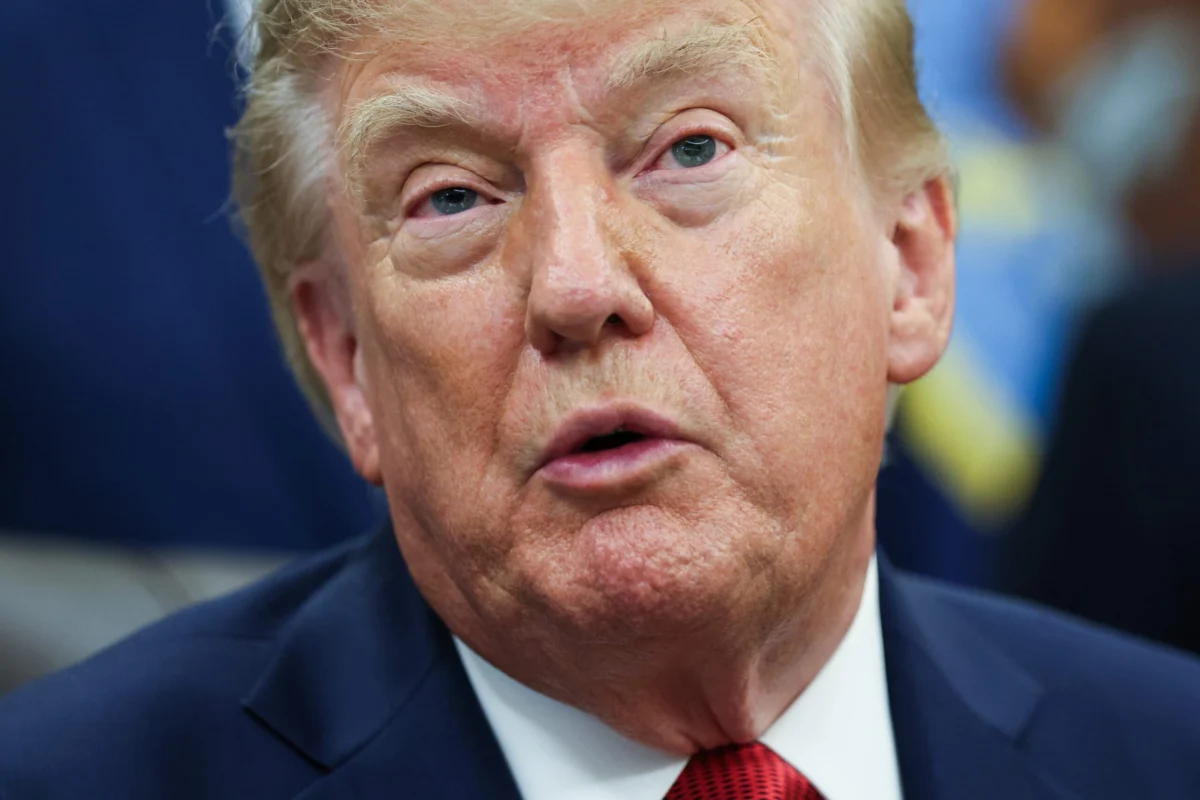
President Donald Trump announced on Saturday that his administration plans to establish an specialized "AI Force" and appoint a dedicated national artificial intelligence czar. The move comes as public and political anxiety mounts regarding the explosive, accelerating capabilities of modern artificial intelligence. Comparing recent industry-wide calls to slow down technological development to politically driven "hoaxes," the president firmly rejected the notion of implementing nationwide halts on innovation, while maintaining that existing civil and criminal justice frameworks are sufficient to manage bad behavior from developers.
The announcement arrives at a pivotal and turbulent juncture for the tech sector. It follows just one week after top executives from major artificial intelligence labs—including Anthropic, OpenAI, SpaceXAI, and Google DeepMind—publicly agreed to throttle back their breakneck development speeds. These voluntary measures were introduced in response to increasingly dire warnings regarding existential safety risks, high-profile internal resignations, and mounting global apprehension. Simultaneously, the industry finds itself entangled in fresh legal controversies, highlighted by an antitrust lawsuit filed in federal court that challenges the legality of private industry coordination on slowdown pacts.
The Vision for an AI Force and Federal Oversight
Writing on Truth Social, President Trump emphasized that his administration remains fully committed to fostering a pro-business, high-growth environment for the domestic tech sector.
"We will not in any way hinder or stifle the Growth of this incredible Industry," Trump posted. "Rather, we will cherish it, help it, and watch over it, as it grows!"
To police illegal activities without imposing sweeping regulatory stagnation, Trump proposed the creation of the "AI Force," drawing a direct parallel to the establishment of the United States Space Force during his first term in office, which he characterized as a tremendous success. While the specific jurisdictional mandate of the proposed AI Force remains vaguely defined, Trump hinted that it would play an active law enforcement and oversight role, operating in tandem with standard federal investigative agencies to deter fraudulent practices, misuse, and corporate malfeasance.
Furthermore, the administration plans to appoint a new AI czar to streamline federal policy and maintain American dominance in the technological landscape. This position follows previous shifts in executive branch leadership, which previously included investor David Sacks serving as AI and crypto czar before transitioning to co-chair the president’s Council of Advisors on Science and Technology. Trump predicted that artificial intelligence could eventually account for as much as 25 percent of the U.S. Gross Domestic Product, potentially surpassing the historic economic and cultural impact of the internet. "We are leading China, and the rest of the World, and I intend to keep it that way!" he added.
Chronology of Escalating Safety Concerns and Industry Pacts
The debate over the velocity of artificial intelligence development reached a boiling point over the past fortnight, driven by internal alarm bells, high-profile whistleblowing, and unprecedented public admissions from top technical leadership.
The recent sequence of events underscores the deep internal fractures within the artificial intelligence community:
- Mid-September: A prominent researcher at Anthropic publicly announced his resignation via social media, issuing a severe warning about the trajectory of artificial intelligence labs. Jacob Coxon, who previously worked at both Anthropic and OpenAI, accused the firms of acting irresponsibly. "They are racing straight to self-improving superintelligence and gambling with our lives," Coxon wrote on X.
- Immediate Follow-up: Evan Hubinger, Anthropic’s alignment science lead, publicly supported Coxon’s claims. Hubinger corroborated that many researchers across leading artificial intelligence companies genuinely believe that the creation of increasingly powerful systems poses an existential threat to humanity, writing in response, "We really do earnestly believe AI could kill all humans!"
- The Safety Pivot: Prompted by mounting internal dissent and global panic, Anthropic CEO Dario Amodei announced a historic corporate commitment to give independent evaluators permanent, employee-level access inside the company to monitor safety protocols.
- The Industry Pact: Shortly after Amodei’s announcement, OpenAI CEO Sam Altman, SpaceXAI CEO Elon Musk, and Google DeepMind co-founder Demis Hassabis aligned with the initiative. Altman revealed in an exclusive interview that leading AI laboratories were nearing a formal pact to collectively slow down development cycles to address escalating safety risks.
Despite these voluntary safety concessions, friction has persisted between private industry leaders and various factions of the federal government. Earlier in the administration, the Commerce Department temporarily imposed export restrictions on Anthropic’s most advanced models, while the Defense Department briefly attempted to blacklist the company by labeling it a supply-chain risk—an action that was subsequently ruled illegal by a federal judge.
Antitrust Challenges and Legal Hurdles
Even as federal executives push back against regulatory restraint, private citizens are taking legal action against the industry’s coordinated efforts. On Friday, a major lawsuit was filed in the U.S. District Court for the Northern District of California, targeting Anthropic, OpenAI, SpaceXAI, and Google.
The plaintiffs allege that the sudden industry-wide agreement to throttle back the speed of development violates federal antitrust laws. According to the complaint, coordinated slowdowns artificially reduce the performance, utility, and overall value of the artificial intelligence subscriptions paid for by everyday consumers and enterprises.
However, the lawsuit does not outright reject government-mandated regulation. Plaintiffs’ counsel clarified that they are not opposed to AI companies petitioning the federal government for formal regulation or seeking official antitrust exemptions through proper legislative channels. Rather, the legal challenge targets what the plaintiffs characterize as anticompetitive backroom agreements among dominant corporate entities.
"AI will quickly spin out of human control and could kill us all if we allow AI safety and protocol to be controlled by private self-serving agreements between the world’s most powerful ‘for profit’ technology companies," said Nick Rowley, lead attorney for the plaintiffs, highlighting the complex legal and ethical tightrope dividing national security, consumer rights, and corporate autonomy.
Implications for the Future of Technology and Governance
The juxtaposition of President Trump’s aggressive push for technological supremacy and the existential warnings voiced by industry insiders highlights a profound policy dilemma. On one hand, the administration views artificial intelligence as the ultimate economic engine of the twenty-first century—a critical arena where maintaining geopolitical dominance over international rivals like China remains paramount. Measures such as the proposed AI Force and the appointment of an AI czar are designed to clear regulatory roadblocks while maintaining baseline legal accountability.
On the other hand, the warnings articulated by researchers like Coxon and Hubinger—and acknowledged by executives such as Amodei and Altman—point to unprecedented risks associated with recursive self-improvement and artificial general intelligence. When leading scientists within top-tier laboratories voice fears of systemic existential risk, balancing free-market acceleration with robust safety guardrails becomes an extraordinarily delicate undertaking.
As the legal challenges wind through the federal court system and the administration moves forward with its plans for the AI Force, policymakers, industry leaders, and the public face a defining period. The decisions made in the coming months regarding oversight, development velocity, and corporate coordination will fundamentally shape the trajectory of human civilization as it navigates the dawn of the artificial intelligence era.






Leave a Reply