Beginning in January, the Georgia Public Service Commission (PSC) will experience a profound political and structural realignment when three of its five elected officials assume office as Democrats. This transition marks the first time in three decades that the Democratic Party will hold a governing majority on the powerful energy regulation board. The shift follows a series of hard-fought electoral battles in 2024 and subsequent cycles, where skyrocketing power bills, clean energy integration, and the explosive growth of energy-hungry data centers galvanized voters.
The five-member commission holds immense regulatory authority over the state’s utility landscape, most notably dictating the financial and operational parameters for Georgia Power, the state’s largest electric provider. As the new Democratic bloc—consisting of returning Commissioner Peter Hubbard alongside newly elected colleagues Shelia Edwards and Alicia Johnson—prepares to take the reins, they step into a regulatory environment defined by unprecedented public scrutiny and intense economic pressures on everyday ratepayers.
The Main Facts of the Shift
The incoming majority inherits an energy board that has historically maintained a pro-utility reputation, often approving rate increases and infrastructure projects with limited public friction. However, surging monthly electricity bills have transformed the once-obscure regulatory agency into a central flashpoint in Georgia politics.
With Democrats now holding a 3-to-2 advantage, the commission’s priorities are slated for a sharp pivot. Commissioners have signaled that affordability, aggressive scrutiny of utility expenditure, and transparent policymaking will take precedence starting in January.
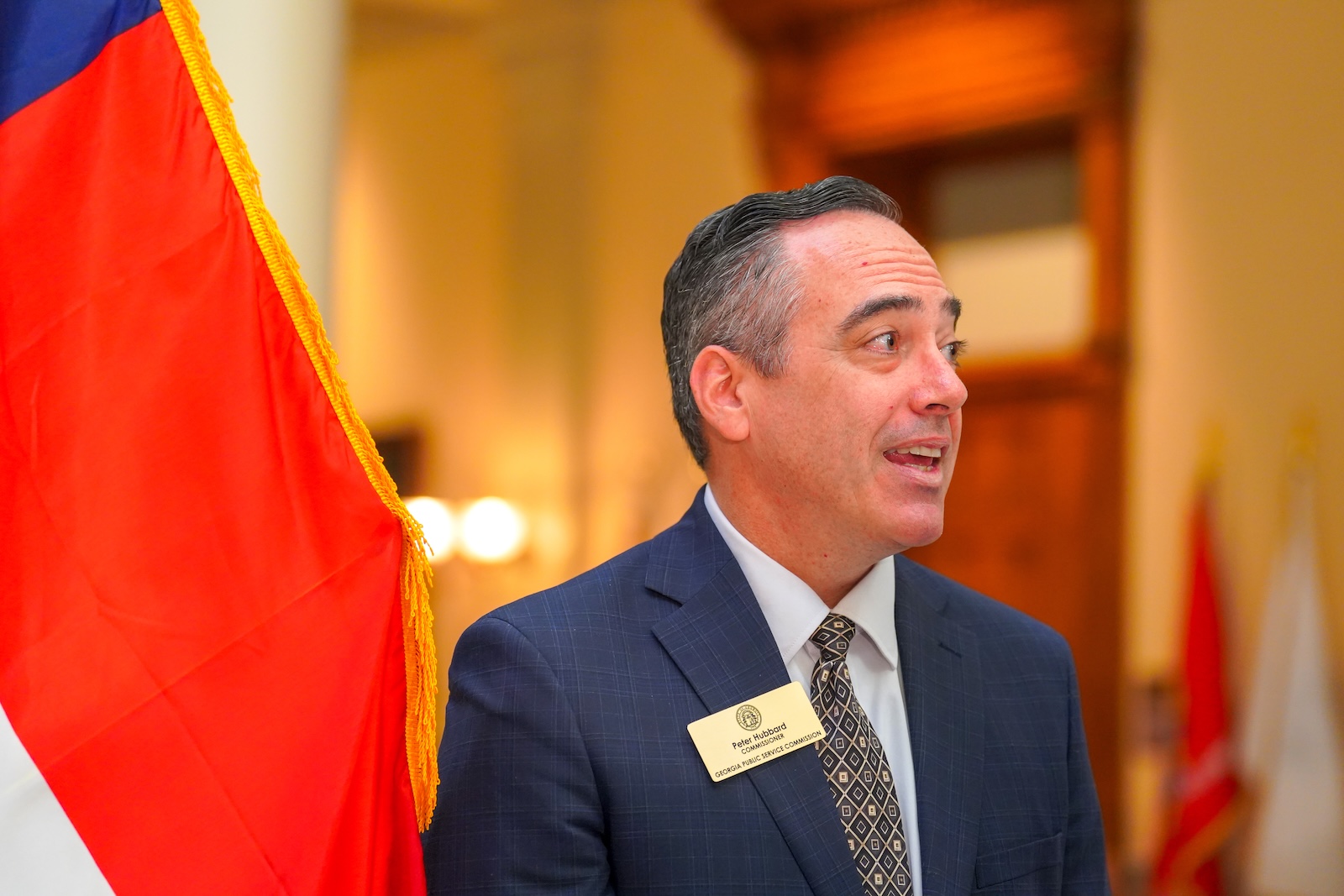
Hubbard, reflecting on the mountainous task ahead, noted that the incoming leadership must immediately categorize and address a backlog of oversight issues. Among the primary initiatives is the establishment of an "affordability docket"—a dedicated sequence of formal hearings designed to investigate the structural drivers behind escalating power bills and to identify direct savings mechanisms for residential and commercial customers. Furthermore, the newly constituted commission intends to apply microscopic oversight to upcoming filings from Georgia Power concerning generation capacity and rate adjustments.
A Chronology of Rising Pressures and Electoral Turning Points
The roots of this political turning point stretch back over several years, fueled by a combination of macroeconomic trends and local energy policy decisions.
Historically, PSC elections in Georgia garnered minimal media attention and low voter turnout, with incumbents enjoying a distinct advantage in a traditionally conservative state. However, the landscape shifted dramatically during the early 2020s as residential electricity rates climbed alongside national inflation and massive capital investments by utility providers.
The construction delays and massive cost overruns associated with Units 3 and 4 at Plant Vogtle—one of the largest nuclear expansion projects in U.S. history—became a lightning rod for consumer advocacy groups. Ratepayers were repeatedly socked with bill increases to finance the construction overruns, driving public awareness of the PSC’s role in household budgeting.
Concurrently, the arrival of the artificial intelligence boom and the subsequent proliferation of massive data centers across metropolitan Atlanta and surrounding rural counties created an unprecedented surge in electricity demand. Utilities scrambled to forecast grid needs, leading to massive fossil-fuel and renewable generation proposals that further complicated the rate-setting horizon.
By the 2024 election cycle, environmental organizations, consumer advocacy coalitions, and grassroots political groups actively connected energy policy to cost-of-living concerns. Campaigns highlighted that utility regulation directly influences household poverty rates, public health, and long-term economic stability. The culmination of these concerted organizing efforts ultimately resulted in the historic flipping of the commission’s majority.
Supporting Data and the Data Center Dilemma
At the core of the commission’s upcoming regulatory battles lies a fundamental economic debate surrounding data center expansion and its impact on the average ratepayer.
Since the inception of the data center boom, Georgia Power has insisted that serving these massive, high-load facilities acts as a financial net positive for the broader grid. The utility argues that the sheer volume of new electricity consumption generates substantial tax revenues and corporate rate payments that help offset operational costs. Georgia Power refers to this phenomenon as "downward pressure" on rates—a concept stipulating that while overall electricity prices may not fall, future rate hikes will be mitigated by the financial influx from industrial tech giants.
This narrative was heavily emphasized during negotiations over a major electricity service contract for a massive new OpenAI data center in the state. Georgia Power projected that the agreement would produce roughly $15 per month in downward pressure for a typical residential customer.
However, this theoretical relief has done little to calm anxious consumers. Critics and independent analysts point out that downward pressure is not a direct rebate or a reduction in current billing statements, but rather an abstract offset against future increases.
Compounding these tensions was a temporary rate freeze approved by the commission in the previous year. While Georgia Power credited data center revenue growth for making the temporary freeze possible, consumer advocates sharply criticized the rollout. The utility announced the freeze directly without holding a preliminary PSC evidentiary hearing, denying independent analysts the opportunity to audit the company’s financial claims in real time. Advocacy groups argued that this opaque mechanism prevented the public from verifying whether everyday customers were genuinely insulated from the immense infrastructure costs required to power tech facilities.
Official Responses and Corporate Posturing
Corporate leadership at Southern Company, the parent organization of Georgia Power, has publicly acknowledged the heightened public anxiety surrounding affordability while projecting confidence in their ability to work constructively with the new Democratic majority.
During a third-quarter earnings call, Southern Company CEO Chris Womack emphasized that affordability remains a central tenet of the utility’s operational strategy. Womack pointed to historical rate freezes, customer benefit programs, and economic development contributions as a solid foundation for ongoing dialogue with the incoming commissioners.
"If you look at what we have been doing with rate freezes, with benefits, with how we are providing benefits from growth to customers—existing customers—as well as to the communities, we think that’s a strong platform to stand on," Womack stated during the call.
Despite these assurances, consumer advocates remain skeptical. Briontée McCorkle of Georgia Conservation Voters noted that public perception of the commission has undergone a permanent evolution. No longer viewed as a bureaucratic rubber-stamp agency, the PSC is now recognized as a vital institution whose decisions carry immediate consequences for family budgets, community health, and the state’s ecological future.
Transparency Deficits and Future Regulatory Frictions
Beyond raw electricity rates, transparency has emerged as a primary grievance among watchdogs and independent researchers tracking the Georgia PSC.
A frequent critique involves the heavy redaction of documents submitted during regulatory proceedings. For instance, the contract negotiated for the OpenAI data center was entirely redacted prior to approval, with only a high-level summary made available to the public. Critical details regarding energy purchase agreements, long-term transmission construction costs, and localized service guarantees are routinely shielded from public view under the legal umbrella of trade secrecy and proprietary business protections.
Academic experts emphasize that the incoming Democratic majority has a unique opportunity to dismantle these informational barriers. Kristin Phillips, an associate professor at Emory University who specializes in energy burden and regulatory affairs, noted that while consumers should not expect immediate drops in their utility bills come January, an instantaneous shift in administrative culture is entirely plausible.
"We may not be able to expect immediate effects on our wallets," Phillips said. "But I think we can expect immediate change in the types of decisions that are made… I absolutely think transparency is potentially one of the biggest impacts here. It has been often on advocates to push on the way that the PSC communicates about the decisions that it’s making, and I’m hoping that there will be more clarity and transparency."
Broader Impact and Strategic Implications
As the January transition approaches, the new Democratic commissioners are formulating a legislative and administrative calendar designed to maximize their four-year window of unified control.
Among the primary milestones on the horizon is the upcoming comprehensive rate-setting case scheduled for 2028. This proceeding will require Georgia Power to justify its long-term integrated resource plans, demand forecasts, and capital expenditure proposals under the microscope of a hostile regulatory majority.
In addition to electric utility oversight, Commissioner Hubbard has proposed initiating a formal rate review for the state’s natural gas utilities—a sector that has reportedly avoided comprehensive rate case scrutiny for over a decade.
By systematically opening dockets on energy burden, expanding public access to regulatory filings, and demanding rigorous justification for corporate infrastructure spending, the new majority aims to reshape Georgia’s energy identity. Whether these structural reforms can successfully translate into tangible financial relief for everyday ratepayers remains one of the most significant open questions in modern Southern politics.